
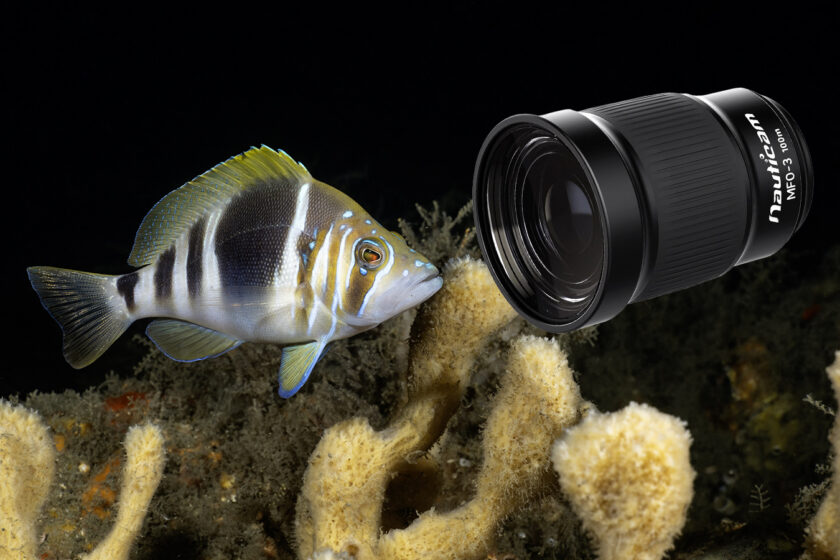
When Nauticam first announced their newest Mid-range Focus Optimizer, the MFO-3 back in July of 2025, my curiosity was only mildly piqued. What was different about this new wet lens was that its sole purpose was to convert a macro lens with a focal range of 90mm–105mm to perform with the optical characteristics equivalent to a macro lens in the 50mm–60mm focal range.
In my review of Nauticam’s first Mid-range Focus Optimizer, the MFO-1, I found that with this add-on water contact lens was aimed to circumvent focus-hunting issues inherent among macro lenses in the 90mm to 105mm range. My own testing of this lens found that it gave me a substantial edge when shooting small, fast-moving subjects with my Nikkor Z MC 105mm f/2.8 VR S macro lens.
This time around, Nauticam’s MFO-3 was billed to be a highly viable replacement for a 50mm–60mm macro lens that can be added to the front of my Nikkor Z MC 105mm f/2.8 VR S macro lens. Not only was this piece of optics designed to alter the focal range of my 105mm, it was also advertised to deliver the same the same optical characteristics including shorter focusing distance and depth of field as my Nikkor AF-S 60mm f/2.8 G Micro ED IF lens. But, after seeing a few fellow underwater shooters I personally knew start singing their praises about the MFO-3, I had to see for myself.
First Impression
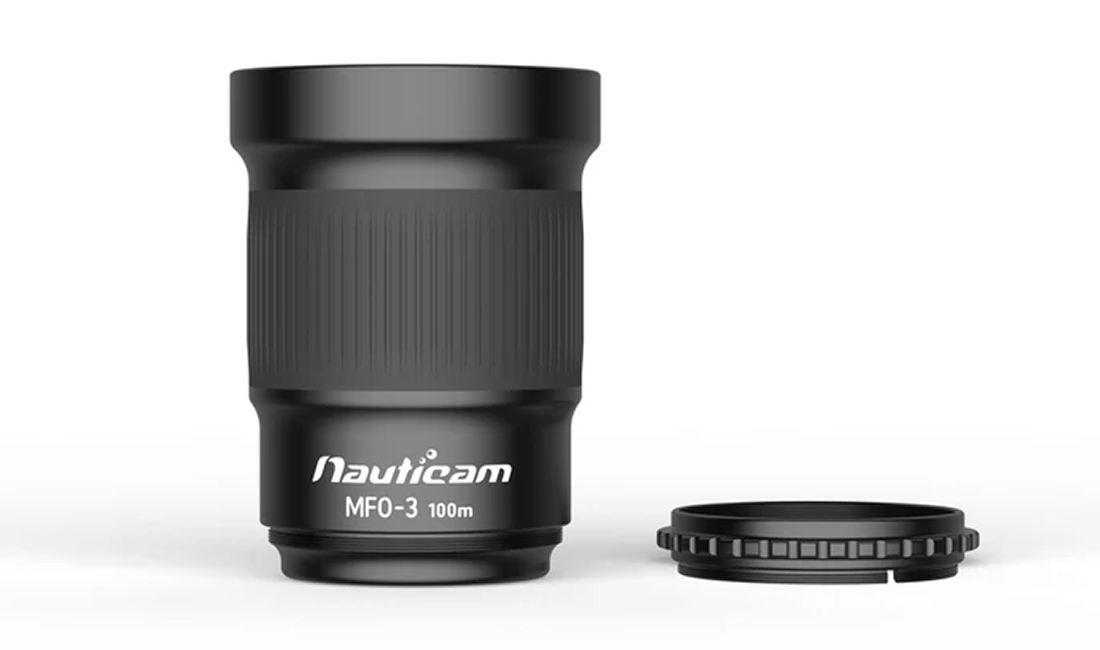
In my hand, the MFO-3 feels substantial — a hard-anodized aluminum alloy housing containing four glass elements in three groups. Measuring 4.5 inches/114.2mm long by 3.3 inches/84mm in diameter, the MFO-3 weighs in at 21.2oz/602g out of water — 1.7oz/48.2g heavier than the combined weight (19.5oz/553g) of my Nikkor AF-S 60mm f/2.8 G Micro ED IF lens and FTZ II F-to-Z mount adapter together. Yet in water, the MFO-3’s weight shifts noticeably to a mere 4.2oz/120g. That’s less negative buoyancy than my SMC-3 super macro lens at 7.6oz/215g.
Underwater, the MFO-3’s optical elements are designed specifically for full-frame macro lenses from 90mm to 105mm to transform their optical character to approximate that of a 50mm or 60mm macro, with a maximum magnification of 0.9x. For example, mounted in front of Nikon’s Z 105mm f/2.8 VR S Macro lens, the lens’s 23° Field of View (FOV) opens up to approximately 38°. For reference, the FOV of a Nikon AF-S Micro-NIKKOR 60mm f/2.8G ED IF used on a full-frame (FX format) body is 39°.
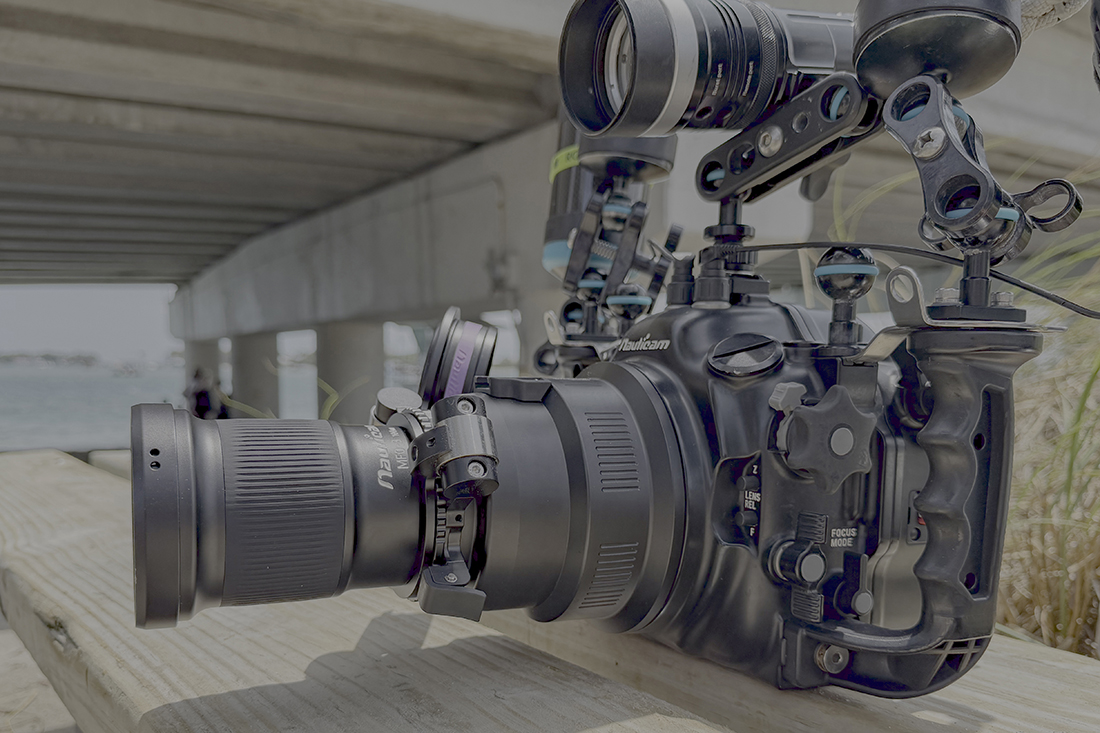
With such promising-sounding specs, the one thing I would have to learn to accept was the somewhat goofy aspect of seeing it mounted to the front of my housed camera. On its own, Nauticam’s N120 macro port for the Nikkor Z 105mm lens spans a full 3.5 inches/88mm from the housing. With the MFO-3 mounted to the front of that same port (using a Nauticam flip diopter holder), the entire assemblage spans a full 8.2 inches/208.28mm in length!
In Water Impression
Open to trying new forms of optics for underwater photography, I really wanted to give Nauticam’s MFO-3 a comprehensive run-through. The first place that came to mind was the Blue Heron Bridge in West Palm Beach, Florida.
A popular, easy-access shore dive, the Blue Heron Bridge sits over a bottom of sand and seagrass dotted with scattered rock piles beneath the columns of bridges and docks — all ideal hunting grounds for underwater photography. The marine life alone covers everything from juvenile angelfish with stunning color to nudibranchs, octopus, seahorses, and frogfish, as well as the occasional eagle ray, sea turtle, or manatee.
Once in the water, concerns about having a honking big nose in front of my camera housing began to evaporate. While its physical size is larger than all other water contacts intended for macro photography, the MFO-3’s negative in-water weight of just 4.2oz/120g made it surprisingly easy to handle.
Flipping the MFO-3 in and out of the way of my 105mm lens to watch the lens’s FOV go from 23° to a wider 38° and back again was really cool. Hunting around to see how a FOV swap would play out, I happened upon a few worthy targets. The first was a very small orange seahorse less than 2 inches/50mm long, followed by a beautiful juvenile blue angelfish the size of a dime, an adult Townsend angelfish — a very rare find — and a baseball-sized common octopus sitting at the entrance of its lair. And that was just to get things started.
Optimized for use with longer focal-length full-frame macro lenses (such as 90mm, 100mm, and 105mm), one of the highlights of the MFO-3 is that it can still retain focus on something just shy of touching the front element. At that point, maximum magnification with the MFO-3 is approximately 0.8x.
Playing around with that little seahorse to see just how close it could go, it demonstrated its full capability of rendering a tack-sharp image with a similar depth of field I’d expect from a 60mm macro lens.
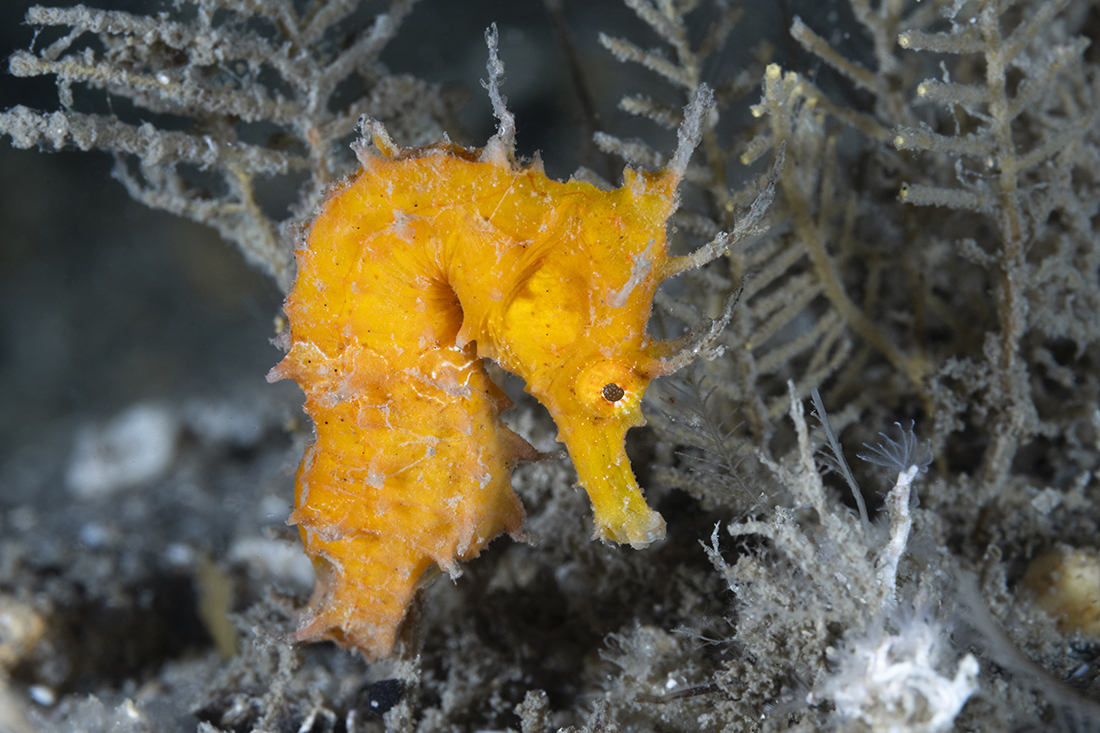
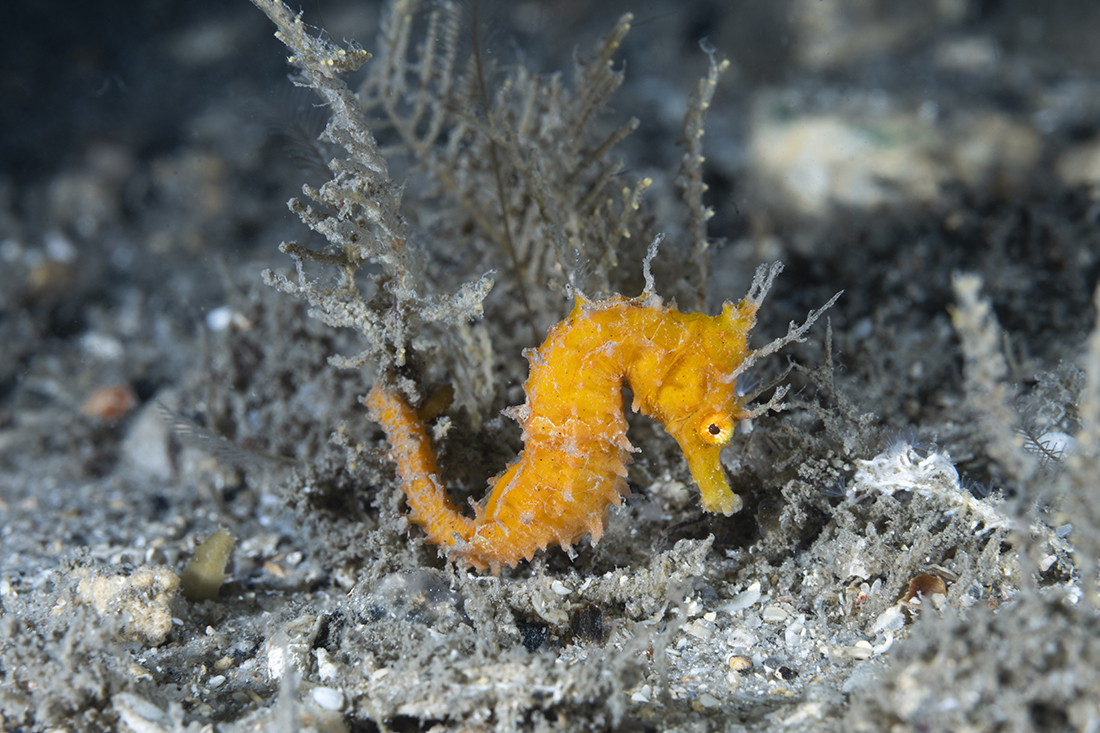
For this set of portraits of a small orange seahorse less than 2 inches/50mm long I started off shooting with Nikkor Z MC 105mm f/2.8 VR S lens at its maximum close focusing range. The first one is what I got with not cropping in post. The second was taken with the MFO-3 in front with no more than 20mm of space between the subject and the front of the MFO-3’s optics.
In addition to the ability to focus remarkably close, it provides an ample working distance out to 59 inches/1,500mm with the same level of performance. When an adult-sized Townsend angelfish entered the scene, all I needed to do was flip the MFO-3 down in front of the 105’s macro port and go.
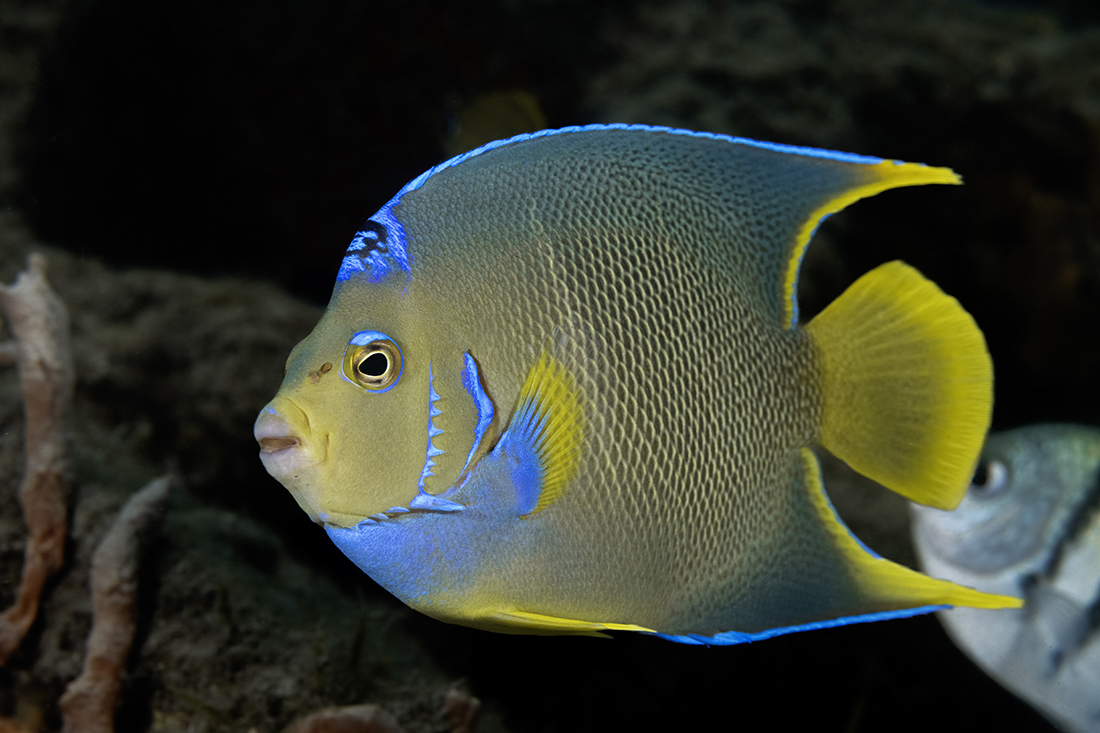
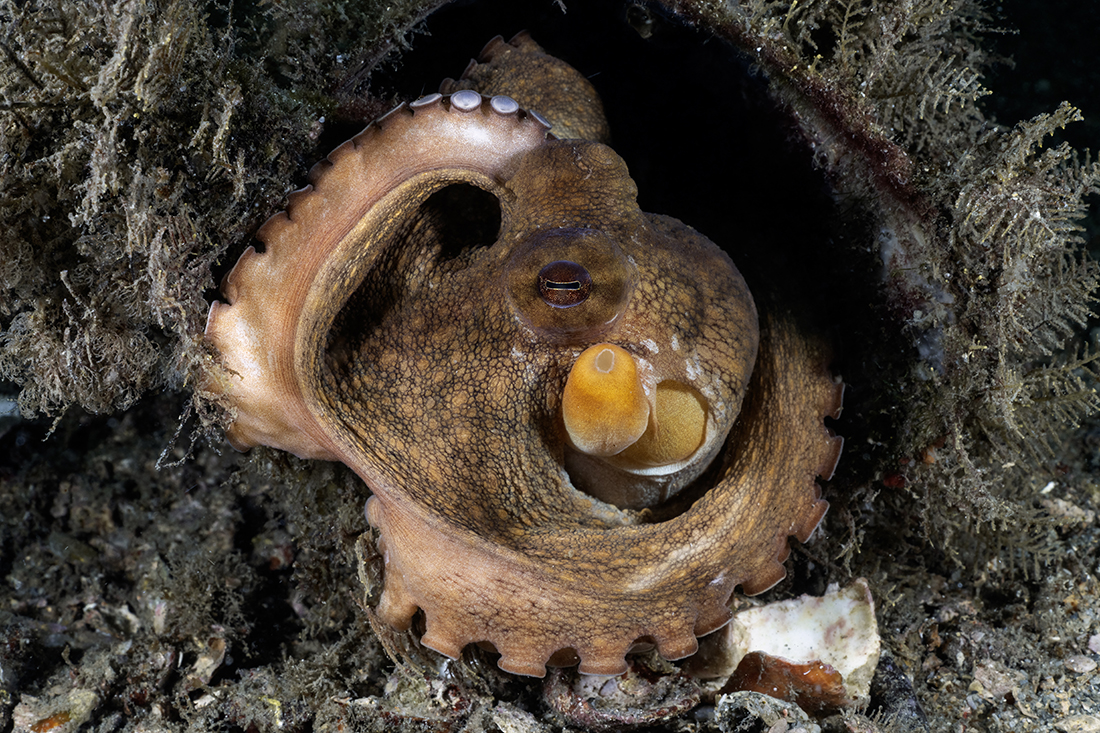
Just as when using the MFO-1 with a 90mm–105mm macro lens, you should leave your lens’s focus range on full/infinity. Engaging the focus limiter on your lens will restrict the MFO-3’s maximum focusing distance down to just a few centimeters.
That raised another question: with my 105 requiring its full focusing range for the MFO-3 to work correctly, would the 105 still be able to focus correctly with my Nauticam SMC-3?
Short answer: yes, though with noticeable issues in getting close enough for this super macro lens to do its thing.
MFO-3 for Blackwater?
In daytime shooting, the Achilles’ heel of 50mm and 60mm macro lenses is that their shorter focal length makes it tough to get close enough to small, skittish subjects. Yet getting close enough to your subject with the same lens at night is rarely a problem. Regardless of whether the camera was full frame (FX) or crop sensor (APS-C), these lenses became the go-to choice for blackwater photography.
When the idea came to take the MFO-3 in place of my trusty Nikkor AF-S 60mm f/2.8 G Micro ED IF lens on a blackwater dive off Palm Beach, Florida, I had plenty of skepticism as to whether it would perform accordingly.
The first concern was again having such a long apparatus making it harder to find and keep very small, often translucent subjects in the frame — and whether I’d still be able to maintain focus. My first test came in the form of a larval flounder slightly larger than my thumbnail and juvenile seahorse about an inch in length clinging to a piece of sargassum.
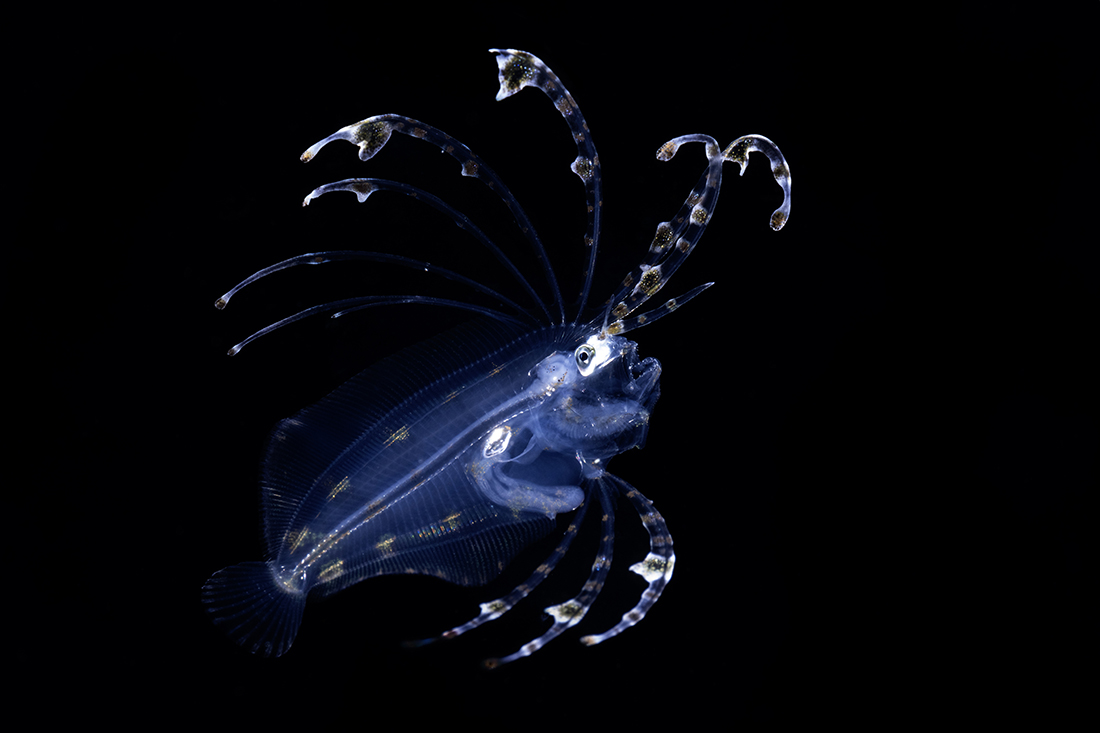
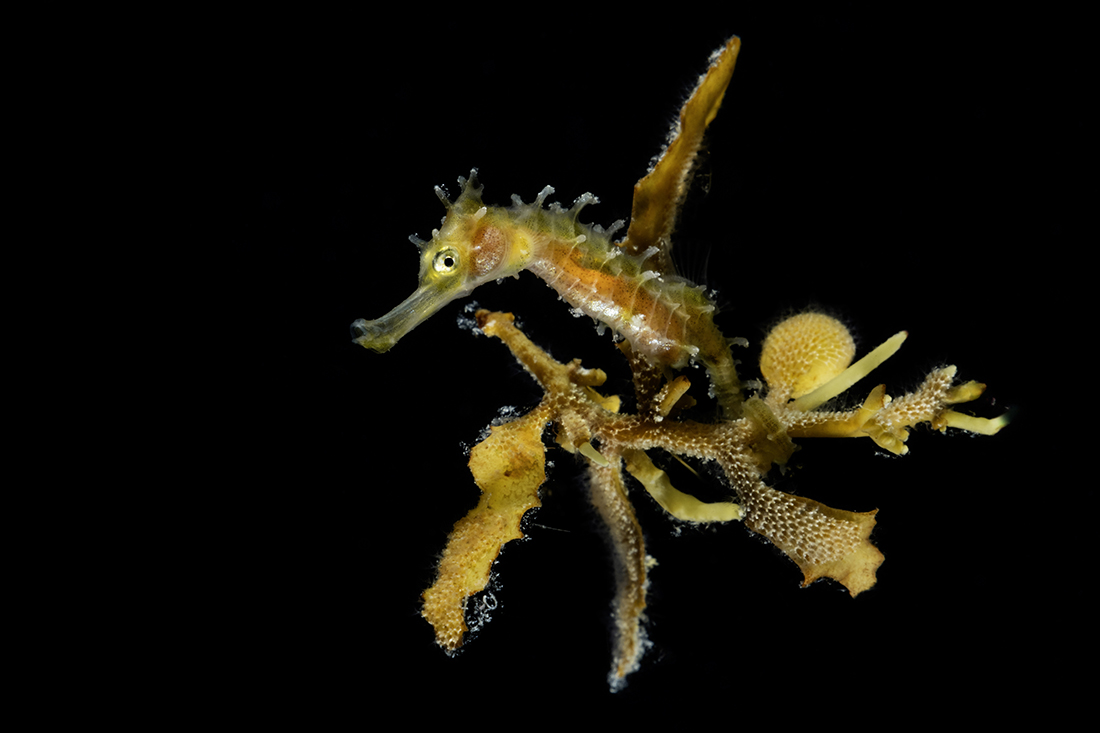
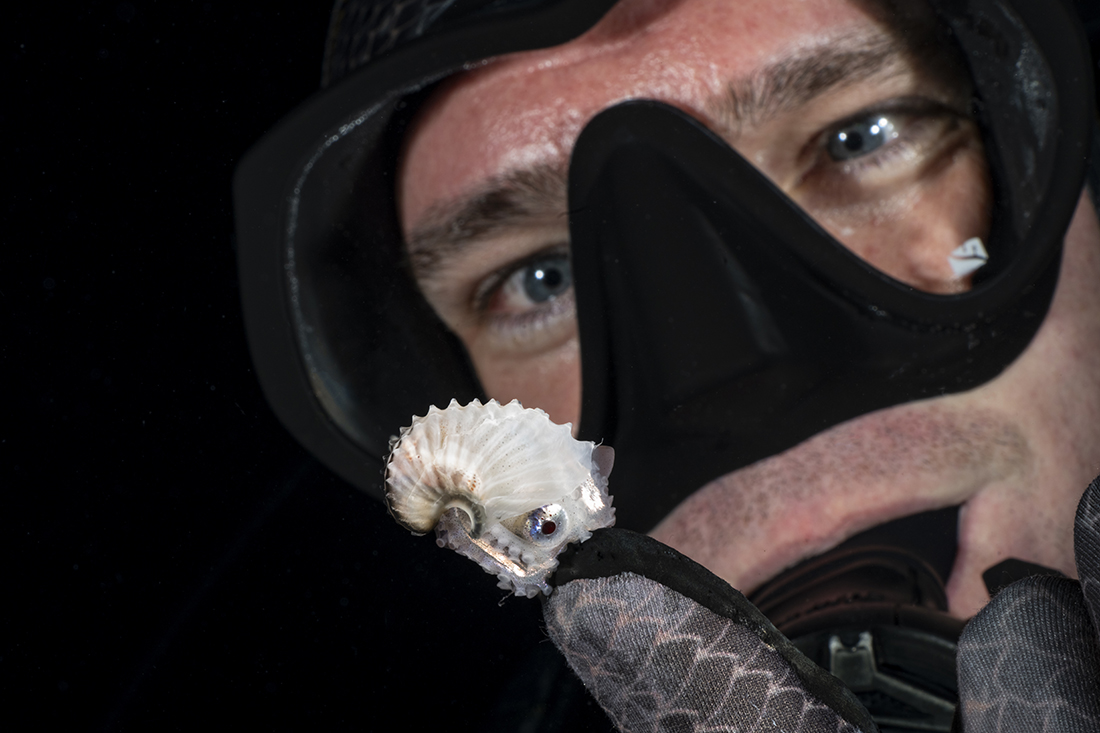
Once again, I was pleasantly surprised that the process was no more difficult than if I had been using my 60mm macro. Other subjects I had no problem capturing with amazing detail included a larval swordfish and a tiny jack hiding in a small jellyfish — but the real baptism by fire came when another diver in our group found a beautiful female argonaut, better known as a paper nautilus, as big around as a nickel. What made this little critter tough was that it started jetting away the moment I approached, forcing me into high-speed pursuit to stay with it.
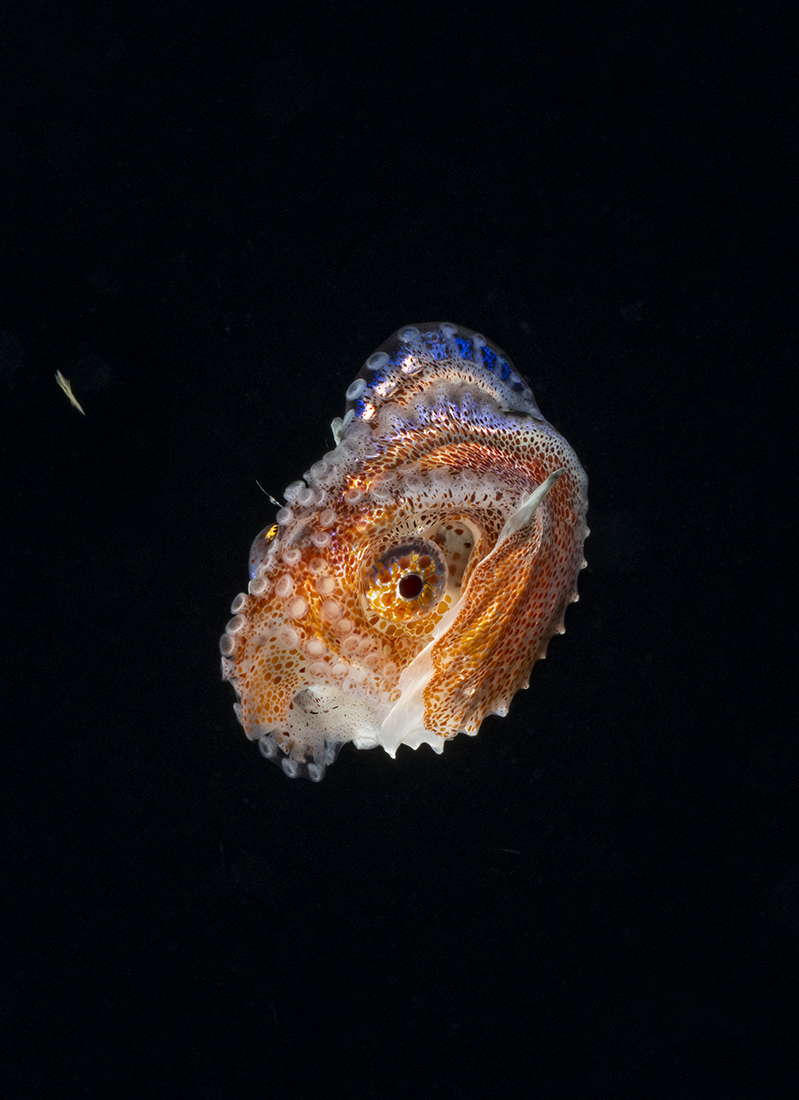
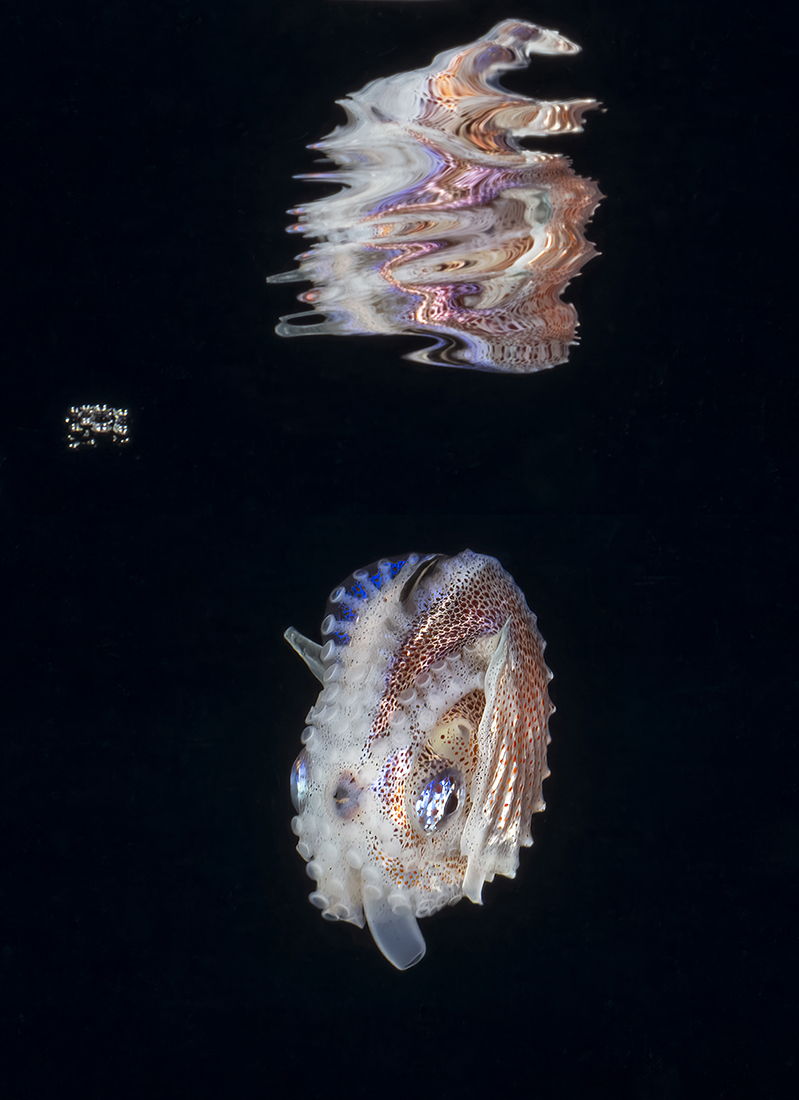
Since this was my first female argonaut with a well-developed shell, the number of shots I took was on the side of overkill. Afterward, anticipating that a high percentage would go in the trash, I was astonished to find that only 6 out of 252 images were out of focus — with two-thirds showing stunningly sharp detail. A testament to just how well the MFO-3 performs alongside the autofocus capability of the Nikon Z8 with the Nikkor Z MC 105mm f/2.8 VR S.
Once again, the MFO-3 proved just how capable it was across a wide range of macro shooting scenarios.
Final Thoughts
Nauticam’s development of the MFO-3 could not have come at a more appropriate time.
When all the major camera manufacturers (Canon, Nikon, Sony, etc.) pretty much completed their transition from full-frame DSLRs to full-frame mirrorless systems, it appeared that the once-revered mid-range macro lenses in the 50mm–60mm range were left behind. In their place, camera manufacturers as well as third-party lens creators invested heavily in developing a fantastic array of macro lenses in the 90mm–105mm range with rapid-response autofocus.
On paper, both Nikon and Sony developed a commendable 50mm f/2.8 macro lens capable of achieving a full 1:1 magnification ratio, but their acceptance among underwater photographers was less than stellar. The most notable factor was that both lacked internal focusing, causing the front element to extend nearly an inch to reach a minimum focusing distance of 6.3″/16cm. For my own macro photography tastes, this simply wasn’t satisfactory.
After giving the MFO-3 a rigorous run-through, not only did it perform as advertised, but I also found that choosing between a mid-range 60mm and my longer focal length 105mm before a dive was no longer a dilemma.
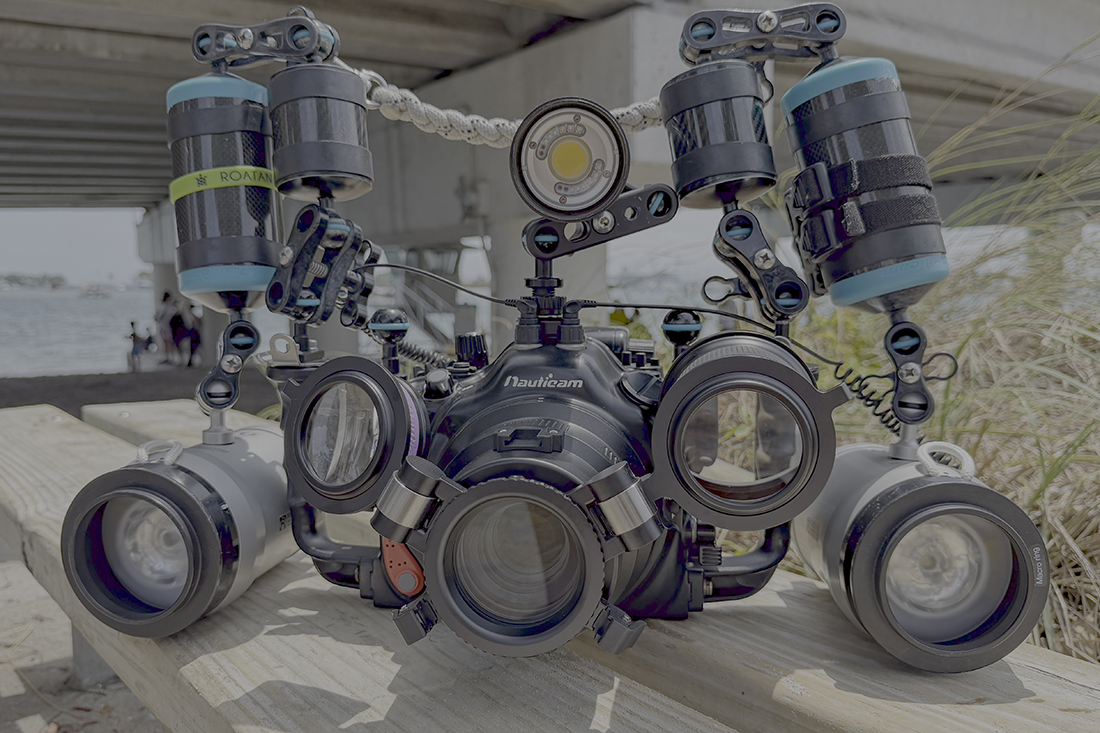
To top things off, using a double flip diopter holder, I now have the benefit of my SMC-3 lens providing a 2.3x magnification factor for shooting something as tiny as a hairy shrimp, along with the MFO-3 at the ready for tackling something the size of a basketball.
Who says you can’t have your cake and eat it too? For me, this new advancement in underwater macro photography is now so much more enjoyable.
