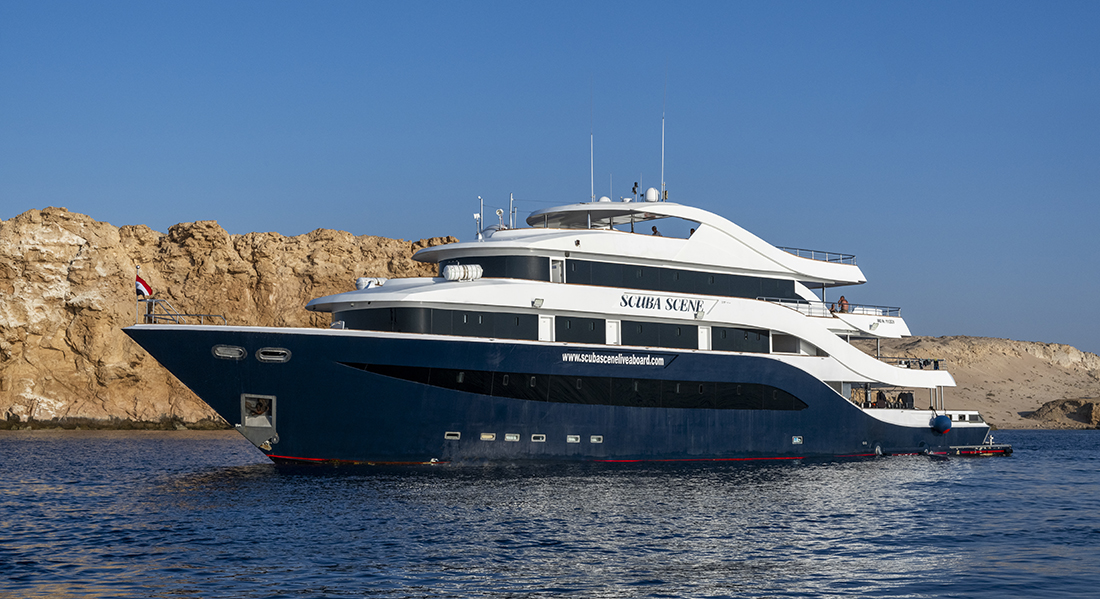
To state the overly obvious, the Red Sea is not red—unless, of course, you are referring to the vibrant, mesmerizing colors of its soft corals.
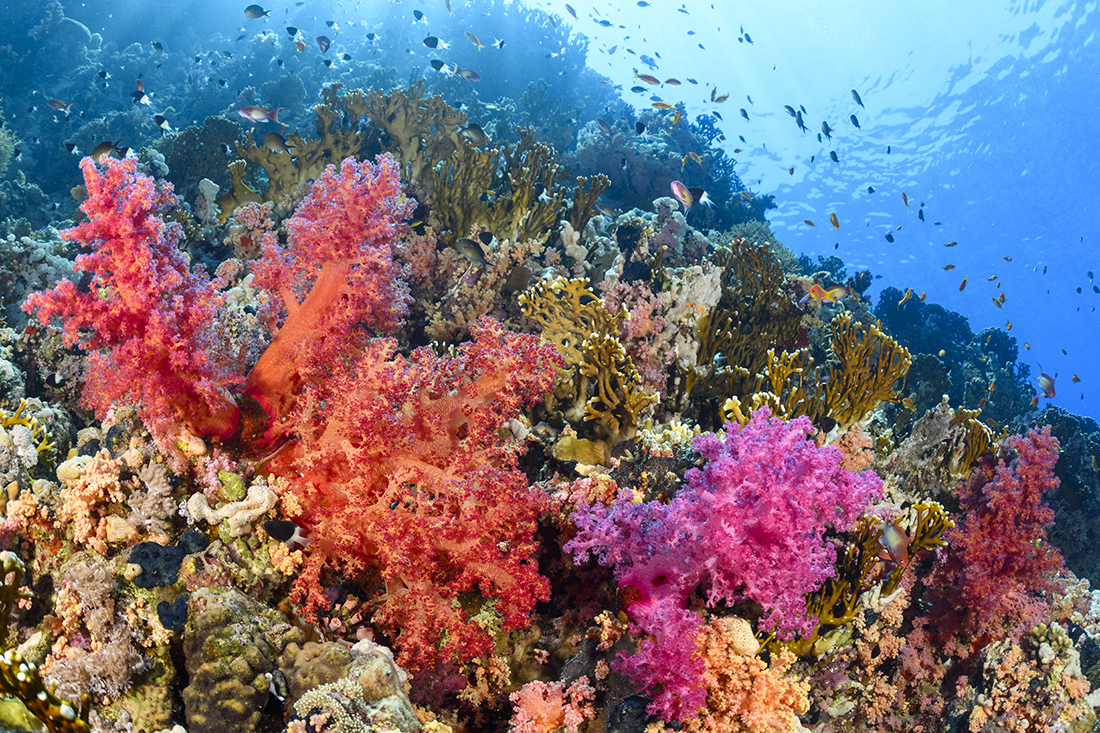
Not to be confused with hard corals—which possess the hard calcium carbonate skeletons associated with actual reef building—true soft corals (often called carnation corals) are highly flexible organisms looking more like psychedelic-colored broccoli or cauliflower. More specifically, true soft corals belong to the genus Dendronephthya, which comprises more than 250 described species spread across tropical and subtropical waters worldwide. Among the various locales known for displaying a wide range of shapes and colors, from the southwestern Pacific and the Indo-Pacific up to the Maldives, the Red Sea is a standout.
From personal experience traveling through regions like the Philippines, Indonesia, and Papua New Guinea, Fiji is widely regarded as the soft coral capital of the world. However, seeing so many clusters growing across the steep inclines of Jackson and Gordon Reefs, and even on wrecks like the Dunraven and the Carnatic, this region of the Northern Red Sea approaches a very close second. Being my first time in the Red Sea, I quickly learned that this vibrant underwater tapestry is just one of the many flavors this destination offers.
The Sinai Peninsula: Where Red Sea Diving All Began
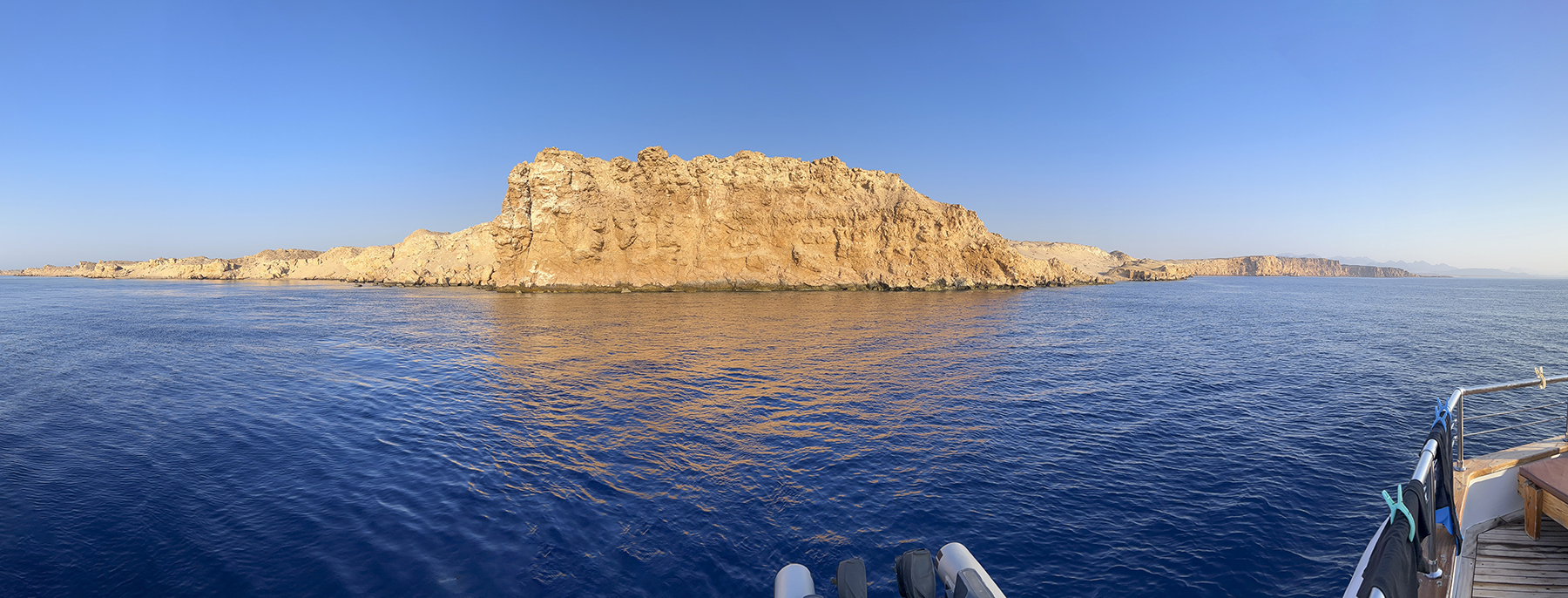
When this 13-day Red Sea Odyssey began aboard the Scuba Scene, we started down south out of Port Ghalib, spending the first two legs of the voyage exploring offshore reef systems from Elphinstone to Brothers. By our ninth day, we had reached the final leg of our journey in the region of the Sinai Peninsula, where, by all accounts, diving in the Red Sea truly originated.
Geographically, the Sinai’s inverted triangle landmass splits the Red Sea into two major directions: the Straits of Tiran leading into the Gulf of Aqaba to the east, and the Gulf of Suez on the western side leading to the Suez Canal.
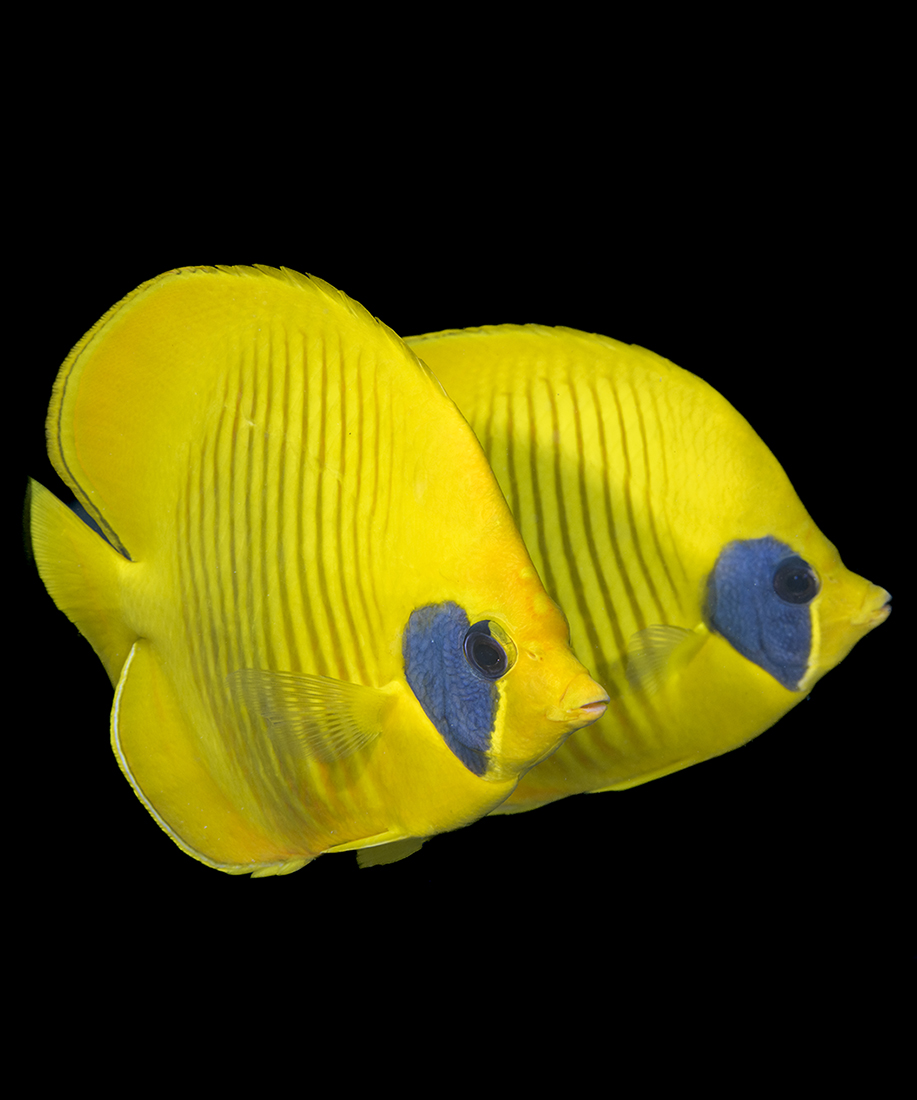
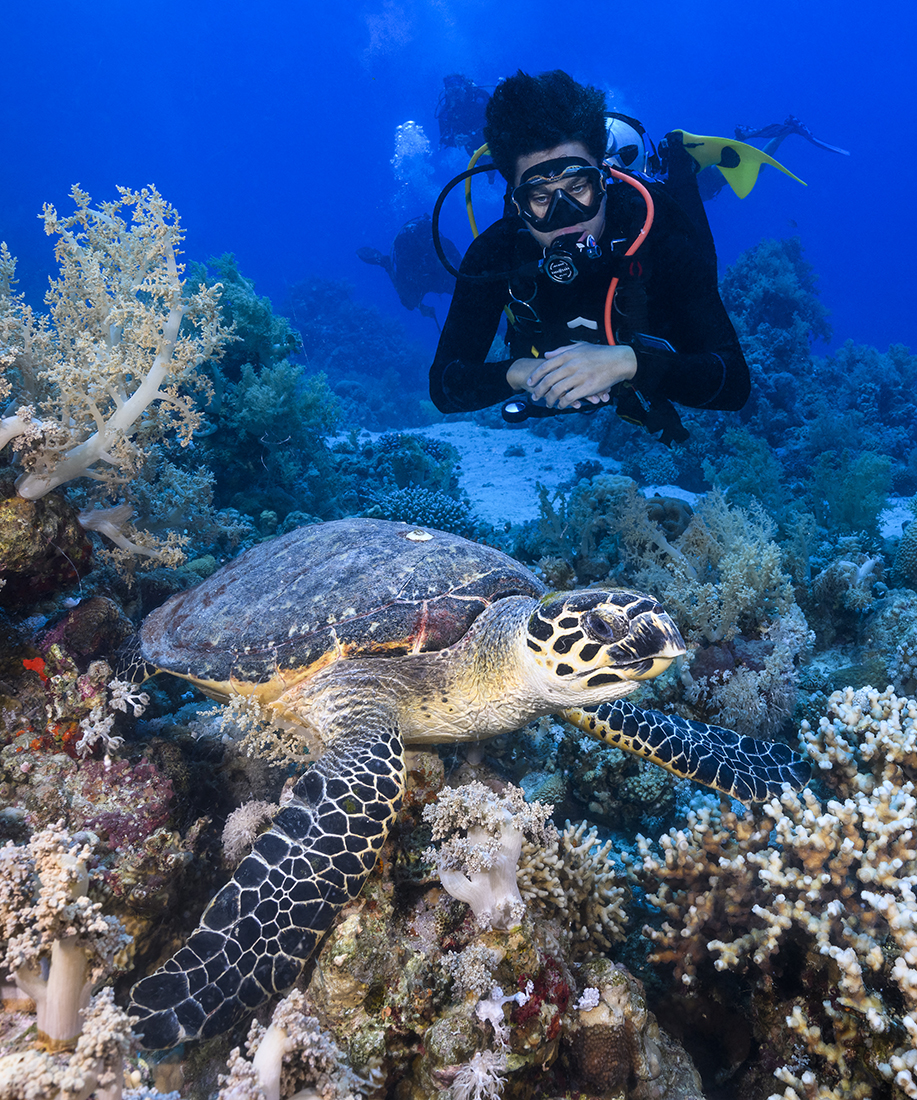
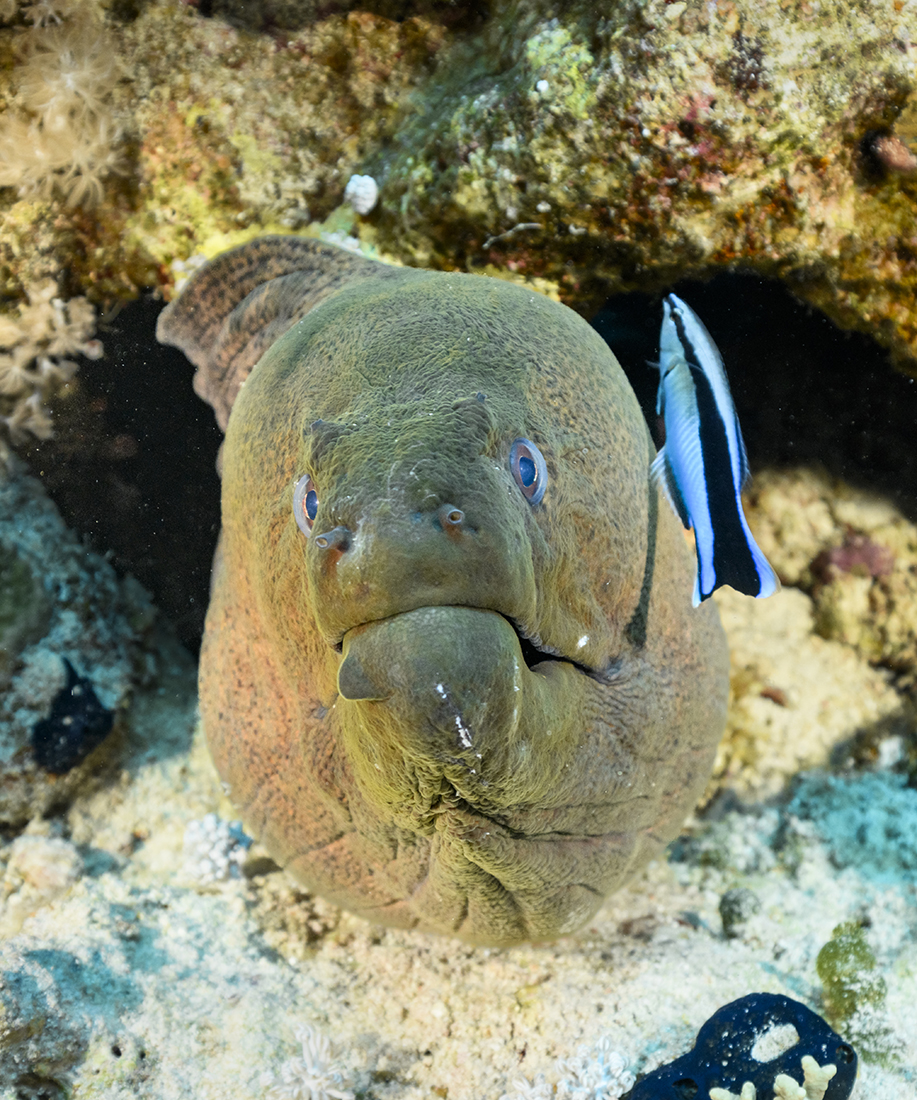
On the southernmost tip of the Sinai Peninsula is Ras Muhammad. When Israel returned ownership of the Sinai Peninsula back to Egypt in 1982, the Egyptian government moved quickly to protect the reefs of Ras Muhammad from fishing pressure and potential coastal development stemming from the nearby city of Sharm El Sheikh. In 1983, it was declared a full-scale marine park spanning 190 square miles (480 km²). While diving here, one cannot help but notice the huge flotilla of day boats heading out of Sharm each morning bound for the park’s protected inlet bays like Marsa Bareika.
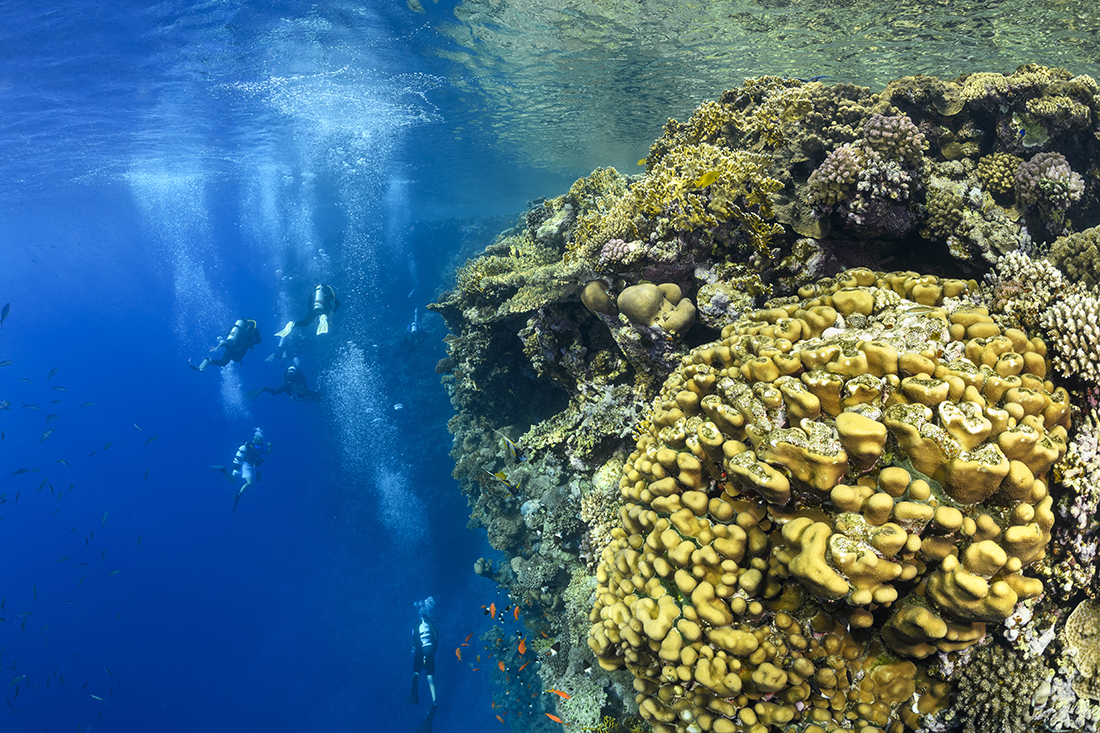
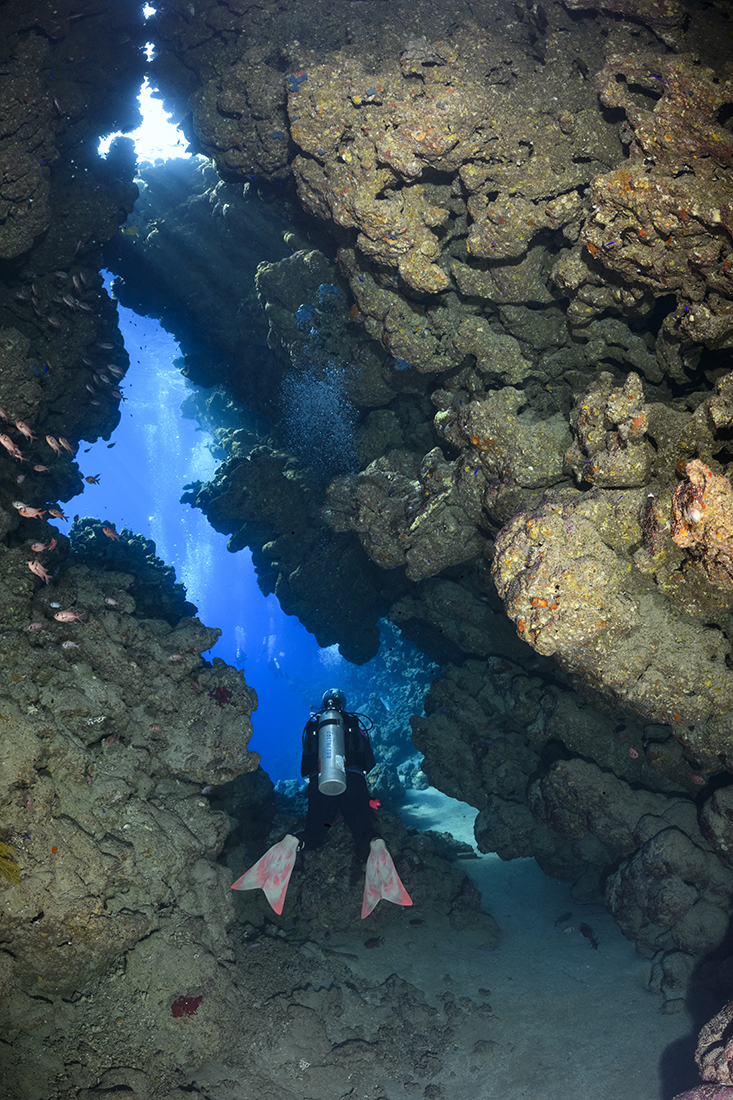
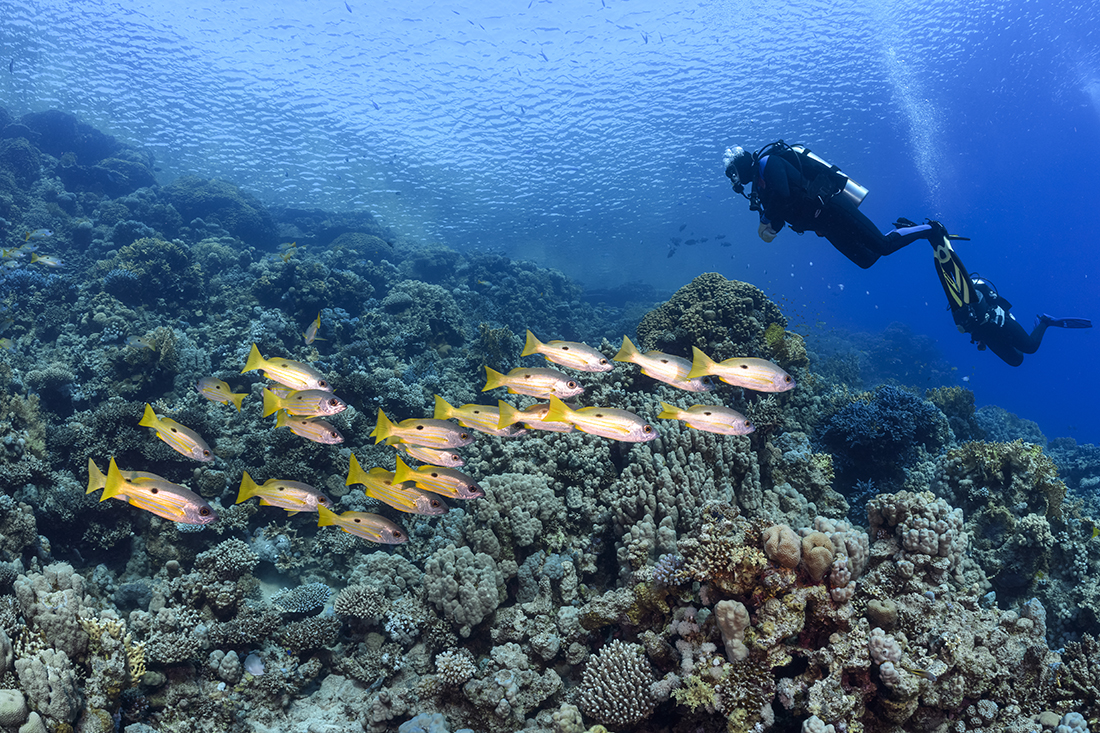
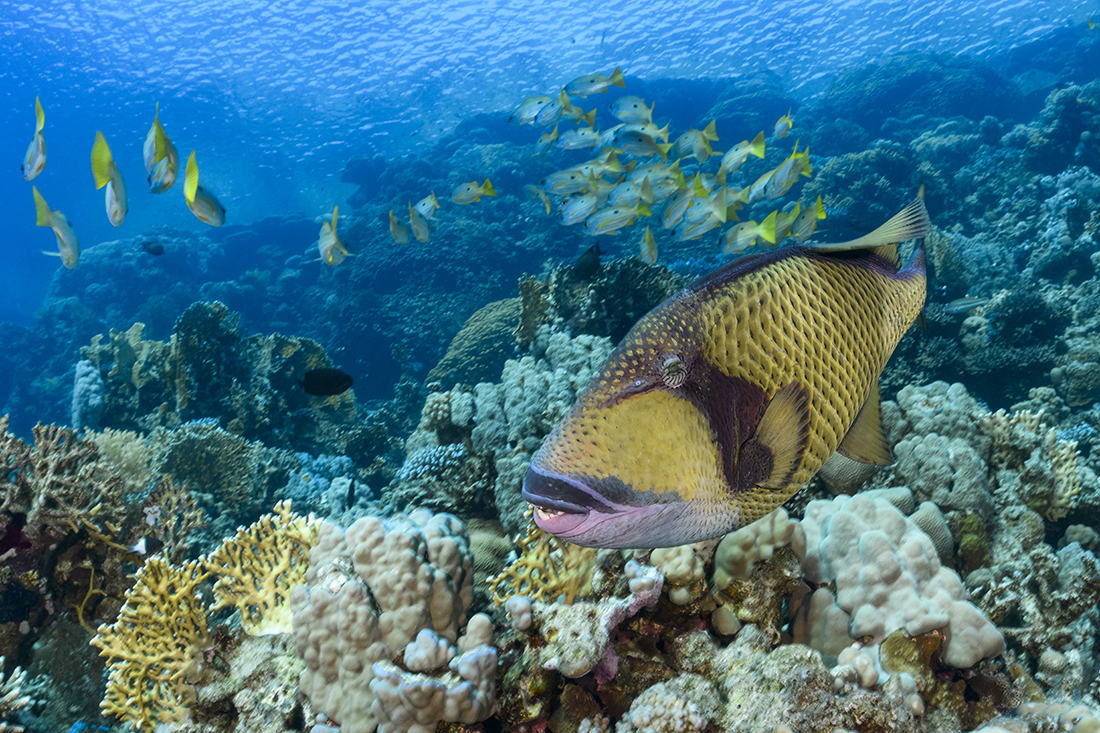
Comparing the north to the deep and central south, the south can be more about big animal encounters (sharks, manta rays, etc.) best seen during the winter months, while the north is more defined by its colorful reefs and historic wrecks.
From a visual standpoint, the diving at Shark & Yolanda Reef was an A-plus dive with highly rich coral growth and a steep wall starting just below the water’s surface. Adjacent to the wall is a plateau region featuring three small coral pinnacles adorned with colorful soft corals and abundant marine life. The reef gets part of its name from the Yolanda, a ship that met its unfortunate end hitting the reef in 1980.
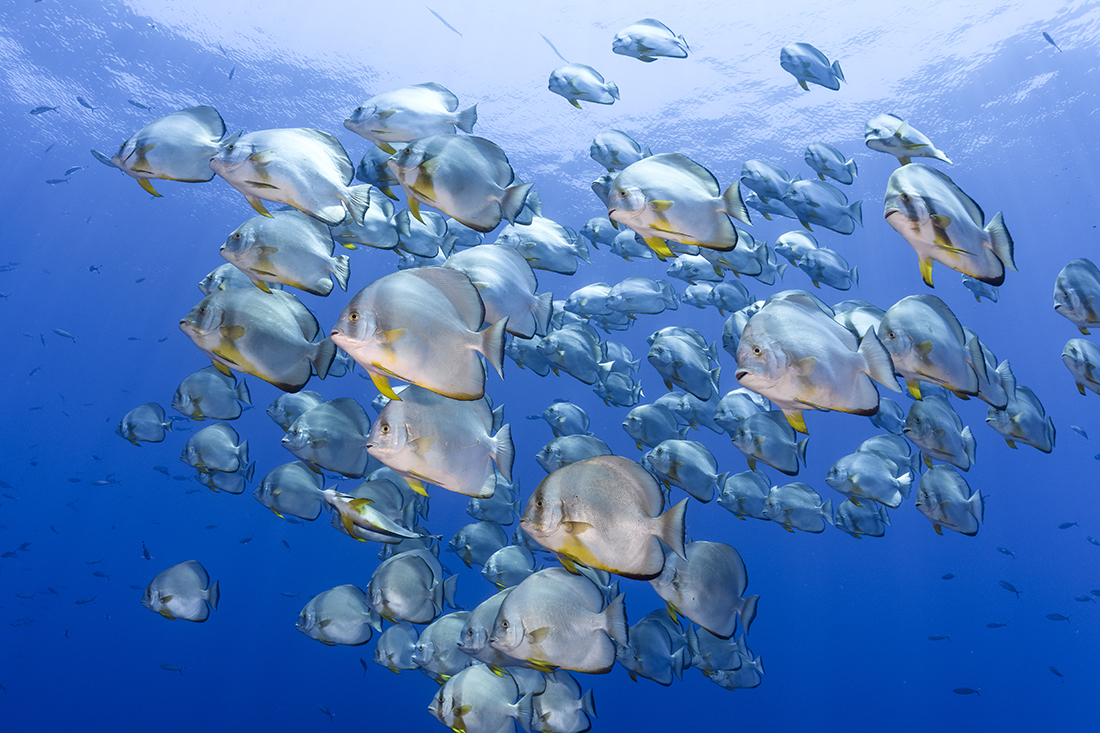
Among the Yolanda‘s manifest was a large shipment of bathtubs, sinks, and toilets. In a rather humorous note, when the wreck was pushed off the shallow shelf to a deeper place 180m down, it left behind a distinct pile of white porcelain toilets in its place. At the start of the dive, we saw resident Napoleon wrasses and blue-spotted stingrays, but the highlight was a huge school of bluespine unicornfish (Naso unicornis) milling about like a spawning aggregation. The fishiness continued all the way to the end with a large school of Orbicular spadefish (Platax orbicularis), commonly referred to here as batfish.
The Currents of the Straits of Tiran
For the Red Sea’s colorful best, one must visit the reefs in the middle of the Straits of Tiran. To understand why, one must consider the geography: the straits between the Sinai Peninsula and Tiran Island are geographically narrow and relatively shallow. As a result, the tidal movement between the Red Sea and the Gulf of Aqaba is forced through a natural bottleneck, creating strong currents that, in turn, generate nutrient-rich upwellings that both fish and corals feed upon.
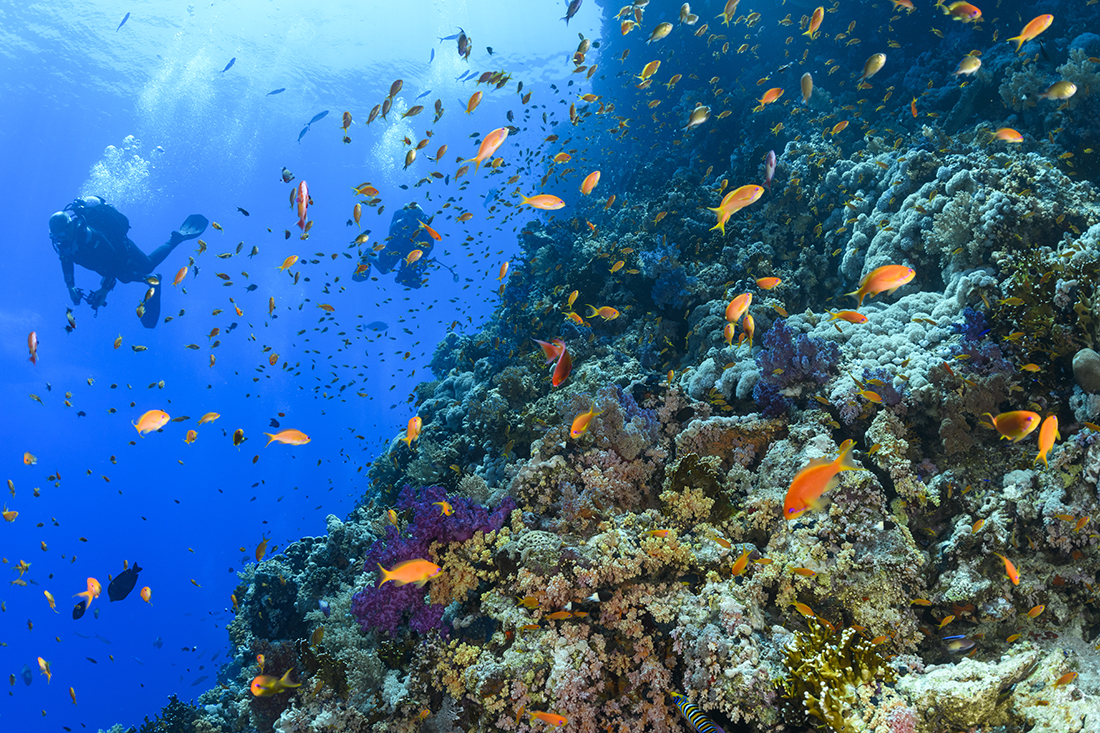
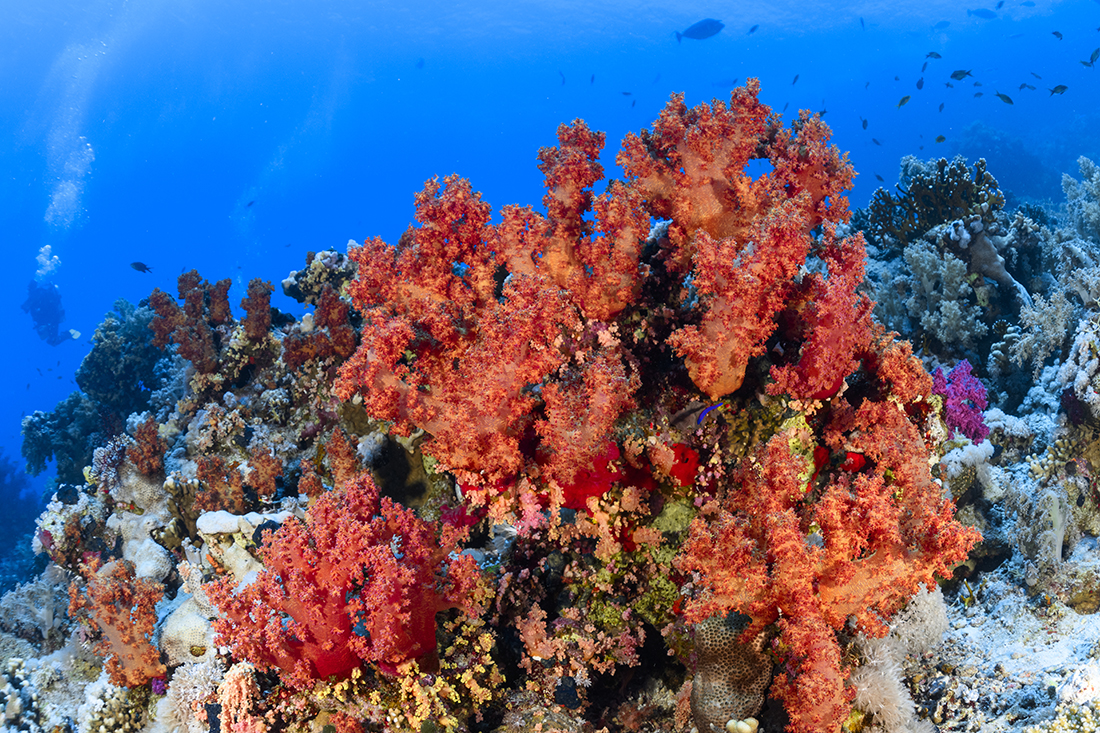
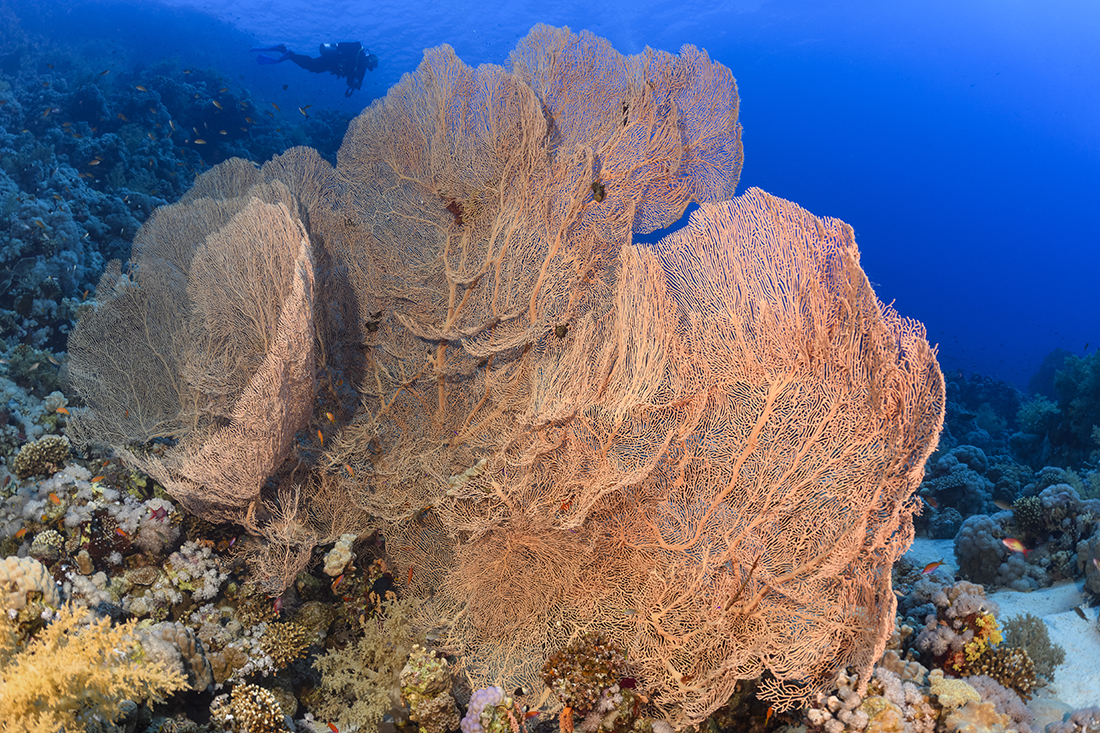
Within this passage lie four distinct reefs known as Jackson, Woodhouse, Thomas, and Gordon Reefs, rising from the depths and topping out just below the surface. Between the strong currents and the surprisingly clear water, these reef systems make for world-class drift dives with spectacular colonies of soft corals and sea fans adorning many parts of their steep reef fronts and walls. During my dives on Jackson and Gordon, I maintained my habit of keeping one eye fixed on the blue, searching for a passing hammerhead, manta ray, or eagle ray.
The Wrecks of the North
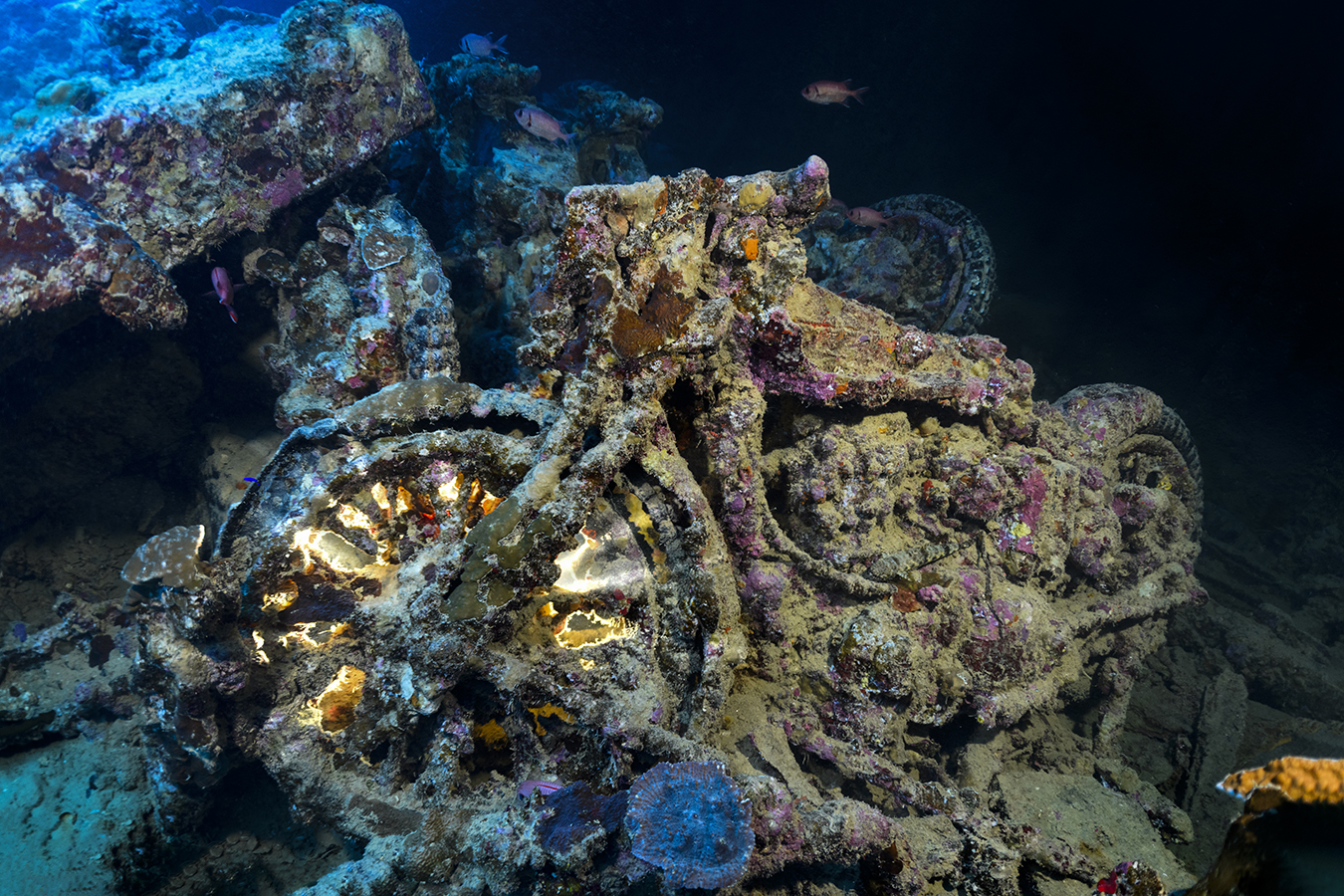
When it comes to the iconic shipwrecks of the Red Sea, the SS Thistlegorm is right at the very top. Measuring 415 feet (126.5 m) in length with a broad 58.2-foot (17.7 m) beam, this massive British cargo ship was running supplies for the British army during the Second World War. While enroute up the Red Sea to the Suez Canal, loaded with armored vehicles, motorcycles, guns, ammunition, aircraft parts, and two LMS Stanier Class 8F steam locomotives, the Thistlegorm was intercepted by a German Luftwaffe on the night of October 5th, 1941. Two 2.5-ton bombs struck near the stern where the bulk of the ammunition was held, sinking the vessel almost instantly.
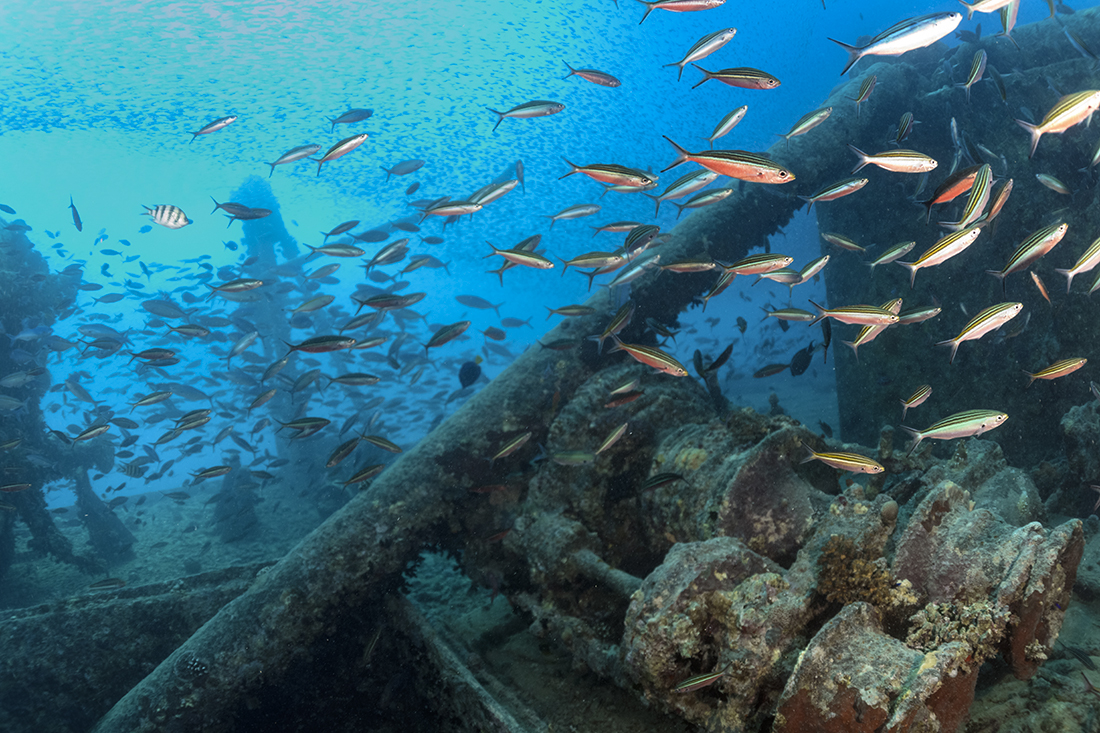
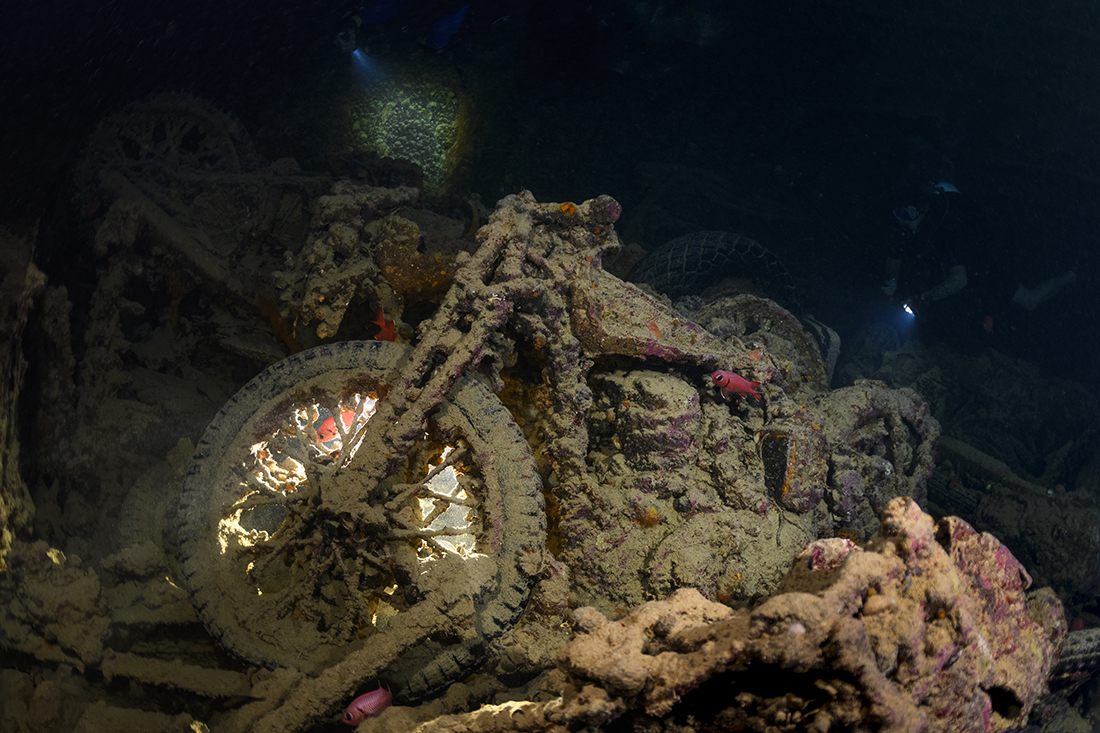
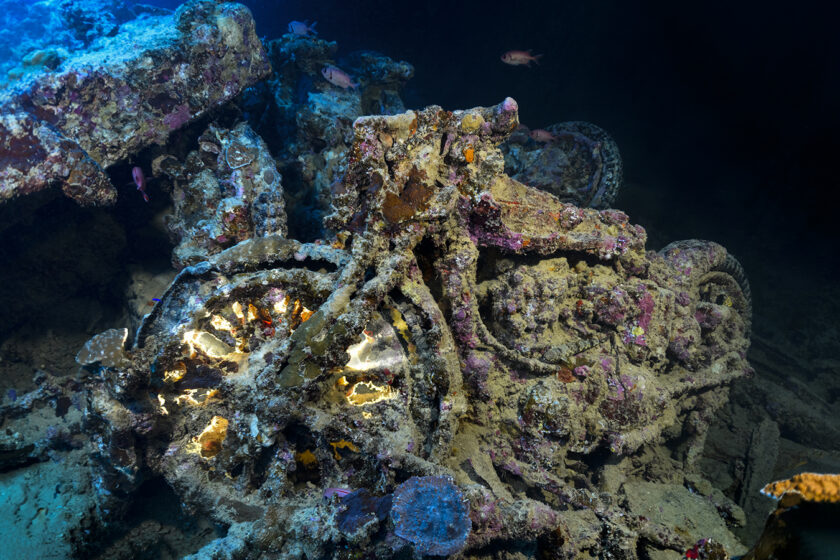
Lying in 100 feet of water, most of the cargo remained secured within the ship, the major exception being the steam locomotives which were blown off the deck cargo to either side of the wreck. Down in the forward hold, divers will find trucks, numerous crates each loaded with four motorcycles, aircraft wings, and radial engine parts. For anyone with a camera, a dive on this historic WWII shipwreck is incomplete without a few snaps of the iconic motorcycles. Yes, the lighting is tricky, but some of the motorcycles stand somewhat upright, making for an interesting subject matter.
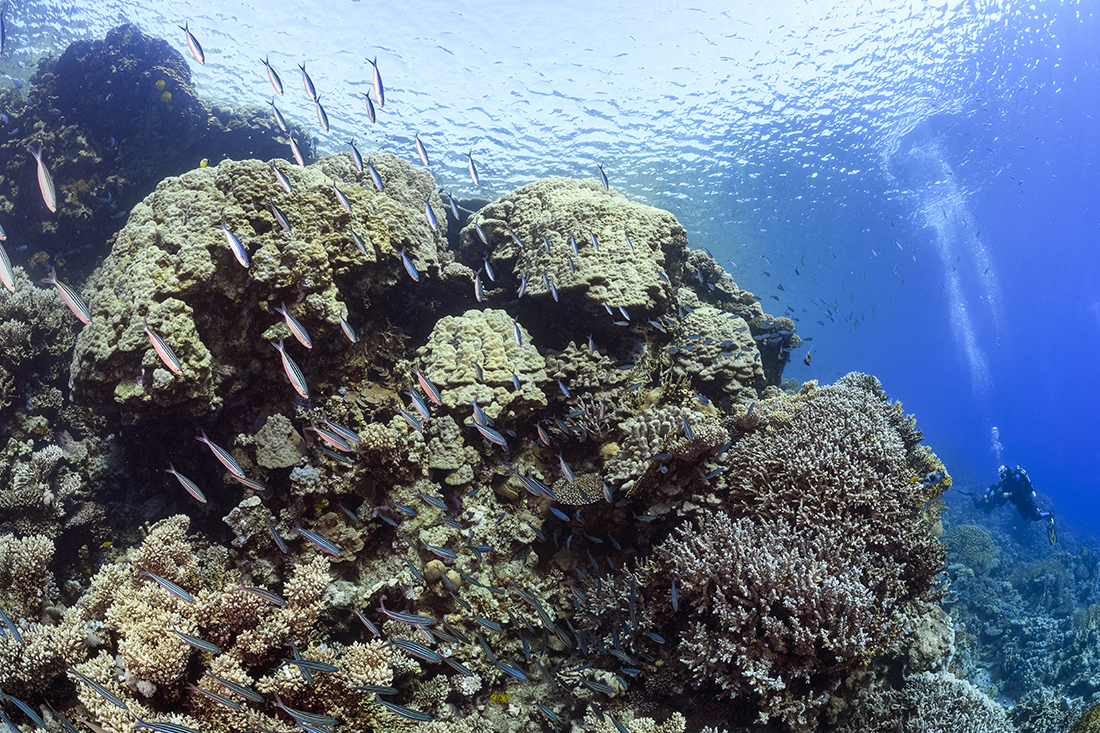
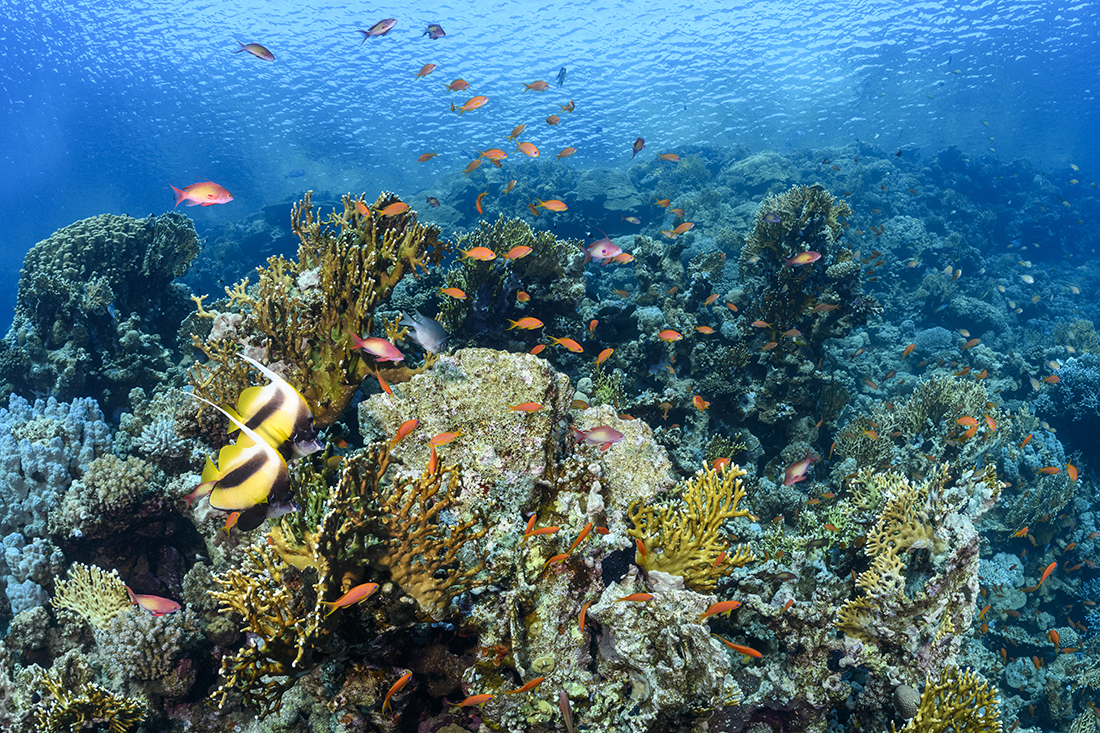
The unwary nature of the Red Sea’s coral topography is best exemplified by the reef of Shaʽb Abu Nuħas, a triangular-shaped coral reef northwest of Shadwan Island off Hurghada. Coming up to within mere inches from the surface as a broad plateau, the reef creates a serious navigation hazard due to its position in the shipping channel at the mouth of the Gulf of Suez. The number of ships this reef has claimed is astounding, with evidence of at least seven shipwrecks, five of which are famous dive sites, including the SS Carnatic (sunk in 1869), the Kimon M, the Chrisoula K, and the Giannis D. The name Shaʽb Abu Nuħas is Arabic for “reef of father of copper,” derived from a cargo ship that sank with a load of copper.
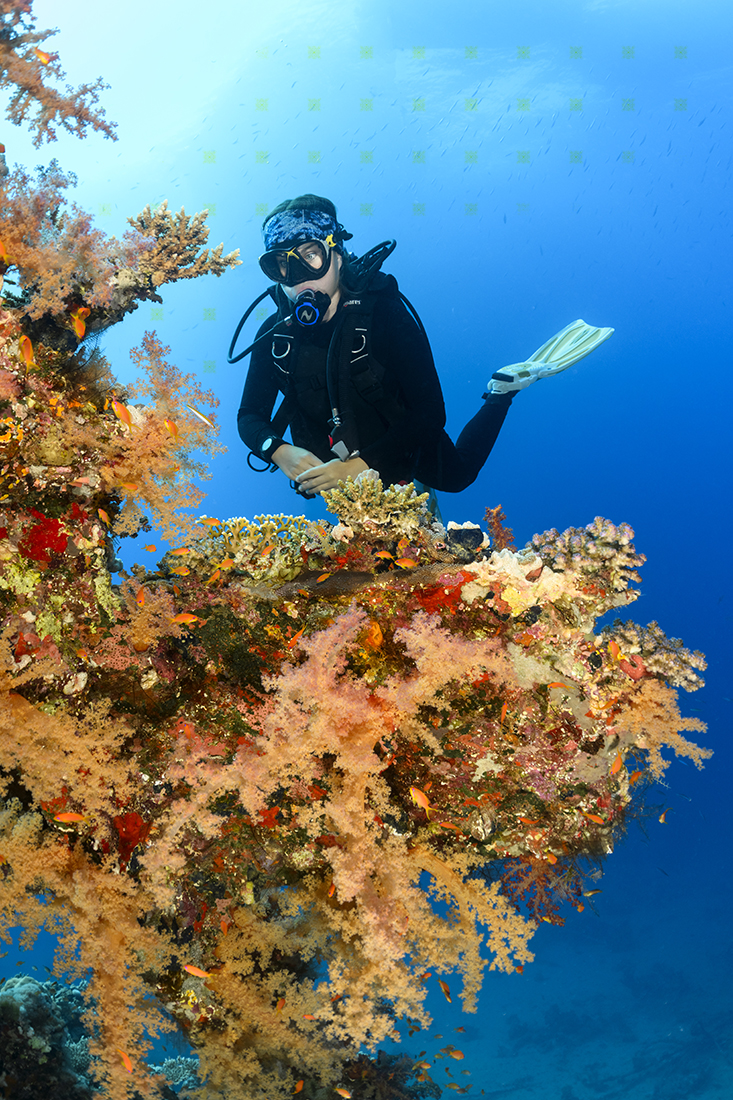
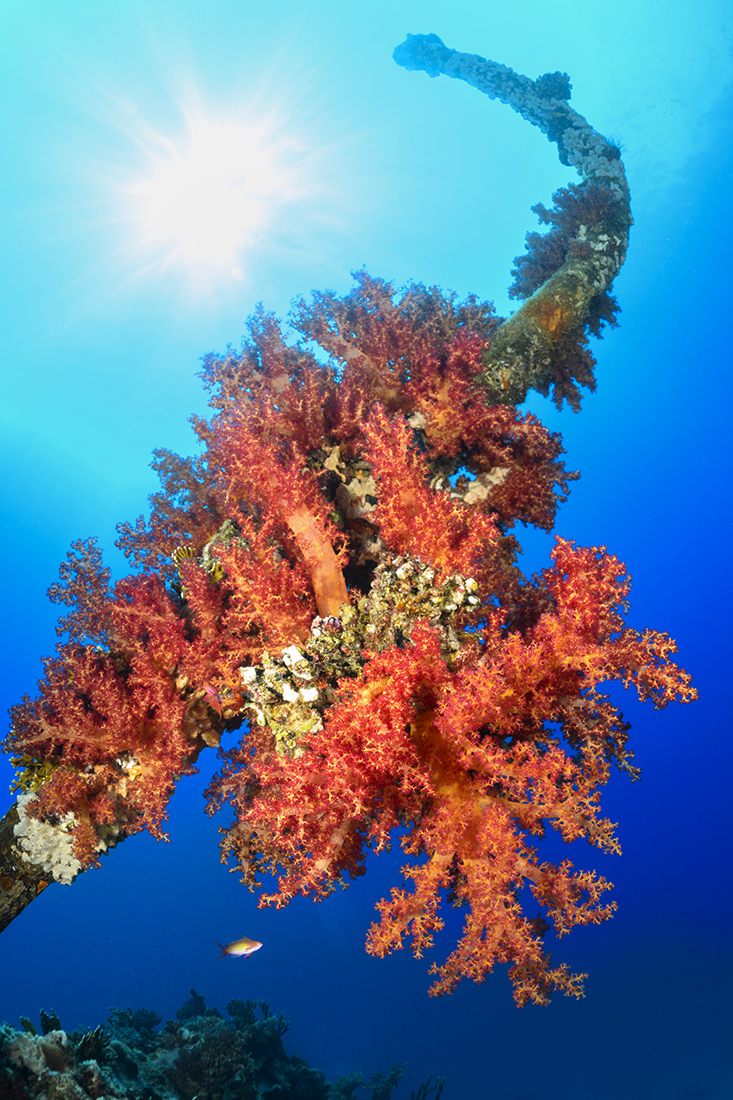
The Scuba Scene‘s schedule only allowed for one wreck dive here, and we moored up to the Carnatic. This ship is one of the oldest in the Red Sea and a local favorite among divers, as the 295-foot (90m) British cargo steamship is splendidly covered in soft coral on the remains of her steel skeleton. The Carnatic‘s demise began when it ran straight into Shaʽb Abu Nuħas on September 12th, 1869. Taking on water and strained by being trapped on the reef, the ship began to break in two, eventually rolling down the side of the reef.
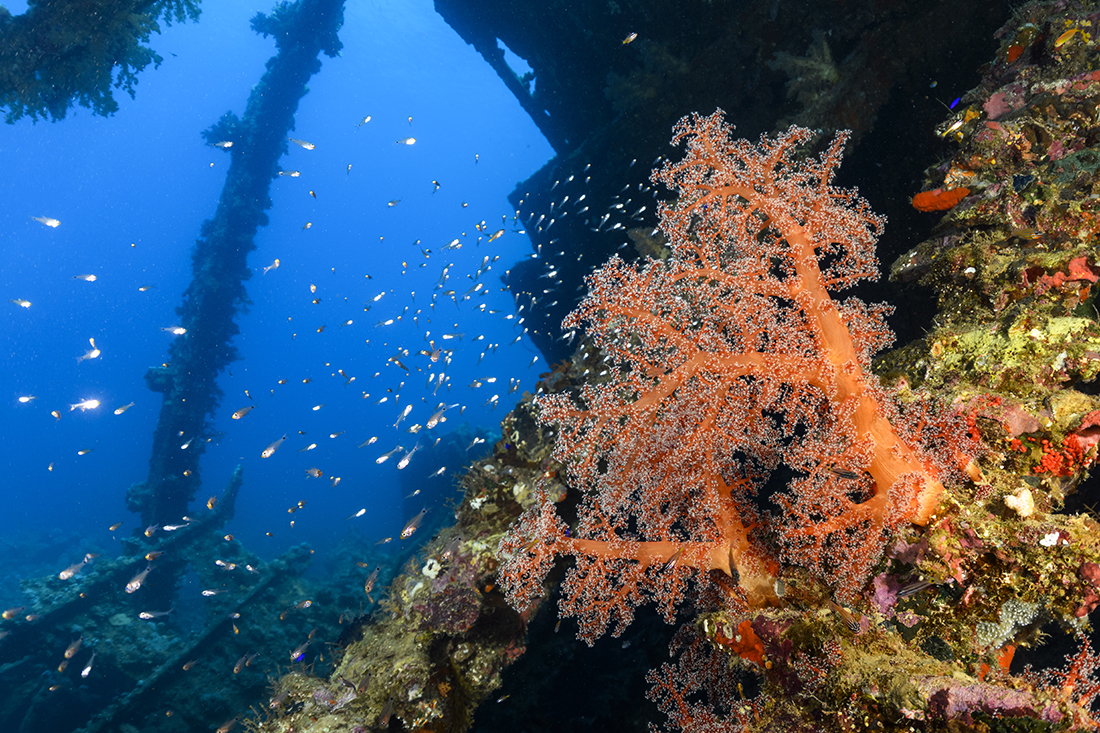
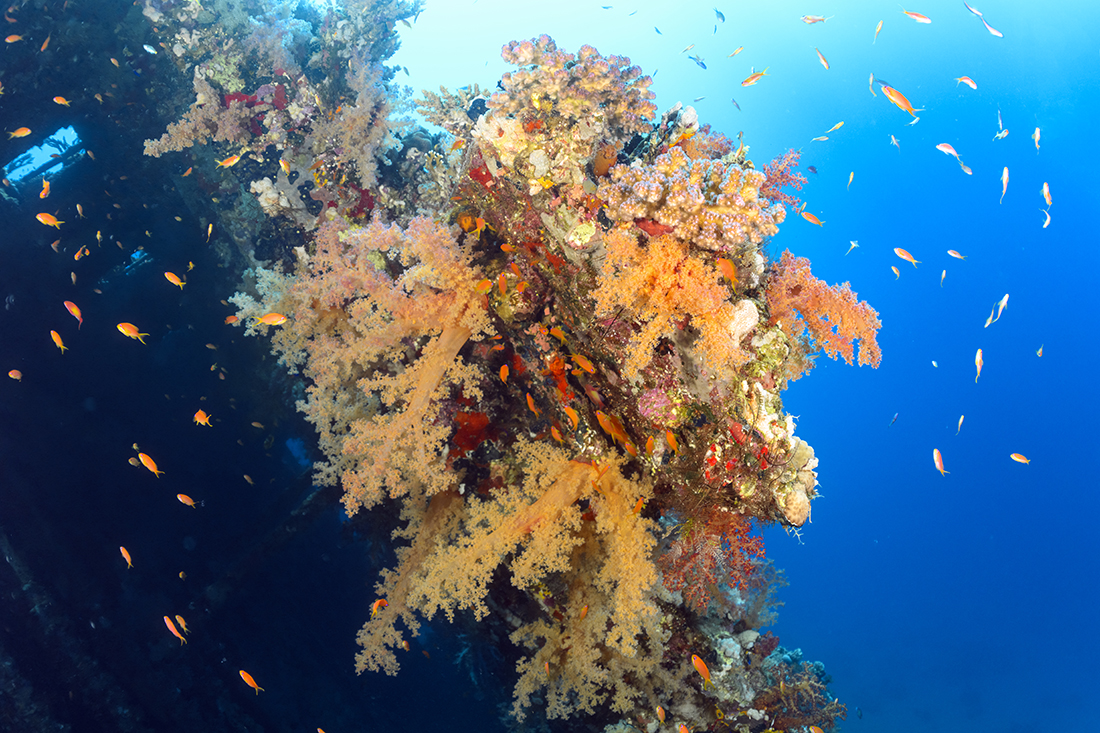
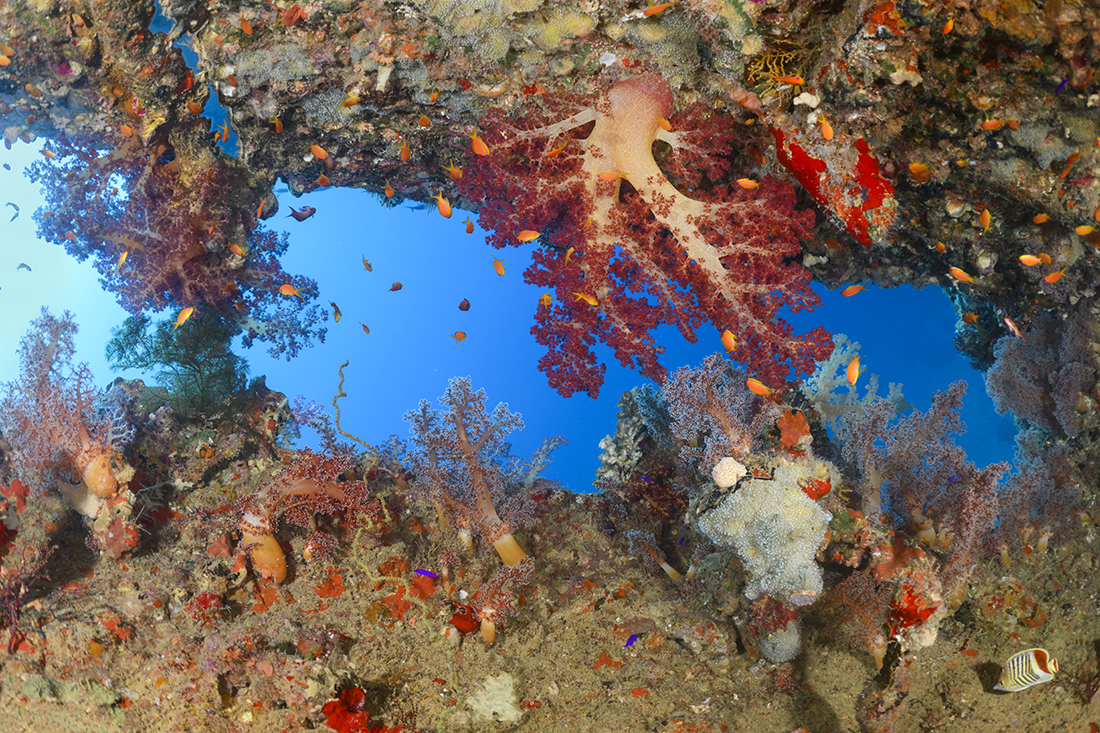
Today, the Carnatic rests on her port side parallel to the reef at a depth of 85 feet (26m). With the wooden superstructure and decking long rotted away, her steel hull’s iron cross-members look like the rib bones of some monstrous leviathan. For photos, the stern region of the wreck, from its lifeboat davits to its huge rudder and propeller, featured the richest amount of soft coral.
Coming to the End of Our Sea Voyage
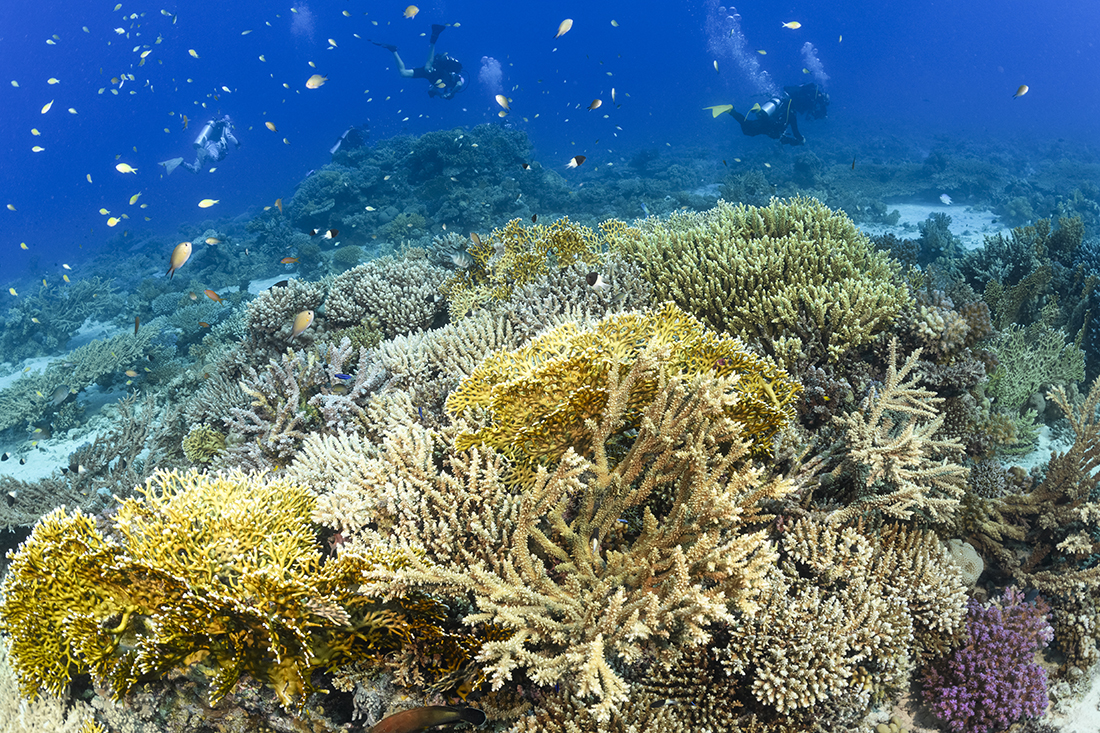
Upon our last day, the Scuba Scene made two more stops at Shaab El Erg and Carless Reef before making port in Hurghada. Shaab El Erg Reef, also known as Dolphin House, is famous for hosting large groups of spinner dolphins (which, unfortunately, did not arrive the day we were there). However, the reef’s channel and southern-facing open end featured the richest garden of hard corals I had seen the entire trip.
My takeaway from this incredible two-week odyssey, traveling through the Red Sea’s deep south up to the Sinai Peninsula, was that it was but a taste of what the destination has to offer. My steadfast rule regarding travel is that I like to visit each place twice; the second time, to apologize for what I missed or got wrong the first time there.
Before my departure to this side of the world, several of my close diving friends questioned my choice in going due to the questionable reputation of some of the region’s dive liveaboards. While the number of bad or even fatal mishaps have been significant, you cannot paint the entire industry with one broad brush stroke. There are some 70 liveaboards in operation in the Red Sea. After seeing a few of them up close, the idea of ever stepping aboard some of the older, top-heavy vessels was out of the question. However, I also got a good look at others that appeared to have good quality construction and were well-maintained.
My sage advice remains: Know the vessel and its operator’s reputation before you go. While All Star Liveaboards is an American-based live-aboard promoter, they thoroughly vetted the construction and operation of the massive 159-foot Scuba Scene before promoting it under their brand. Having just made my first venture into the Red Sea, I honestly feel they made a good choice and readily look forward to the next adventure with All Star Liveaboards.