
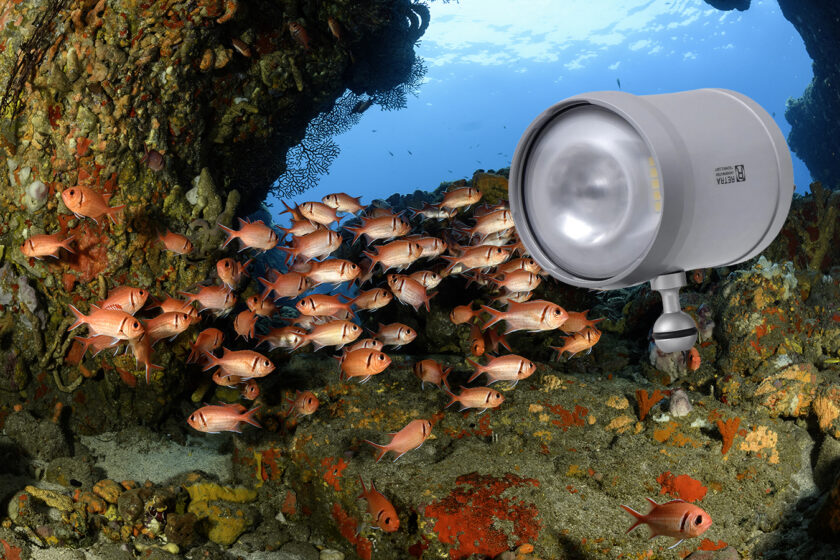
Taking an immersive look at Retra UWT’s current underwater flash and video light hybrid workhorse, the Maxi.
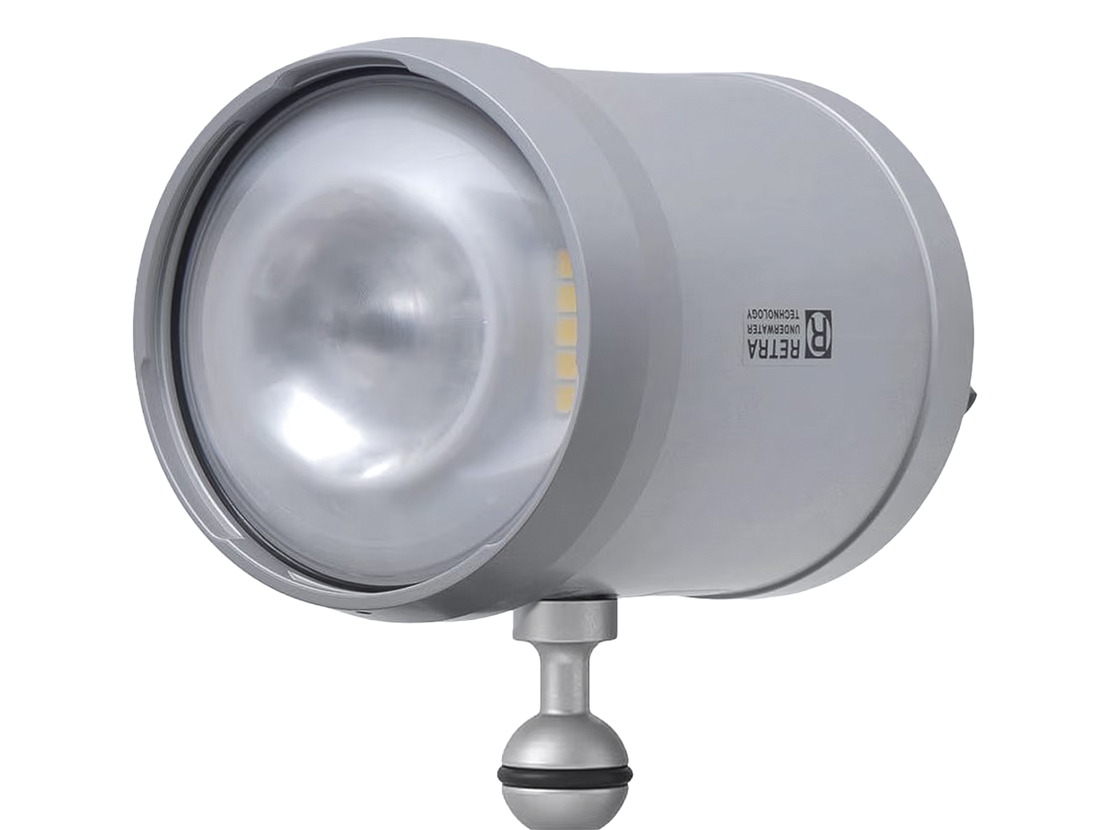
A lot has transpired since my last review of the Retra Prime back in November 2020.
Since then, I’ve found my way to Retra UWT’s Maxi, a newer high-performance underwater flash that offers a winning combination of impressive lighting capability, power and build quality at a competitive price.
In addition to delivering nearly twice as many full-power flashes as Retra’s Pro Max II, with a Guide Number (GN) of 46, the hybrid model includes an integrated 6,000-lumen video light.
Currently, the only other strobe with features comparable to the Maxi is Backscatter’s Hybrid Flash, the HF-1.
If you were to describe it as the makings of a serious workhorse for underwater photography, calling it a Clydesdale would be the appropriate label.
As a highly avid underwater photographer, what I choose for equipment often turns into a rather weighty subject. Regardless of what camera, lens or housing you have, in my mind nothing is more essential in underwater photography than a good lighting system. My decisions on an underwater flash are largely based on which one offers the best quality of light, with enough punch, beam spread and the right color temperature for wide-angle imagery.
By 2024, I had upgraded from my Primes to Retra UWT’s newest offering at the time, the Pro Max, a wonderful model that delivered 140 Ws of energy with a native color temperature of 4900K, rendering a beautiful, soft 120º beam spread with very gradual light fall-off.
The Pro Max has since been replaced by the Pro Max II, which is basically the same strobe (a 120º beam at 4900K) with a power boost to 190 Ws.
Brothers From Another Mother?
Doing a quick side-by-side feature comparison between the Pro Max II and the Maxi, which was released in early 2025, the popular idiom “brothers from another mother” comes to mind.
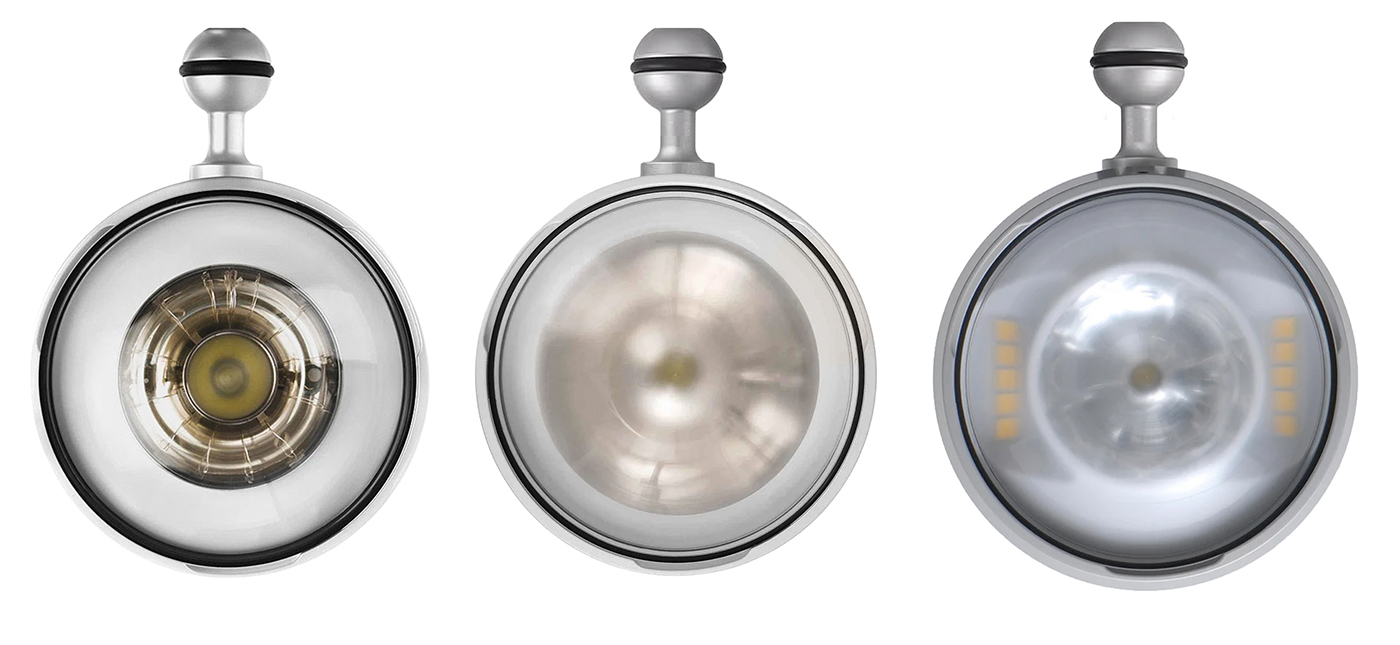
Except these two are in fact true siblings. They share the same bayonet mounting system for diffusers, reduction rings and the Light Shaping Device (LSD); the same compact form factor, with a housing made of marine-grade aluminum; and, most of all, a circular flash tube (albeit a little smaller on the Maxi) with a modeling light built into the center.
The most glaring difference is that the Maxi is powered by two off-the-shelf 21700 lithium-ion batteries. That’s somewhat of a surprise coming from Retra UWT, which previously shunned the idea of using Li-ions in its strobes. It’s a topic I will get into later.
Hands On With the Maxi
After looking into the possibilities, the hybrid version of the Retra Maxi offered, I made the choice to invest in a pair of these powerhouses.
Using my prior Primes and first-generation Pro Max strobes as a baseline, the build quality of the Maxi did not disappoint. The housing is CNC-milled from a solid block of aluminum, a choice that works as a much better heat sink than plastic for dissipating heat from the strobe’s flash capacitors, in addition to withstanding pressure at depth. For aesthetics, the Maxi is given the same satin silver finish as all my previous Prime and Pro Max strobes.
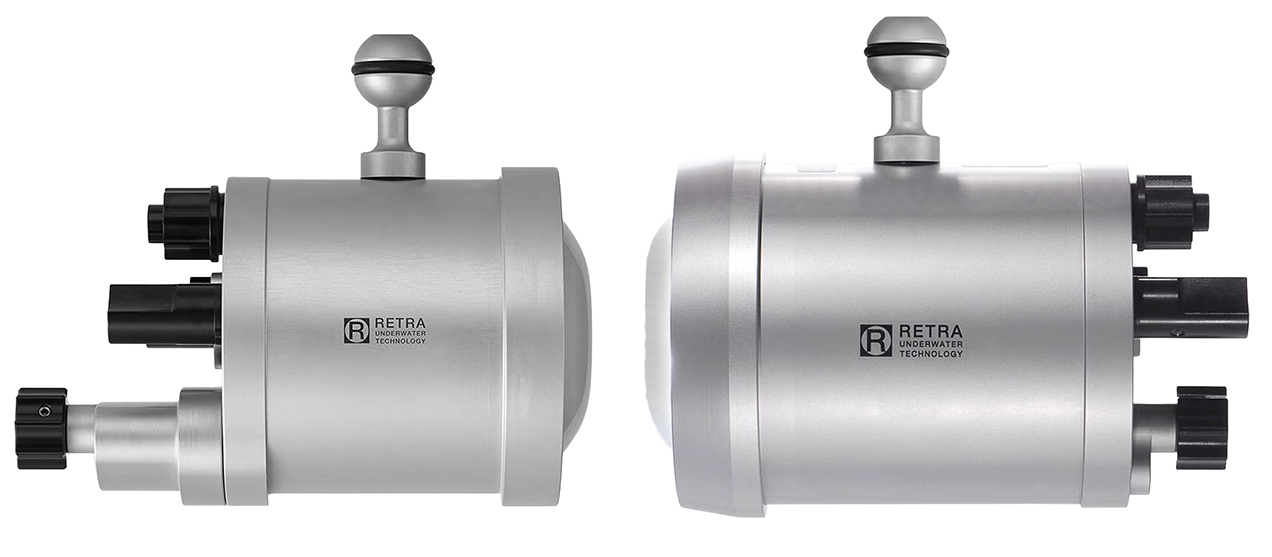
Face to face with the Pro Max and its battery booster, the Maxi is close in size, but with a cleaner, symmetrical look. Like on my Retra Primes, the battery door sits flush with the rear panel instead of jutting out as it does on the Pro Max.
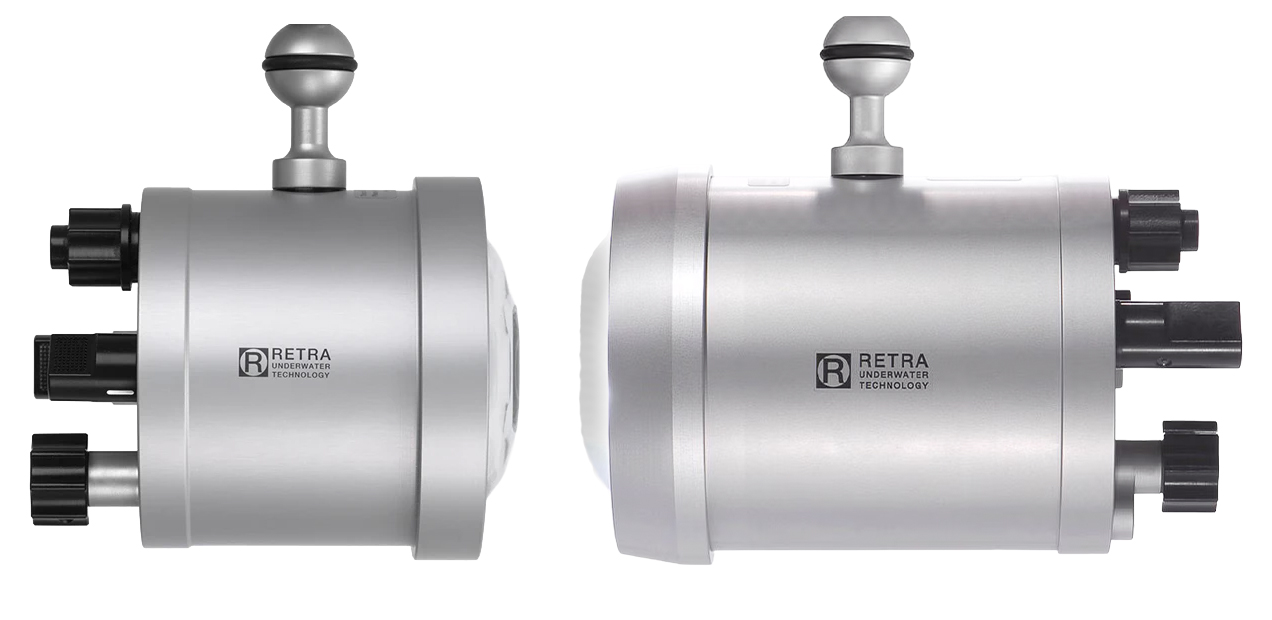
It is a good deal bigger (45mm longer) and heavier than my Primes. Yet thanks to that additional volume, the Maxi comes in just shy of neutral buoyancy, at 20 g / 0.7 oz in the water, compared to 160 g / 5.6 oz for a Pro Max II loaded with 8 AAs. That makes it noticeably easier to handle underwater.
Like every other Retra model, the Maxi is fully compatible with all of Retra’s flash accessories (diffusers, macro rings, LSD optical snoot). Settings like HSS, TTL and manual modes are customizable via the Retra UWT app, which also handles firmware updates and diagnostic checks.
At the Controls
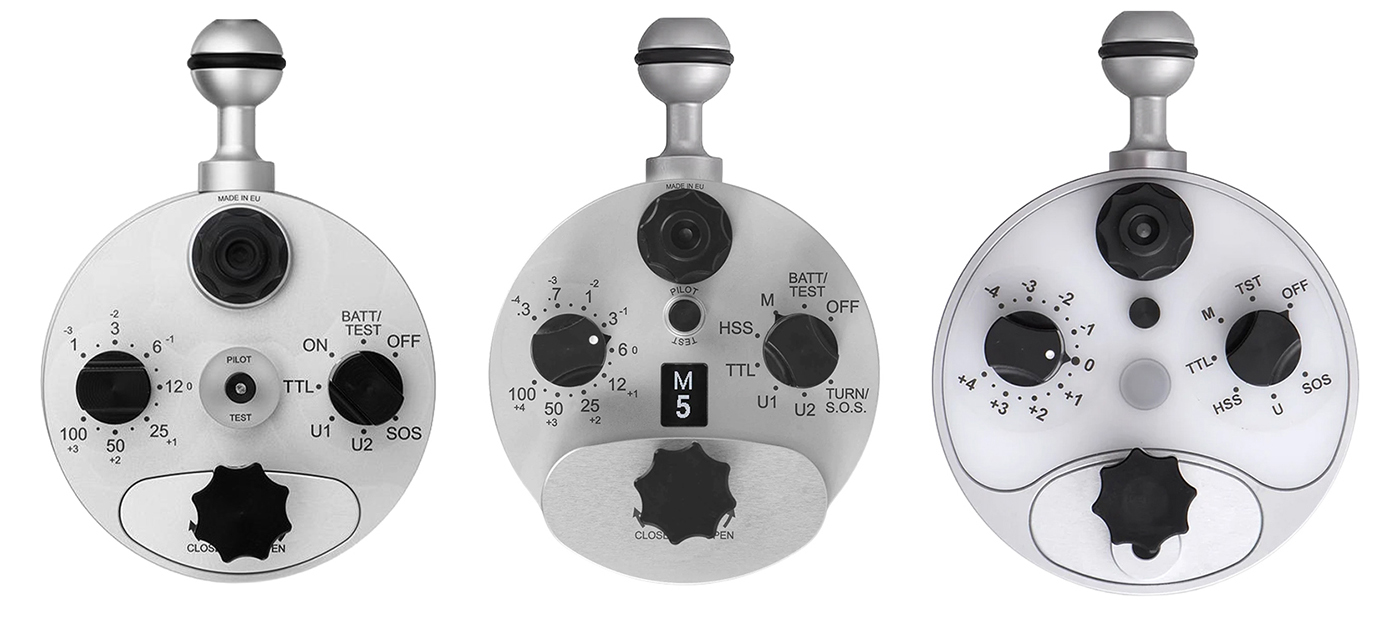
The Maxi’s Power Level and Mode dials are in the same place as before, so no refamiliarization needed there. Also nice, the Maxi retains the same tactile click-stop movement whenever a change is made to either dial.
In place of the small LCD screen on the rear of the Pro Max/Pro Max II that shows power, mode and battery level, the Maxi features a backlit panel that illuminates the entire area between the power and mode dials.
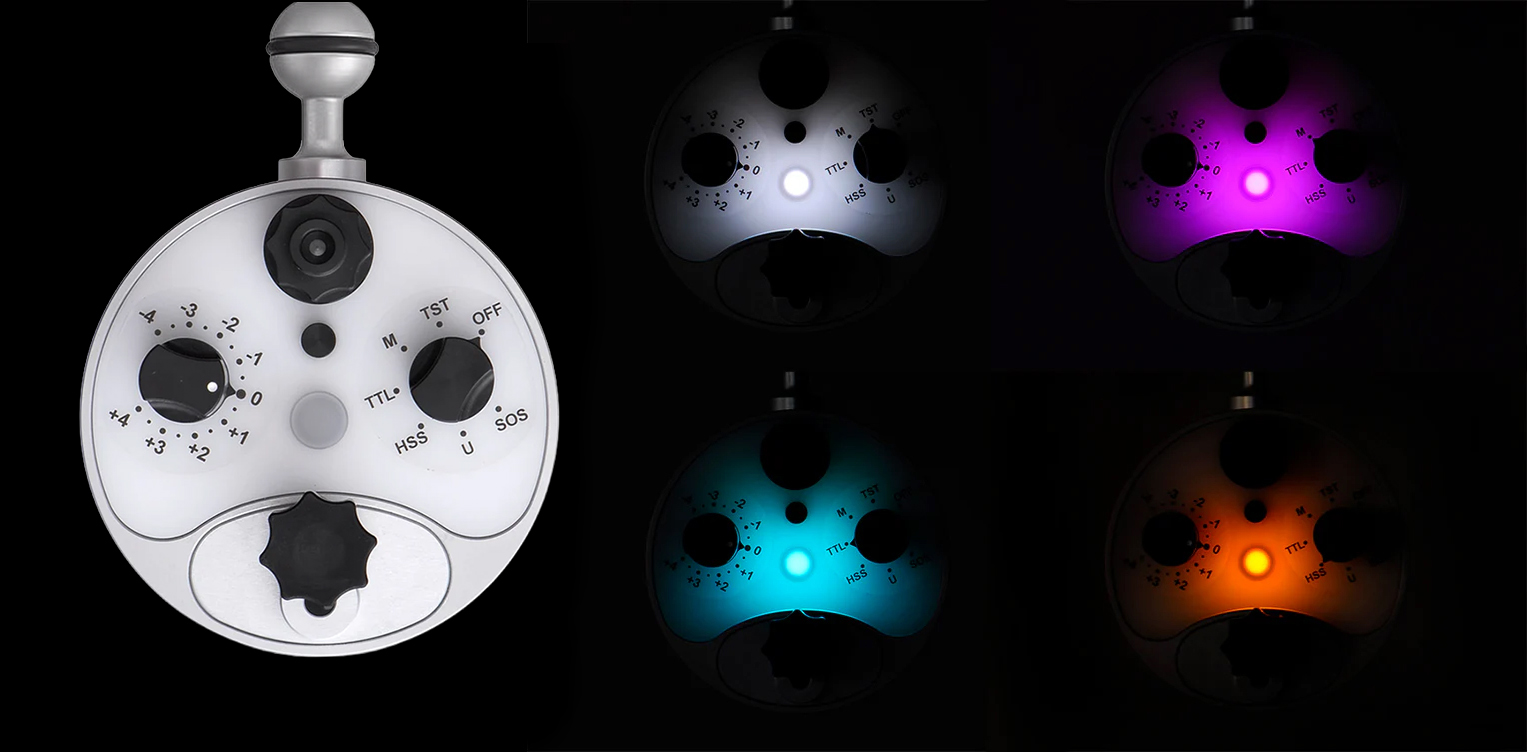
When the mode dial is switched to Test/On (TST), the panel glows white, with the middle LED displaying the battery charge level: green for full, yellow for half, red for low. From there, the illumination turns purple when switched to M (manual), blue for TTL, orange for HSS, and back to purple on U for video light operation in the hybrid model.
Do I like this arrangement on the Maxi? Absolutely!
Between the two, this new approach does a way better job, particularly in the dark, such as on blackwater dives, providing enough illumination for me to easily see and read which mode and power setting I have in place.
The Pilot Light
This is as good a place as any to mention the Maxi’s built-in 400-lumen modeling light.
Retra calls it a Pilot Light; others will likely see it as a spotting or focus light. Either way, having it dead center in the strobe’s reflector makes it a terrific aid for easy, accurate aiming with a snoot or super-macro reduction rings.
Activation is simple: push the black button between the mode and power dials once, and the light comes on at half power with 200 lumens. Push it a second time, and it goes to a bright, full 400 lumens. Push it a third time to turn it off.
On two macro-focused dives, I ran one of the strobes with the spotting light on for nearly a full 70 minutes, and the battery indicator never left the green zone (100–75% remaining). That’s a welcome improvement over my experience running the spotting light on my prior Pro Max strobes. Even with as many as 8 AAs, the demand of handling both the flash and the LED light at the same time often drained the batteries down into the red zone.
Confusion Between Watt-Seconds and Guide Numbers
Now for the question of power. The Maxi is rated with a Guide Number (GN) of 46 at full power, whereas the Pro Max II is rated to deliver 190 watt-seconds (Ws) at full power.
Retra UWT’s decision to go this way with the Maxi is a bit of a head-scratcher. Up until now, Retra has rated its underwater flashes in Ws, which represents the amount of energy the strobe consumes when fired. A GN, on the other hand, is a measure of a flash unit’s maximum light output, calculated by multiplying the flash-to-subject distance by the lens aperture (f-stop) needed for a proper exposure. Unfortunately, there is no direct formula for converting one to the other.
However, if you are still looking for a way to decipher which of the two (Pro Max II or Maxi) packs more power in terms of illumination, I recommend visiting Backscatter Underwater Video & Photo’s web page “The Best Underwater Strobes Tested 2026”.
There you will find one of the most comprehensive roundups available, covering every make and model of underwater strobe they carry, along with a few they don’t, like Marelux and Weefine.
In their side-by-side comparisons, Backscatter’s own test results gave the Maxi a GN of 36.8, with the Pro Max II showing a significantly lower GN of around 26.9. In other words, the Maxi packs the bigger punch. Don’t be thrown by the tested number coming in below Retra’s rated 46; test methods vary, and what matters is how the two compare under the same conditions.
Quest for Broad, Even Lighting

As mentioned earlier, Retra’s Pro Max series delivers one of the most beautiful 120º-wide, soft beam spreads, at a close-to-natural 4900K, without the aid of a diffuser.
The Maxi, on the other hand, delivers a comparatively broad 110º beam spread without a diffuser. The one setback is that its native color temperature leans toward the cool side at 6200K.
For reference, direct midday sunlight measures around 5500K, deemed the standard in photography, while overcast daylight takes on a cooler, blue-white tint of around 6500K.
As of this writing, I have done more than four dozen dives with the Maxis over the course of five months: half of them daytime macro and blackwater dives, the other half wide-angle shoots.
On its own, the Maxi’s native 6200K is perfectly fine for macro photography. Rather than being a hindrance, this color rendition closely mimics the upper end of the daylight spectrum (5000K–6500K), providing a neutral yet high-contrast illumination that helps enhance finer details and textures on a range of small subjects.
If you are a photographer who shoots everything in RAW, fine-tuning the white balance in post is quite easy.
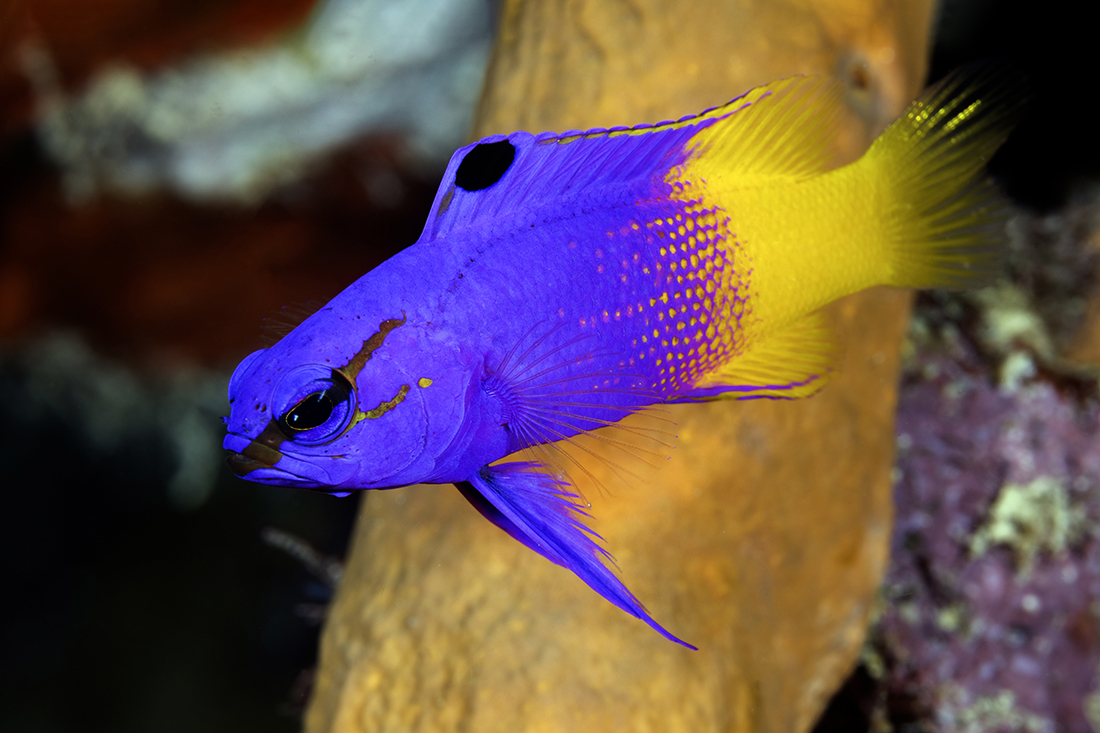
For example, to get the right natural shades of purple and yellow on this royal gramma, all I had to do in Adobe Lightroom or Photoshop was lower the color temperature from 6200K to 4700K.
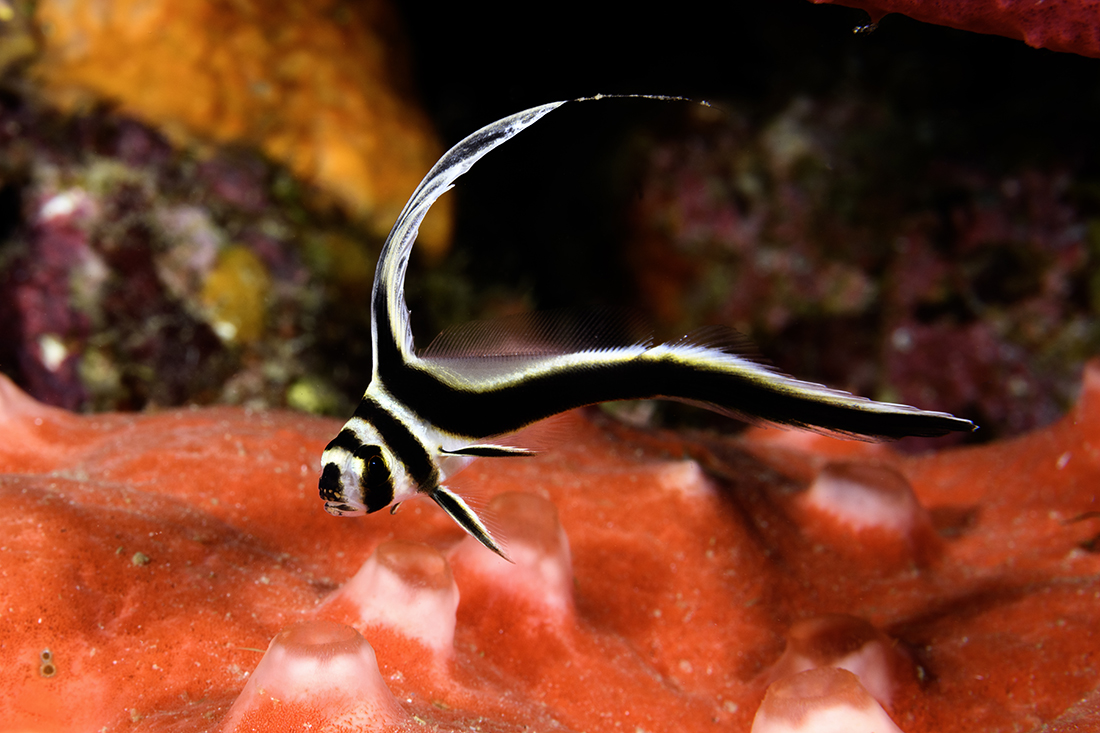

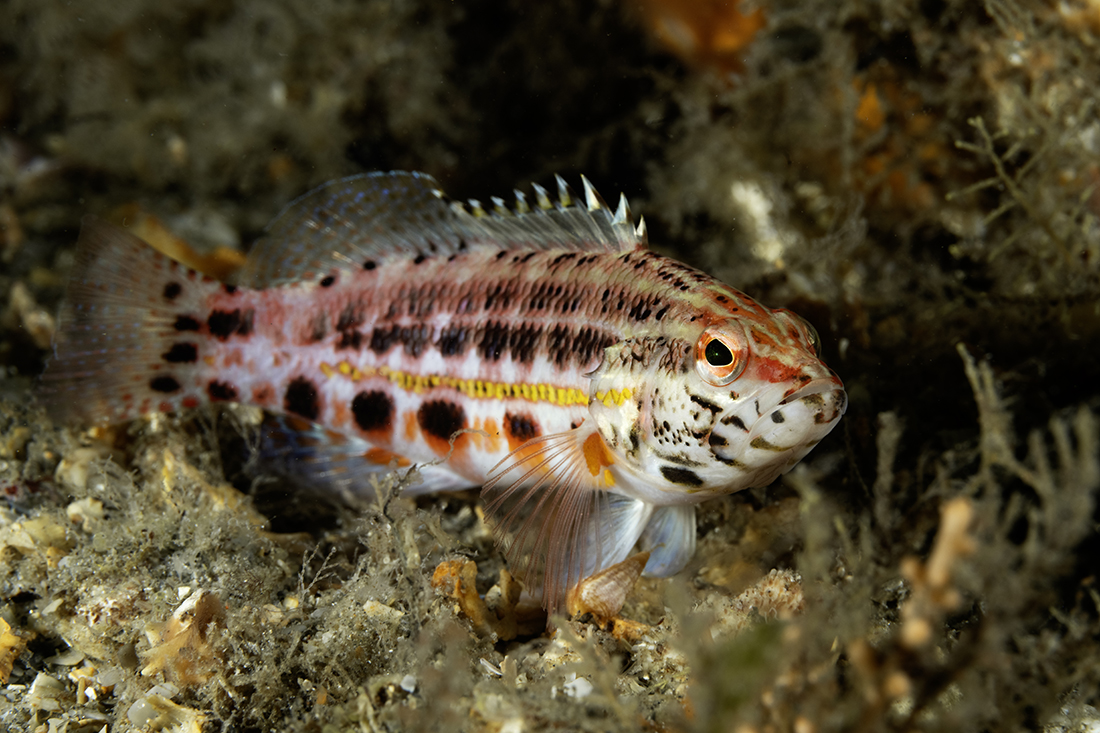
Further examples include these images of a juvenile spotted drum, an orange seahorse and this handsome 2-inch-long lantern bass, plus another three from a couple of blackwater outings.
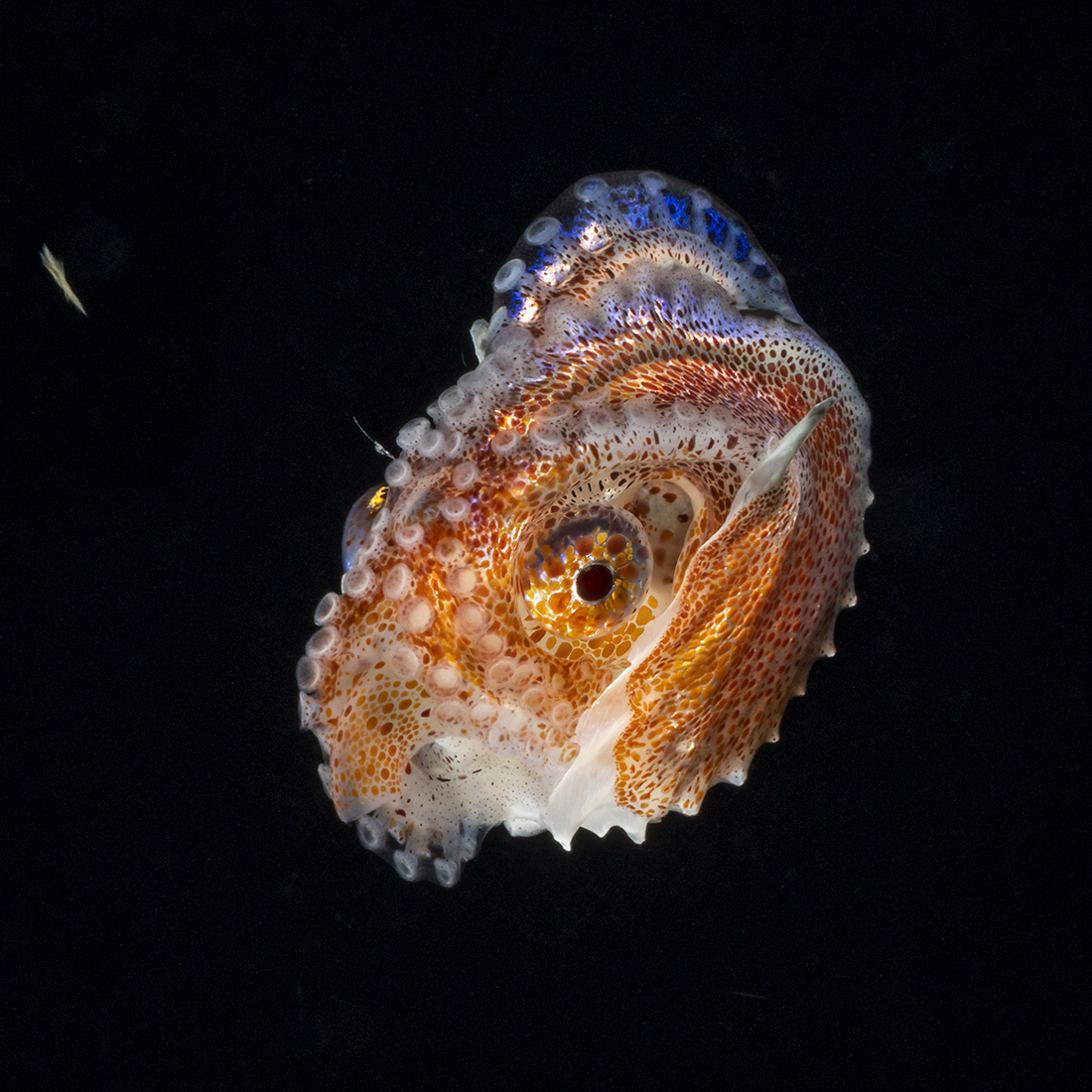
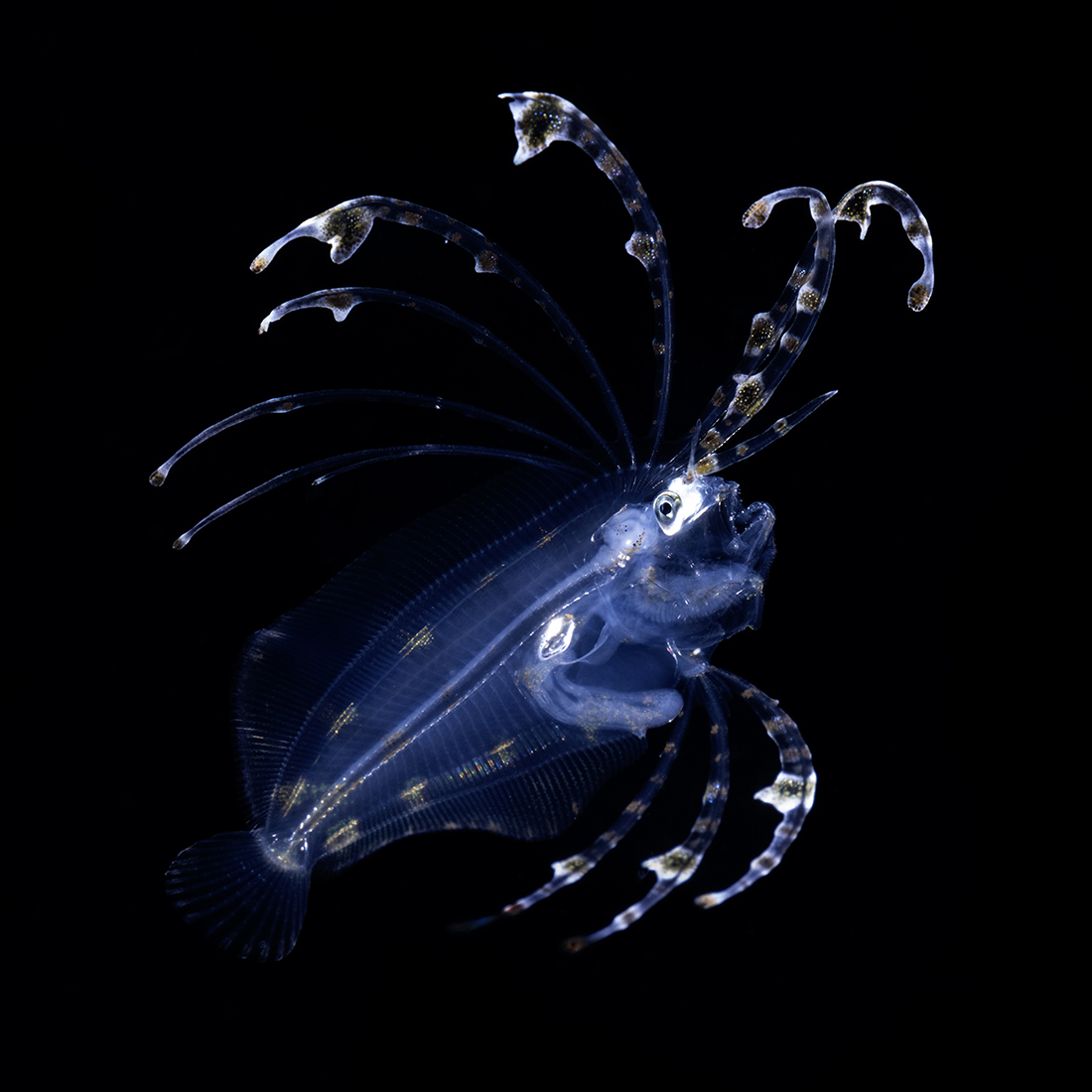
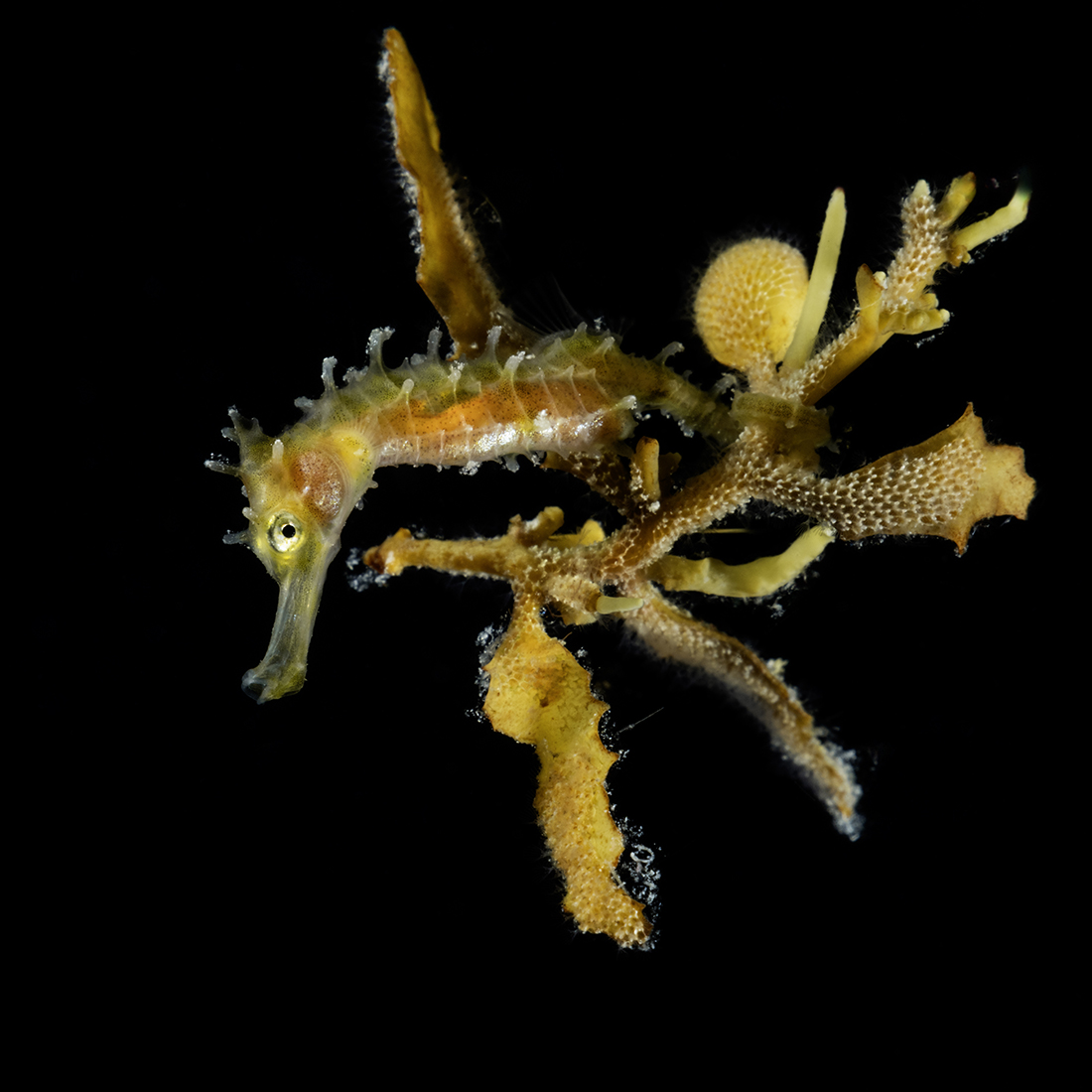
Here again, the Maxis delivered enough light to illuminate these small subjects at apertures of f/22 to f/25 with my Nikon Z 105mm macro lens and MFO-3 diopter. Just as pleasing, the color rendering straight out of the camera in RAW was spot on.
While 6200K does well in this application, I can’t deny it is less suited to wide-angle work. Fortunately, there is an easy fix.
In my case, using a set of Retra’s standard wide-angle diffusers not only warmed the color temperature to 4500K, but also widened the beam spread to a whopping 160°. With this wider spread, the light took on a more even, diffused quality with no hot spots.
That is key to my preferred wide-angle shooting style, where it is essential to balance strobe illumination with ambient light to maintain a natural look while still bringing out the colors of the subject in the foreground.
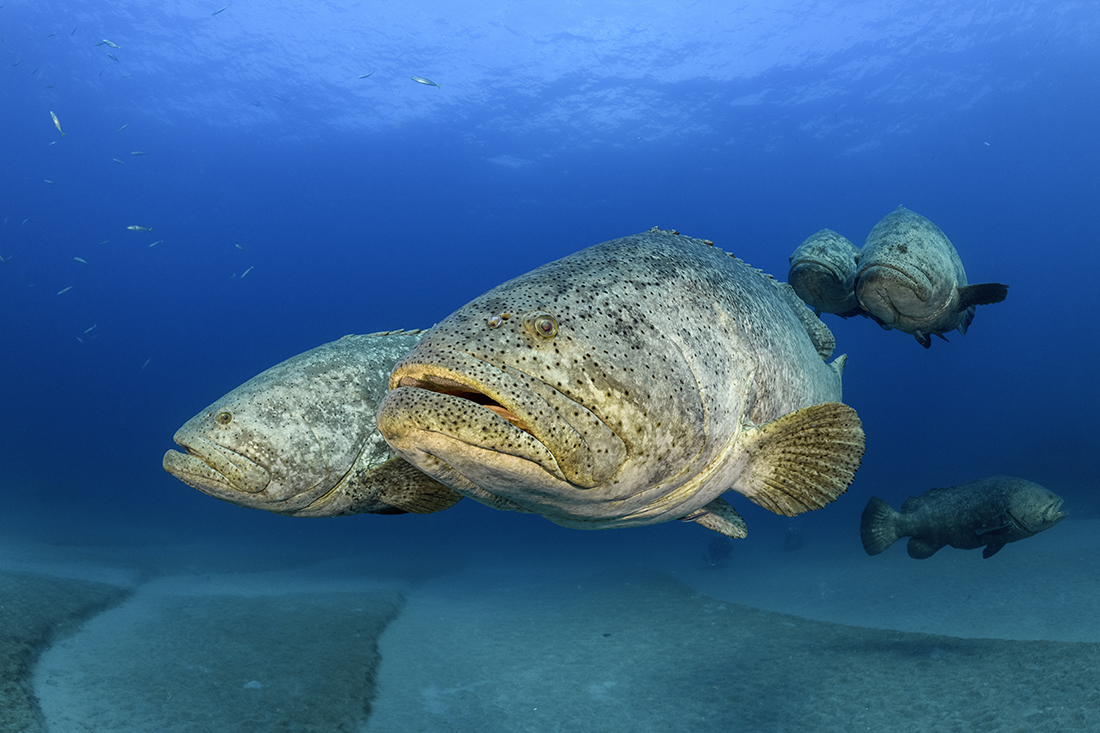
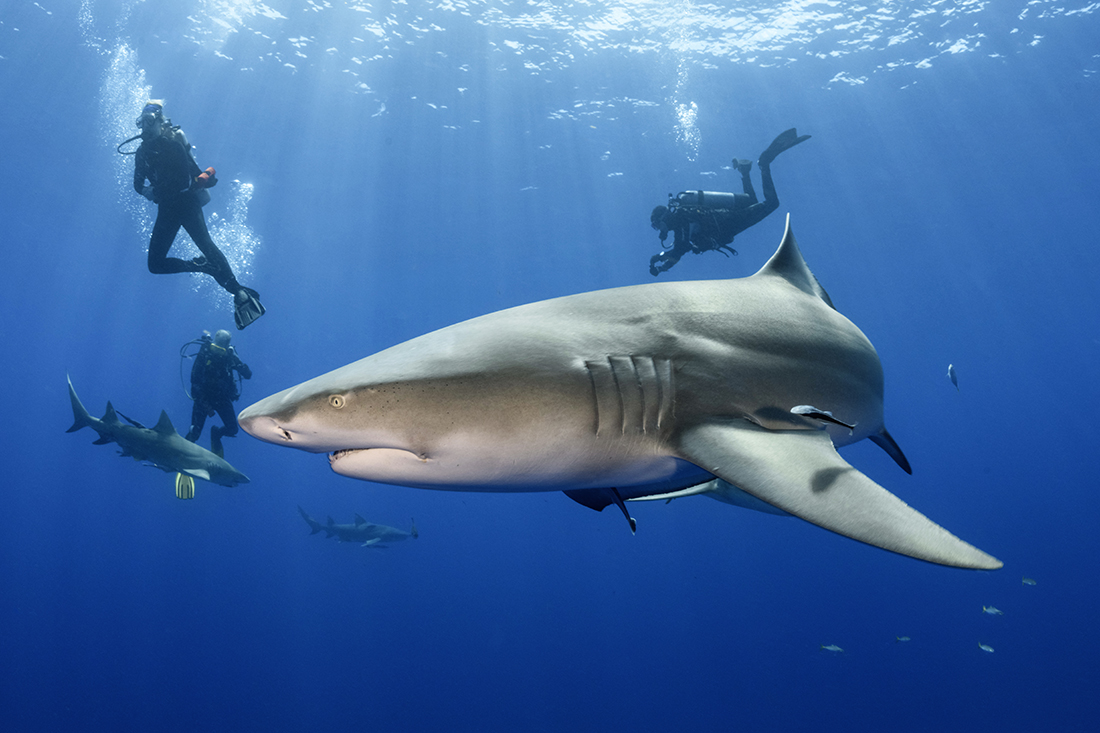
For close-focus and semi-close-focus wide-angle shots, like this large lemon shark making a turn just before touching the dome, achieving this look typically requires power settings no higher than -1 on the dial.
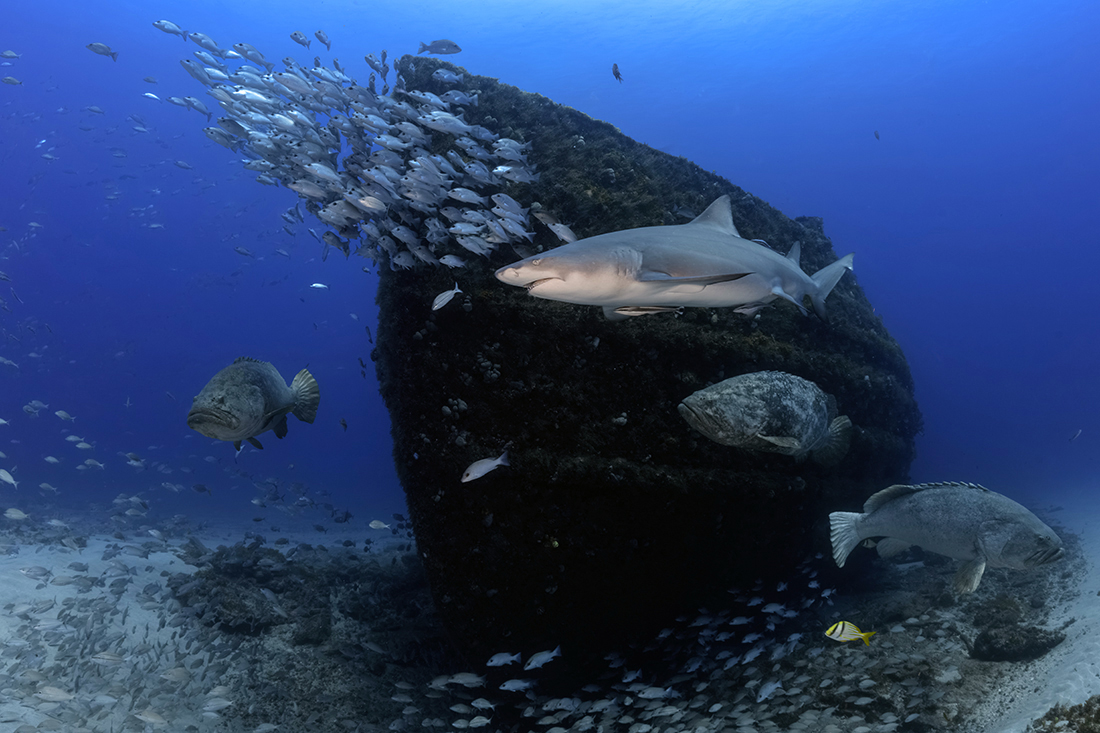
Camera info & Settings: Nikon Z8 in a Nauticam NZ8 housing with a modified Nikonos R-UW 13mm fisheye lens; lighting by two Retra Maxi underwater flashes. Settings: 1/125s at f/11, ISO 500, flash on Manual, power level +1.
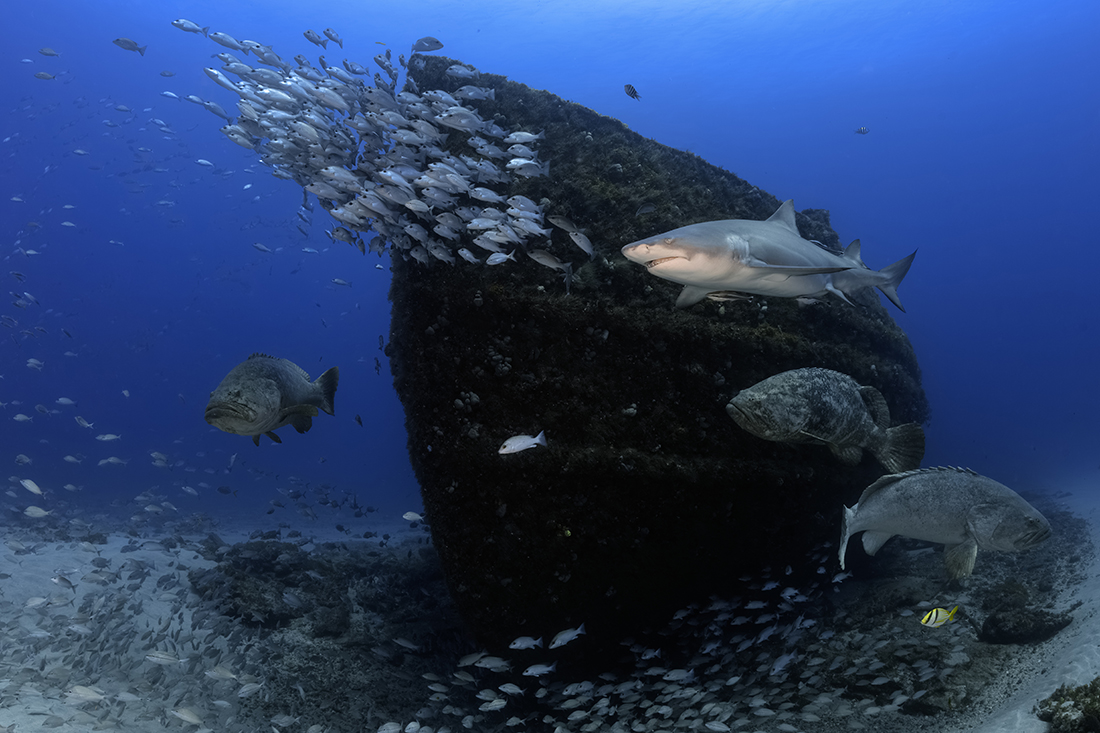
To catch this lemon shark passing the bow of a wreck at a depth of 90 feet, I shot the sequence at 5 frames per second with the power set to +1 on the dial.
From first frame to last, I could not find any perceivable drop in illumination; each consecutive frame maintained the same pleasing, soft glow needed to make the scene look totally natural.
As for working the Maxi in TTL or HSS mode, there’s not much I can tell you, as I rarely use either.
However, I will say this; if you know what your equipment if fully capable of supported by your own experience, lighting becomes a minor issue.

The Shift to Li-ion: The New Paradigm in Rechargeable Batteries
To understand this new favoritism toward Li-ions in the Maxi, one only needs to compare a single Eneloop Pro (one of the most popular rechargeable AA batteries) to a single 21700 Li-ion. Head-to-head, one NiMH AA typically has a nominal voltage of 1.2V at 2550 mAh, which works out to about 3 watt-hours (Wh). A single 21700 Li-ion, by comparison, provides a whopping 3.6–3.7V at 5000–6000 mAh, for roughly 18 to 22 Wh.
In short, it would take roughly six to seven Eneloop Pros to equal the energy of a single 21700. Throw in its compact form factor: a single 21700 Li-ion (21mm wide x 70mm long) takes up less space than four Eneloop Pro AAs (each 14.5mm wide x 50.5mm long).
Pair up two 21700s, and the advantage is twofold, delivering not only fast recycle times but also a greater number of full-power shots than could possibly be pulled from 8 NiMH AAs.
Comparing the number of full-power flashes between the Pro Max II with its 8-AA booster and the Maxi, the Pro Max II delivers approximately 300+, but the clear winner is the Maxi at 550+.
As for recycle time following a full dump (+4 on the dial), I found it impressive, with the ready light back on in under 2 seconds. With the batteries drained halfway, recycle was just shy of 3 seconds.
For continuous shooting with my Z8, I prefer Continuous Low at 5 frames per second. Here again, the Maxi’s recycle time was equally impressive. Even with the power dial set to +2, the Maxi had no problem keeping up with each 5-frame burst while rendering a consistent level of light every time.
If you’re interested in seeing more results on the Maxi’s illumination and recycle speed, I suggest reading Dave Hicks’ comprehensive head-to-head comparison of the Maxi and Backscatter’s HF-1.
The Good, Bad and Ugly Side of Li-ion
I’ve covered the upside of using Li-ion in place of NiMH, but they are not free of their own set of potential risks. To borrow an axiom from Marvel’s Spider-Man comics and movies: “With great power comes great responsibility!”
The most talked-about issue with Li-ions is “thermal runaway,” a rapid, uncontrollable rise in internal temperature that can lead to an intense, hard-to-extinguish fire. Hence the reason airlines, and even liveaboards, have grown a bit skittish about them.
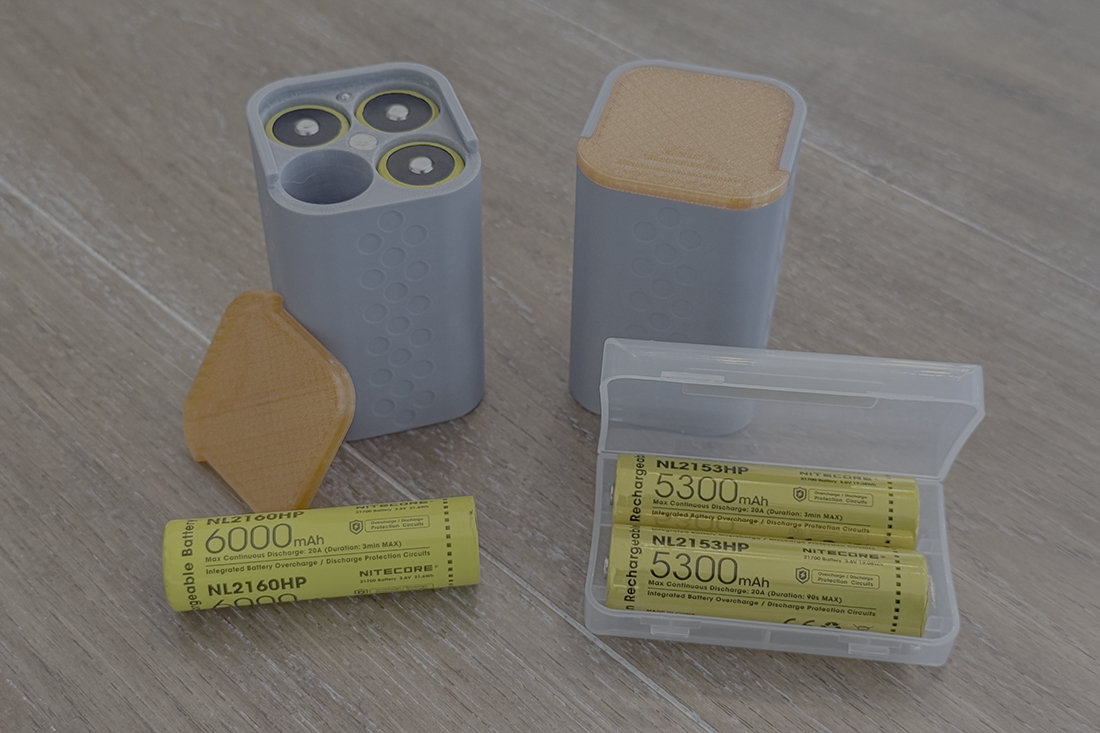
As a safeguard, removable Li-ions sold in the US are required to have a robust Battery Management System (BMS) to prevent thermal runaway, overcharging and cell imbalances.
One brand of rechargeable Li-ion I favor is Nitecore, as their cells also have a pressure relief valve that activates in the event of a rapid temperature rise. But for my own peace of mind, I never leave any Li-ion batteries in a charger unattended.
Retra Maxi’s Safeguards
In our case, we all know electronics, particularly batteries, are deathly allergic to saltwater. With Li-ions, the risk of getting them wet can be even more volatile than with NiMH, as water can cause the electrolyte salts to react with internal components and produce toxic hydrofluoric acid gas or flammable hydrogen.
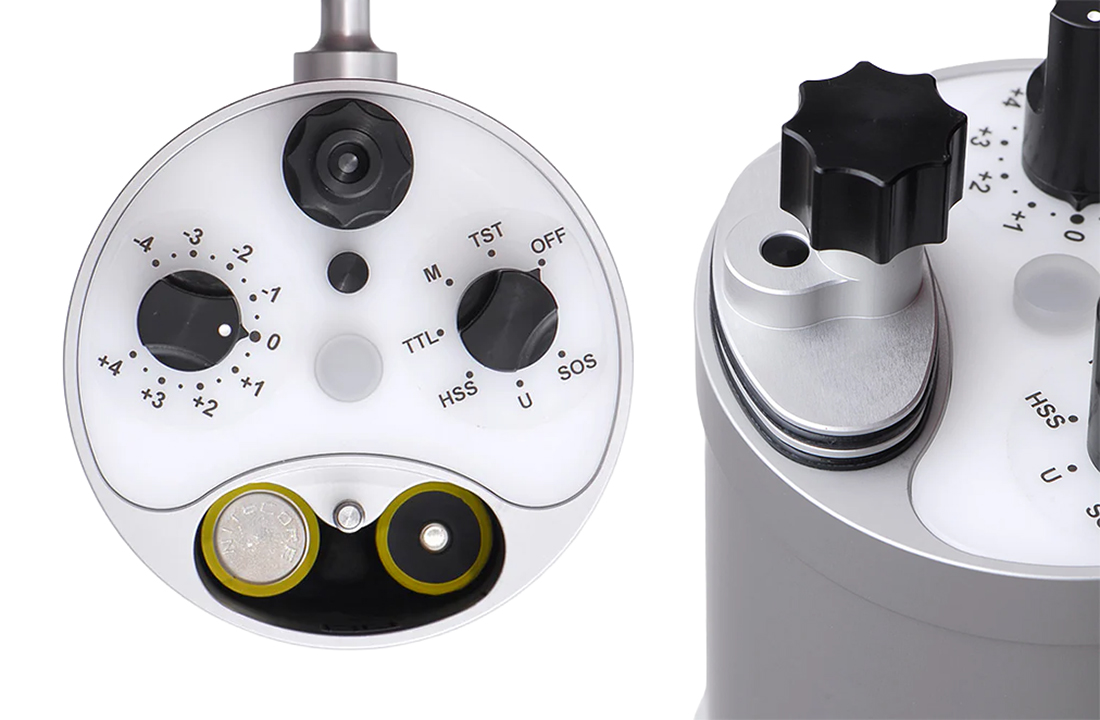
For peace of mind, the Maxi’s battery compartment, which houses two 21700 6000mAh batteries, uses a double O-ring seal on the battery door.
Should a small amount of water get inside the compartment, the Maxi’s built-in leak detection system will trigger the center indicator light to flash red and blue.
According to Osker at Retra UWT, the “battery contacts have multiple layers of anti-corrosive coating with a silver colored finish designed specifically to protect the connection points.” He also pointed out that should some exposure to battery acid take place, the contacts can generally be cleaned well enough for the strobe to power on and remain usable to the end of the trip.
In addition, the battery compartment is fully sealed off from the rest of the electronics, so a flood won’t totally trash the strobe, and the door is equipped with a pressure relief valve to vent off gas. The contacts on the battery door are held in place with a single stainless screw and are designed to be user-replaceable should they become damaged.
Maxi for Video?
For an additional $200, the hybrid model with the 6,000-lumen video light can be well worth the investment. In addition to a fully functioning high-power strobe, you get a decent amount of light to supplement your camera’s video capability.
In the past, when I wanted to shoot a little video, I had to do so either entirely with available light or with two Kraken Sports Hydra 6000 video lights.
The hybrid Maxi has 10 light-emitting diodes (LEDs) embedded in the strobe’s front reflector, rated to provide 6,000 lumens at a color temperature of 5000K.
Putting the Maxi up against the Hydra 6000, the matchup is rather close. With 10 LEDs (five per side) flanking the Maxi’s circular flash tube, the video light mode (U on the mode dial) generates a wider 110º beam than the Hydra’s 100º underwater.
Both feature the same 5000K color temperature, but on color rendering index (CRI), the Maxi scores 80 out of 100, whereas my old Hydras scored 90.
At a CRI of 80, colors come out fairly well, though subtle shades and deep reds can occasionally look slightly muted next to a higher-CRI light.
The same knob that adjusts power levels in flash mode also adjusts the video light from 0 to 100%. While this is a nice feature, I seriously doubt anyone will use less than 75%, with most likely going straight to 100% when transitioning to video.
As for what to expect in burn time during video mode, that too is close to the same. My Kraken Hydra 6000’s interchangeable triangular Li-ion battery pack, made up of three 21700 cells, carries an advertised burn time of 60 minutes on 100% flood. The Maxi, with just two off-the-shelf 21700 (6000mAh) Li-ion batteries, carries the same one-hour burn time. In reality, they began showing signs of struggling past the 50-minute mark.
Given that I shoot stills more than video, the biggest game changer is having a video light at my beck and call whenever I want or need it.
Final Thoughts
Underwater photography is a highly task-loading endeavor, from managing your own buoyancy, currents and surge to changing light and uncooperative marine life. Positioning your strobes should not add to that load.
On that front, the Maxi’s size-to-weight ratio, which makes it just shy of neutrally buoyant, appears to stomp all other strobes in its league for easy handling underwater.
After six months of use, comparing shots taken with my first-generation Pro Max to the Maxi, with and without diffusers attached, I found that each had a few upsides and downsides.
Straight out of the box with no diffusers, the Pro Max series still has the best, most even light spread and color temperature (around 4900K) of any underwater flash currently available. While the Maxi’s native 6200K is certainly a bit too cool for wide-angle photography, all it took to level the playing field was adding diffusers to bring it down to a more desirable color temperature.
After making the switch to the Maxis, my collection of rechargeables went from 34 Eneloop Pro AAs with two 8-bay chargers to eight Nitecore 6000mAh 21700s and a charger that handles four at a time. As it was, I already carried two 21700 Li-ions in the 5300mAh range for my focus lights.
Beyond being a Retra flash that runs on Li-ions instead of NiMH AAs, the Maxi’s meticulous fit and finish is no less than what you’ll find in the Pro Max. Yet, comparing prices, the Pro Max II’s MSRP being $650 higher than a base-model Maxi seems somewhat strange.
Retra UWT’s Flagship Pro Max II Flash vs. Retra Maxi
| Specs | Retra Flash Pro Max II | Retra Maxi |
| Rated Output | 190 Ws | GN 46 |
| Backscatter-Tested UW GN | 26.9 | 36.8 |
| Color Temperature (bare) | 4900K | 6200K |
| Beam Spread, Bare Dome | 120º | 110º |
| Beam Spread with Diffusers | 160º @ 4500K | 160º @ 4500K |
| Video Light | No | Optional, 6,000 lumens |
| LED Pilot Light | 1,000 lumens | 400 lumens |
| Power Source | 4x / 8x AA NiMH | 2x 21700 Li-ion |
| Battery Weight | 238 g / 8.4 oz | 150 g / 5.3 oz |
| Flashes at Full Power | 300+ (w/ booster) | 550+ |
| Flashes at Half Power | 1,000+ (w/ booster) | 1,000+ |
| Recycle Time (Full Power) | 0.02–1.95 sec | 0.02–1.95 sec |
| Housing | Aluminum alloy | Aluminum alloy |
| Dimensions | Ø102.5 x 173mm (w/ booster) | Ø108 x 174mm |
| Land Weight w/ Batteries | 1000 g / 35.2 oz | 1150 g / 40.6 oz |
| Water Weight w/ Batteries | 160 g / 5.6 oz | 20 g / 0.7 oz |
| Leak Detection | Yes | Yes |
| TTL | Yes | Yes |
| HSS | Yes | Yes |
| Bluetooth Connectivity | Yes | Yes |
| Bayonet Mount | Classic A1 | Classic A1 |
| Optical Connector | Inon threaded | Inon threaded |
Well, fortune may favor the bold, but it doesn’t hurt to choose wisely.
Tip: Protect Your Mounting Ball from Corrosion
When your Retra strobes arrive, the 1-inch ball needed for mounting to a strobe arm comes unattached. The ball includes a robust anti-rotation pin, along with a plastic gasket that sits between it and the strobe’s aluminum housing. Where a potential problem can arise is with the stainless-steel bolt used to mount the ball to the strobe. In a marine environment, whenever two dissimilar metals like stainless steel and aluminum meet, galvanic corrosion is sure to develop if a corrosion inhibitor is not used.
For this task, I highly recommend a PTFE-based anti-seize lubricant called Tef-Gel. Not only is this product extremely waterproof and long-lasting, it prevents seizing and galling in the threads and inhibits galvanic corrosion like nobody’s business.
Before installing the ball on the flash housing, apply a small amount of Tef-Gel across the bolt’s steel threads. Once the bolt is threaded all the way in, you can forget about it until you find a reason to remove it, and it will come out as easily as the day it went in.
