
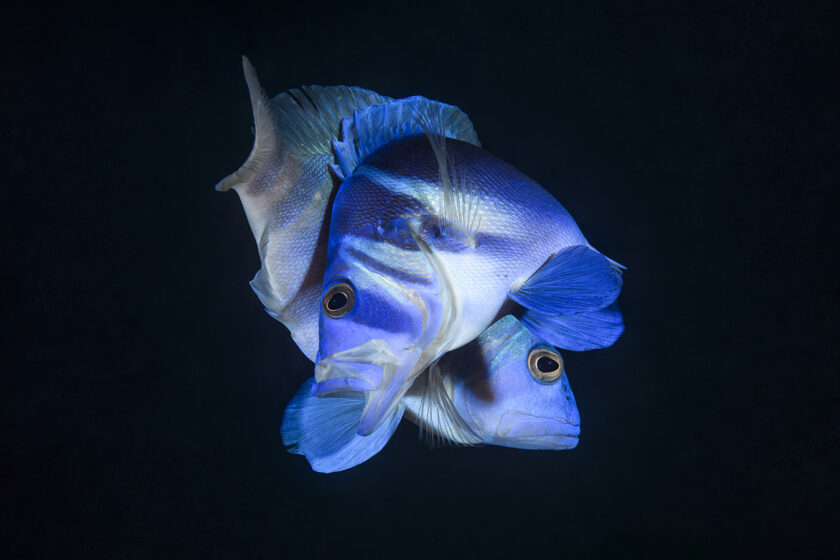
As the sun dips toward the horizon, two blue, palm-sized fish gather at the base of a coral head 25 feet below the surface. To a casual observer, there is nothing noteworthy about this mound of coral jutting upward toward the swells. But for a pair of adult Indigo hamlets (Hypoplectrus indigo), it was a place of significance for what was about to take place.
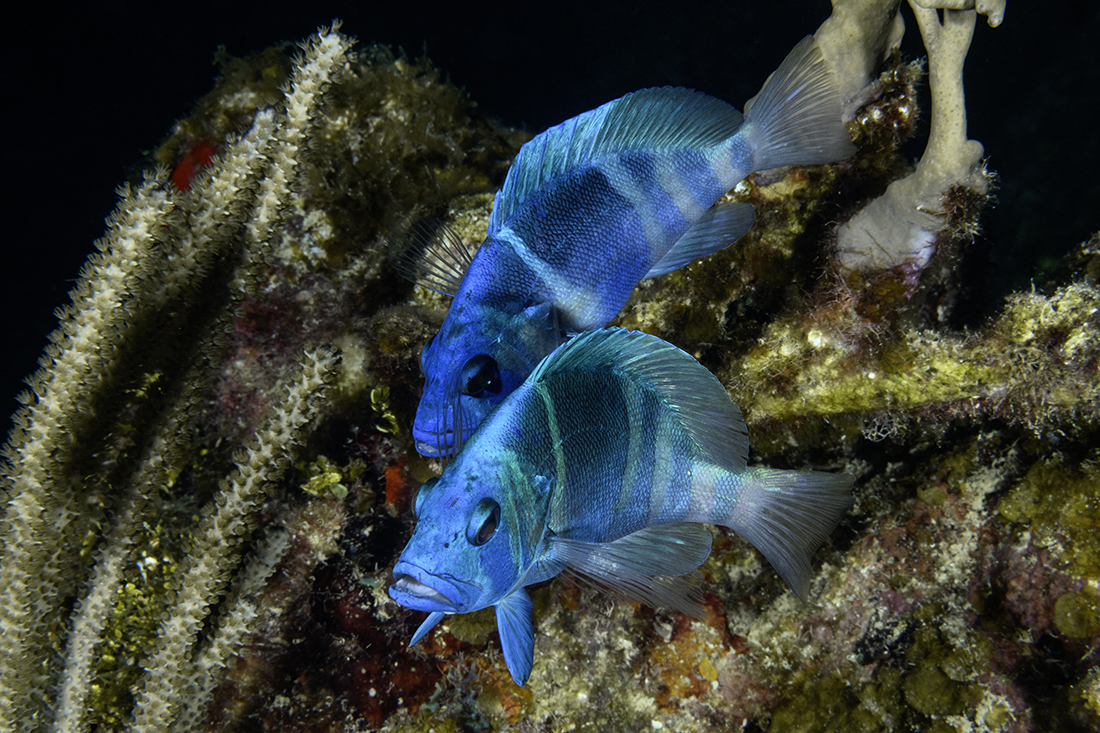
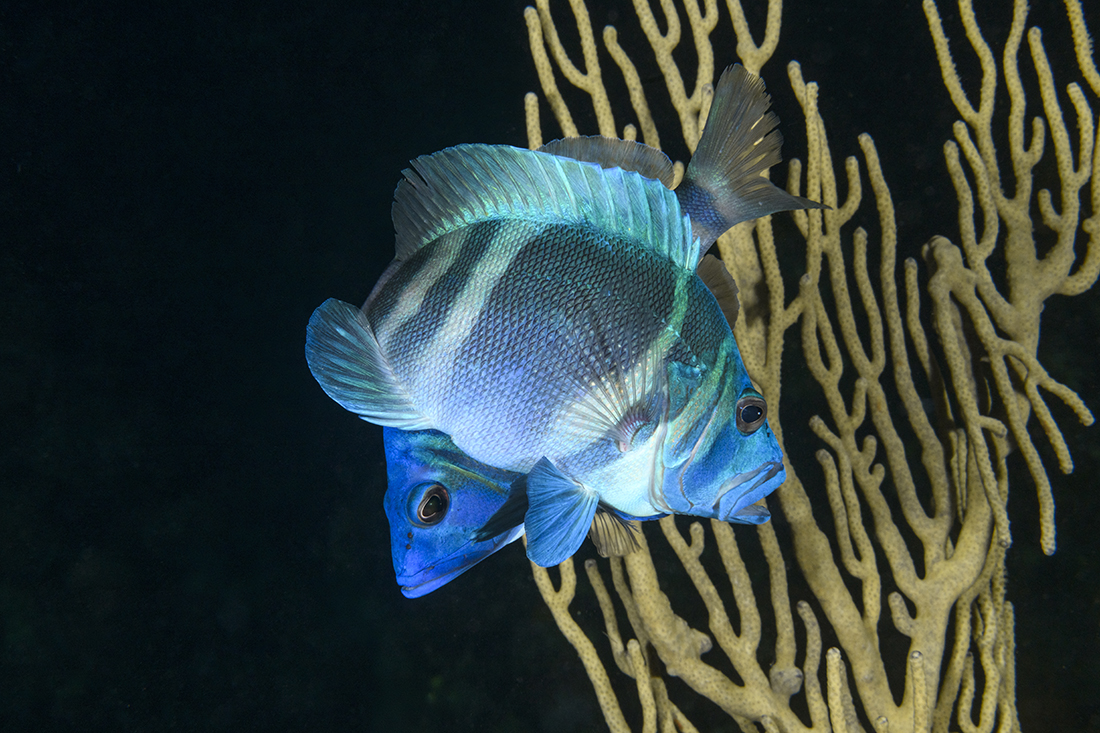
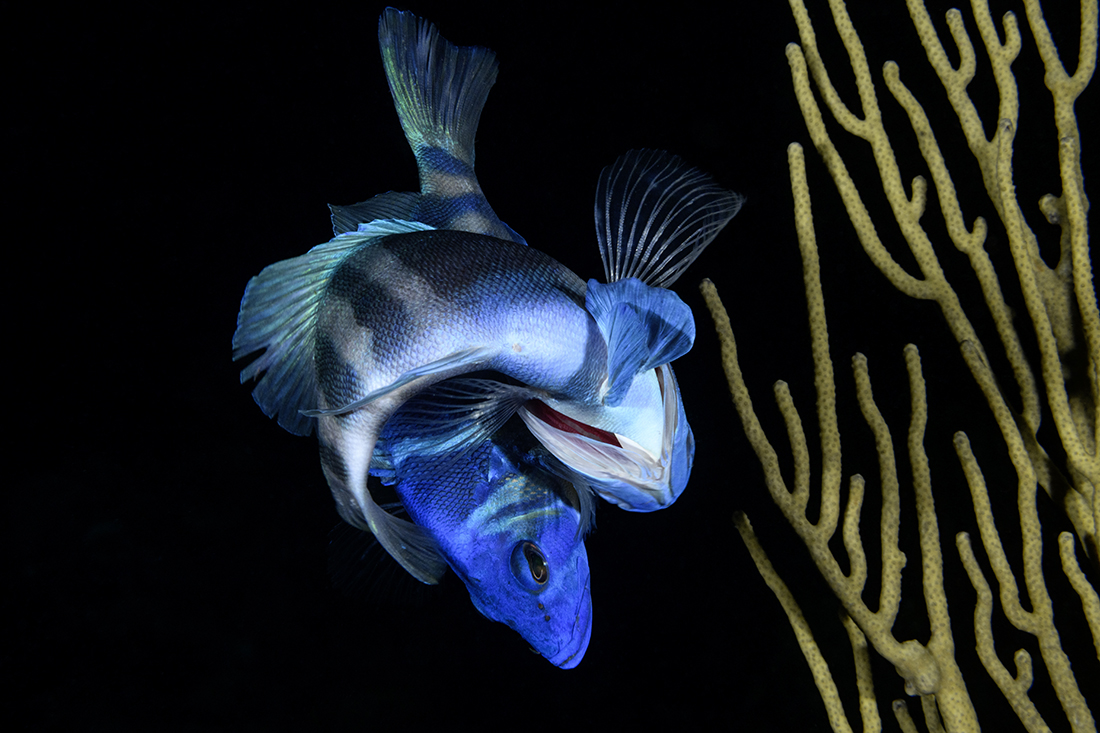
At first, their behavior looks like a territorial dispute: one fish chases the other in frantic bursts around the base of the coral head than suddenly rise a foot above it to come parallel to one another. In a synchronized motion, one fish turns a pale, ghostly blue while the second wraps its body around the first. This intimate embrace lasts only seconds before the chase resumes, repeating until the last remnants of sunlight vanish and the pair disappears into the dark.
What I was I witnessing was the complex mating ritual of hamlets, which happened to be the reason for coming back to Roatan August 2025. The Bay Islands of Honduras are as good as any place in the Caribbean for the seeing hamlets spawning. But Roatan is special in that Indigo Hamlets are highly prevalent here. Then there is the prospect of the right location with highly accessible shore diving for my mission to be successful. Coco View Resort on Roatan’s south side stood out as the premier choice. Read my story on Coco View > here.
Before I got there, I hit the books. It always pays to know your subject in advance to increase the odds of a successful shoot.
Meet The Hamlets
Hamlets are members of the Serranidae family (sea basses). Think of them as “mini-groupers” that rarely exceed five inches in length. With their slim, deep bodies, they are often mistaken for large damselfish at a distance.
Altogether, there are approximately 17 named species spread across the Tropical Atlantic and Caribbean. Among them are four stand outs as particularly spectacular. At the top of the list is the Golden Hamlet (H. gummigutta), defined by a striking gold-to-yellow body offset by iridescent blue and black facial markings. These are incredibly rare; in 30 years of Caribbean diving, I have only ever seen one.
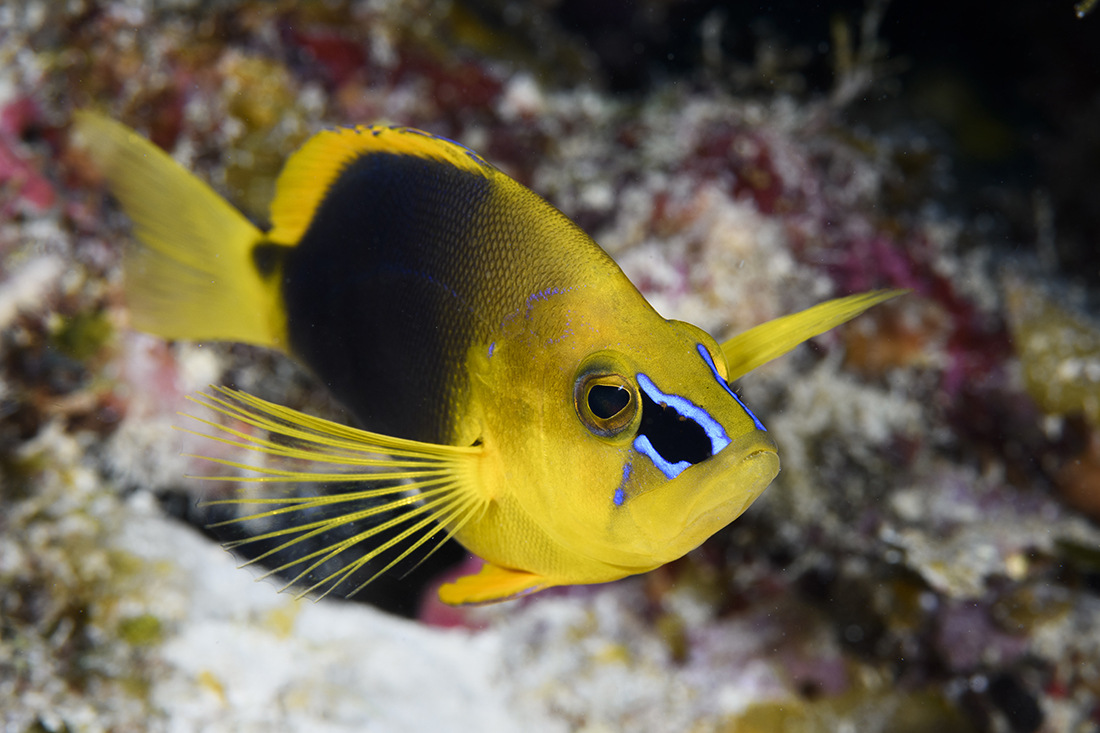
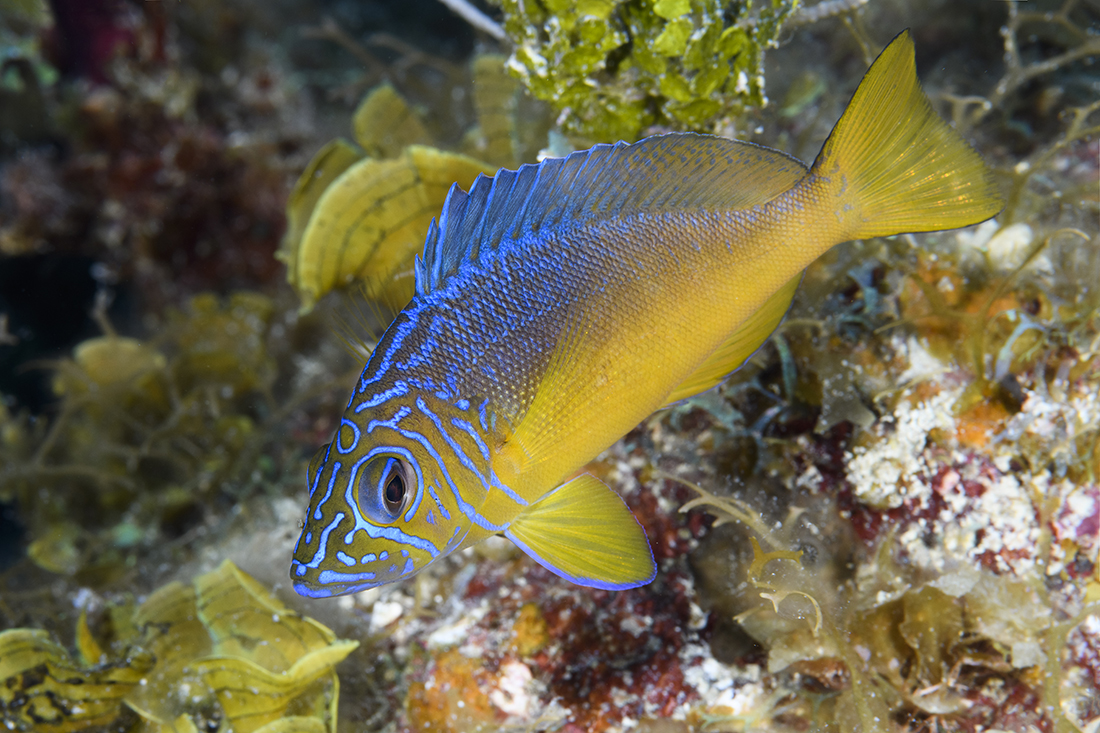
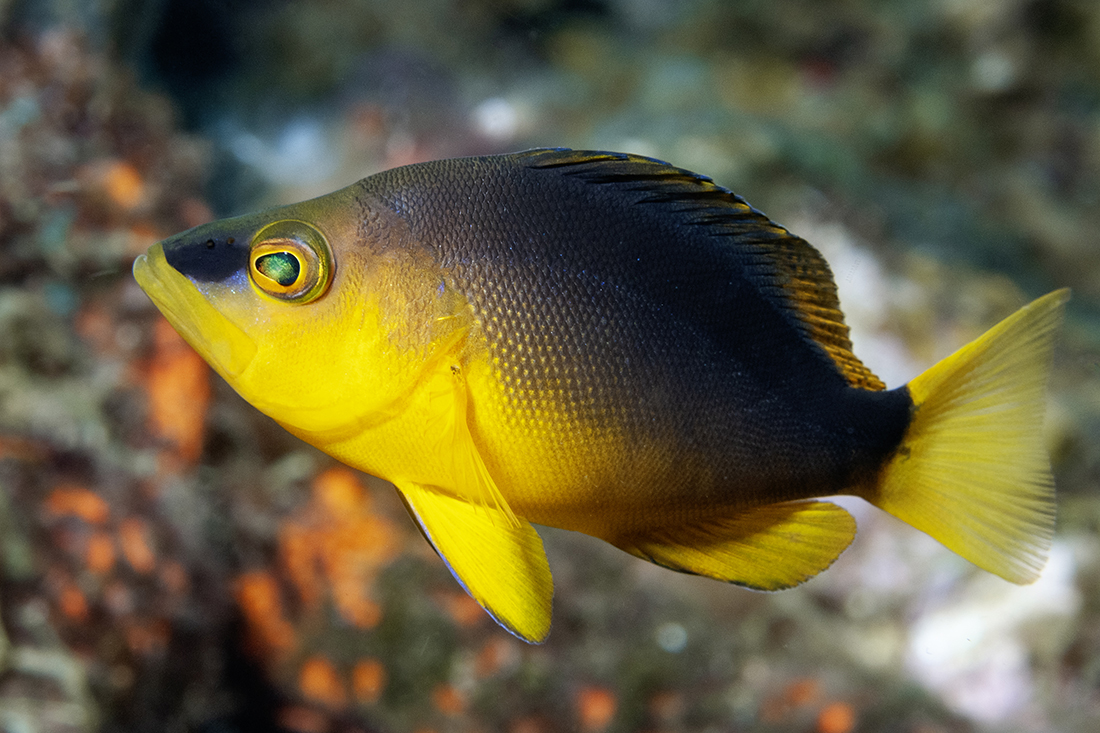
Following closely is the Shy Hamlet (H. guttavarius), which shares a similar golden hue but is distinguished by a large, black “saddle” covering the midsection. The Yellowbelly Hamlet (H. aberrans) is equally eye-catching, featuring a pronounced yellow lower half contrasted against dark blue upper regions and bright blue facial streaks.
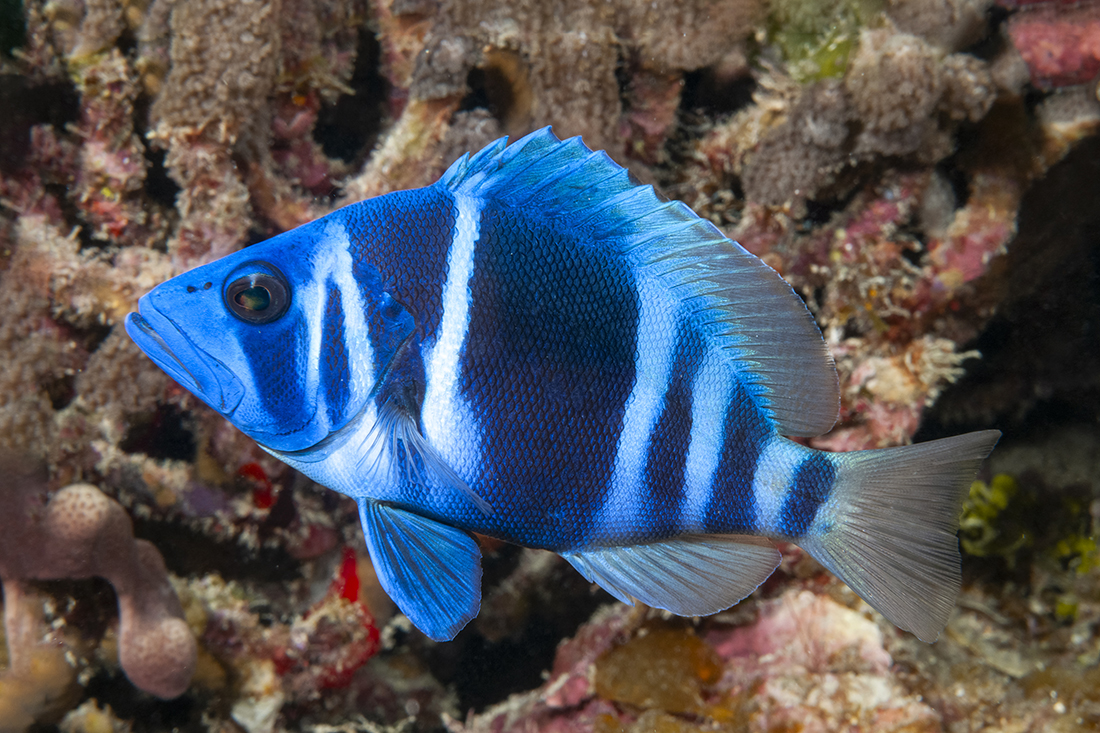
Finally, the Indigo Hamlet (H. indigo) takes the pallet of blues to the next level. Its deep indigo body is offset by six light-blue vertical bars running from just behind the eye to the base of the tail. While the Indigo is widely distributed from the Bahamas to the “ABC” islands, they are exceptionally plentiful in the Bay Islands of Honduras.
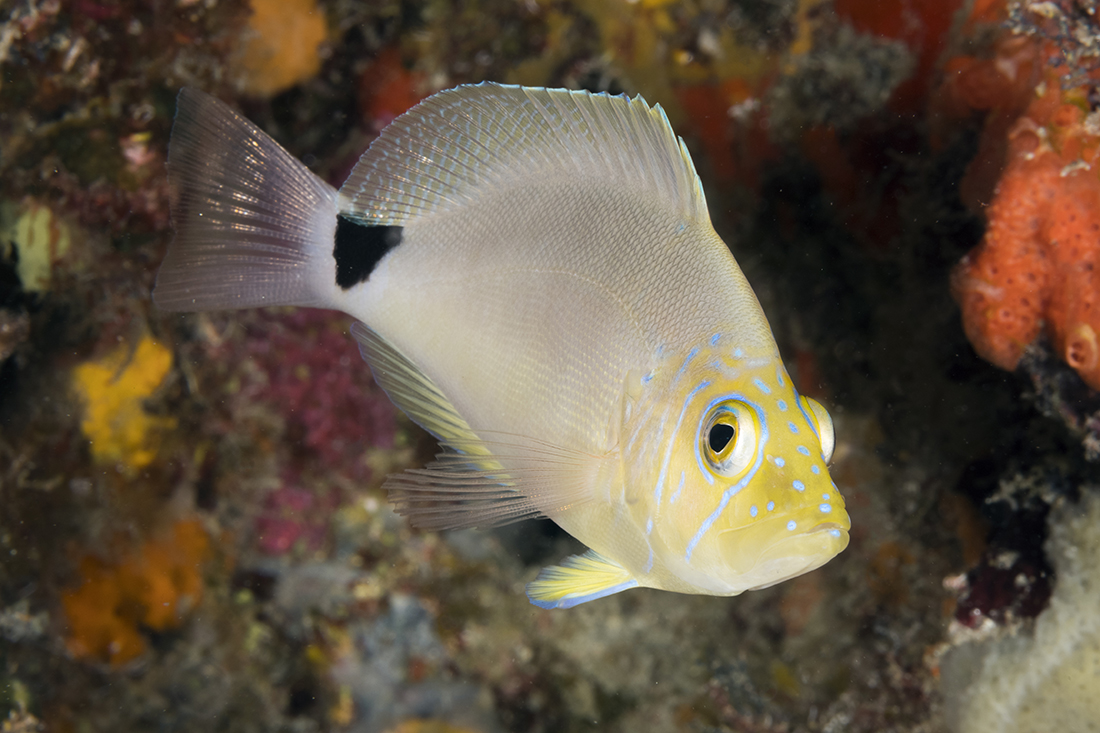
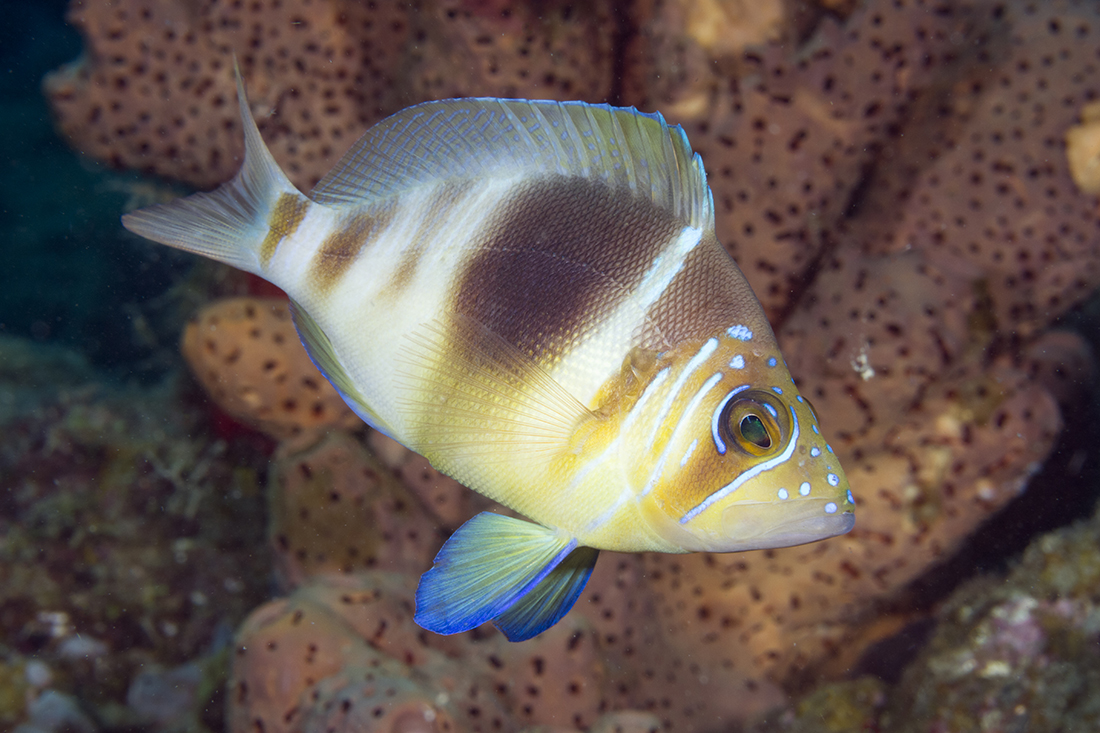
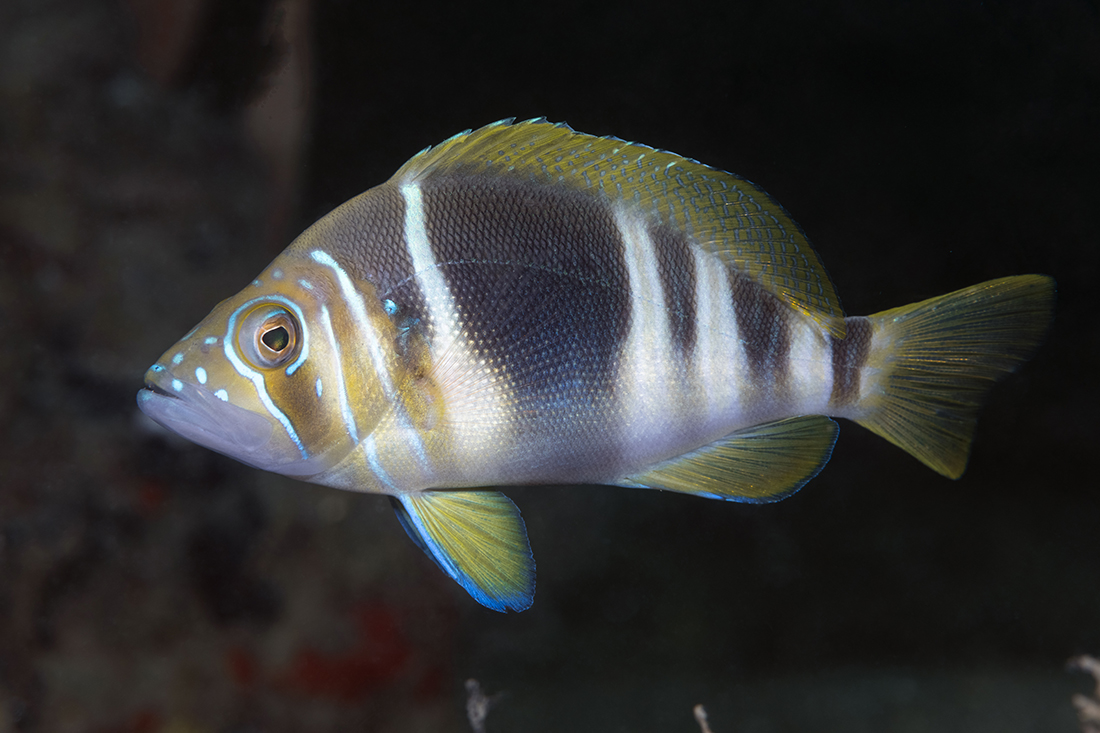
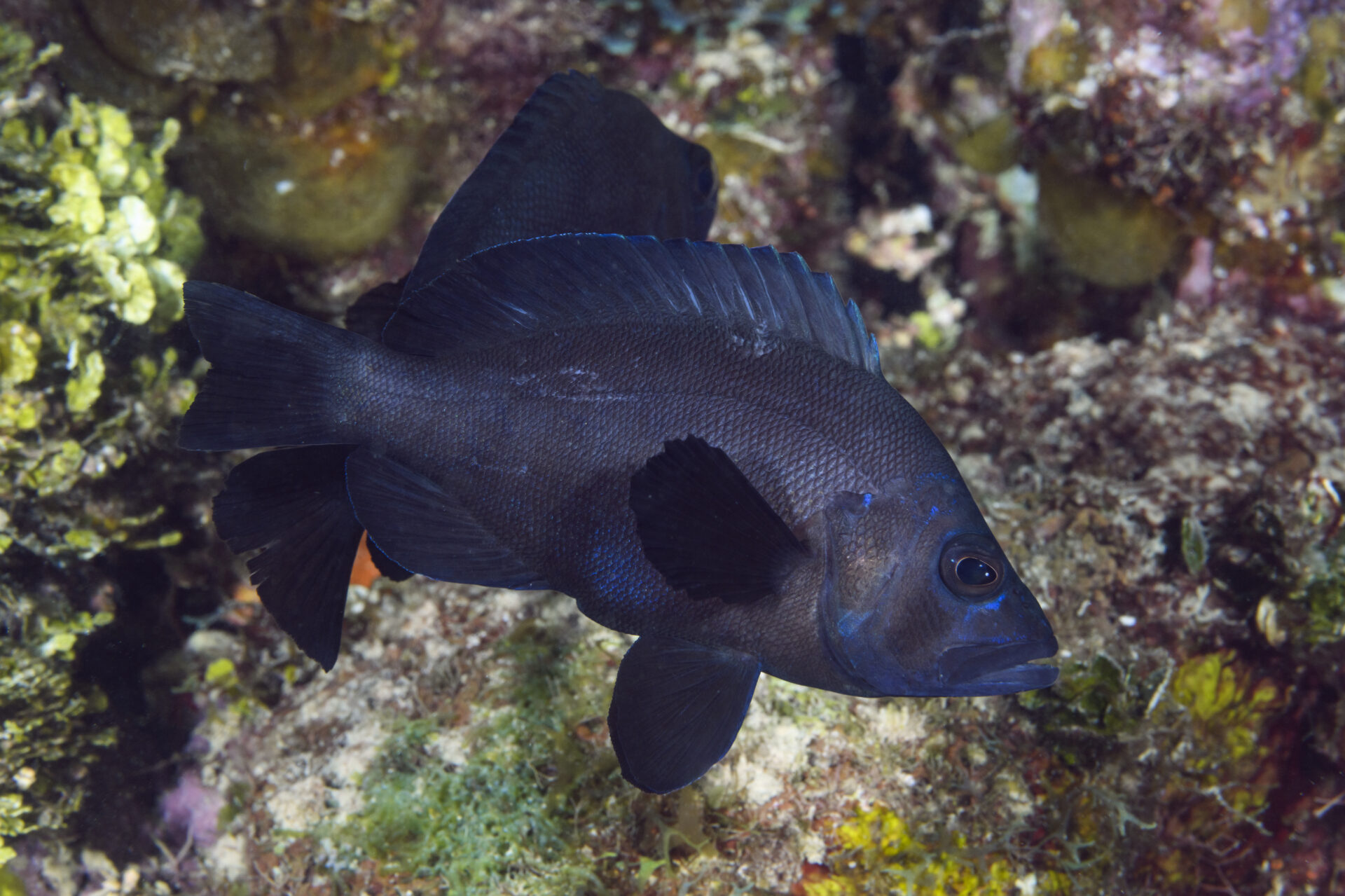
In addition the four aforementioned hamlets, here’s a sampling of a few more species.
Nature’s Strategy
Beyond their vibrant colors, hamlets are unique among reef fish for being simultaneous hermaphrodites, meaning they possess both male and female reproductive organs. This allows any two mature individuals to breed, doubling their reproductive success.
Biologists remain uncertain about the exact number of species, as DNA testing is often inconclusive. To complicate matters, crossbreeding is common. I’ve photographed hybrids that appear to be crosses between Barred hamlet (H. puella) and a Black hamlet (H. nigricans), as well as Indigo “color morph” that are significantly darker than average leading me to believe is a is a possible hydrid between a Barred Hamlet (Hypoplectrus puella) and a Indigo Hamlets (Hypoplectrus indigo).
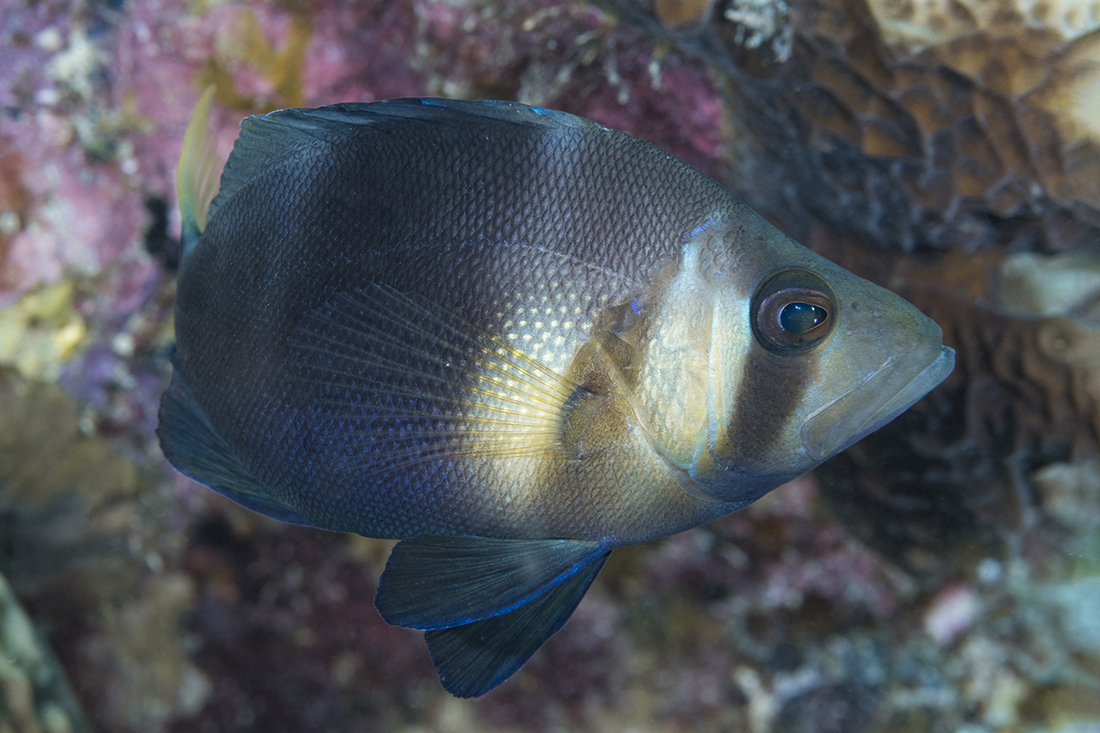
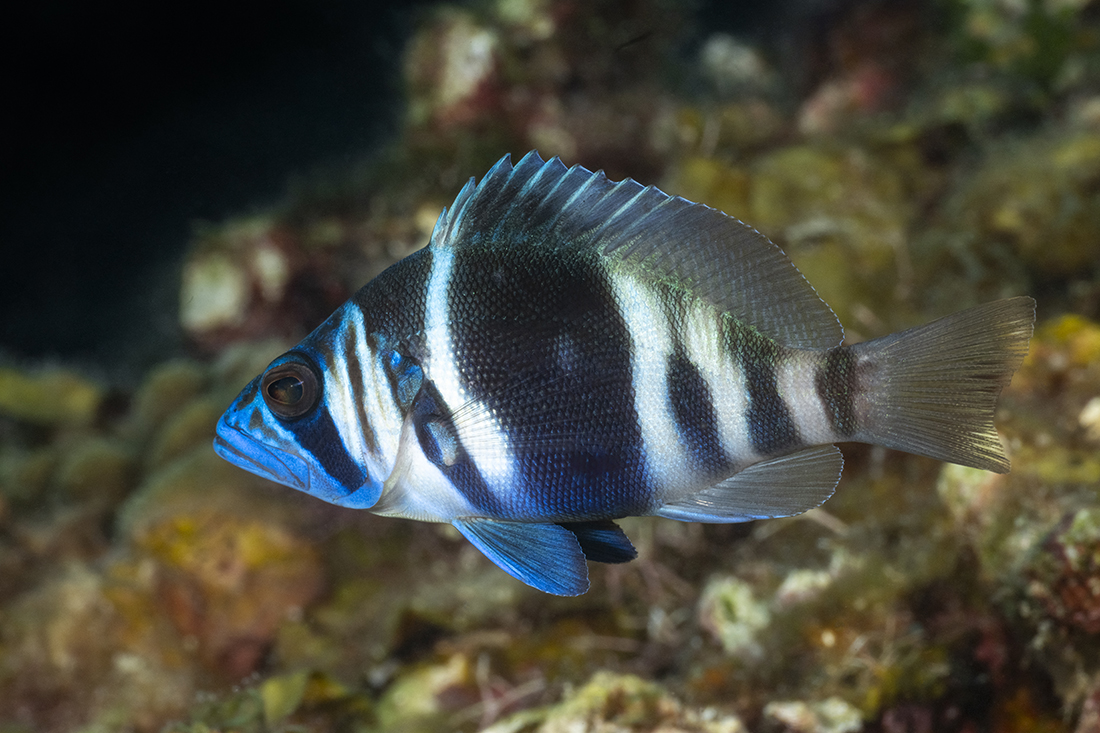
By day, hamlets are solitary. I knew they spawned in the late afternoon and were broadcast spawners—releasing eggs and sperm into the water column to be carried away by currents. However, textbooks lacked specifics on the exact timing and depth.
For that, I turned to local knowledge. Mickey Charteris, Coco View’s resident photo pro, advised me to begin the hunt one hour before sunset. His tip: if you can’t find a pair, find a solitary adult and wait; a partner will eventually appear from the shadows.
The Shoot: Capturing Their Romantic Dance
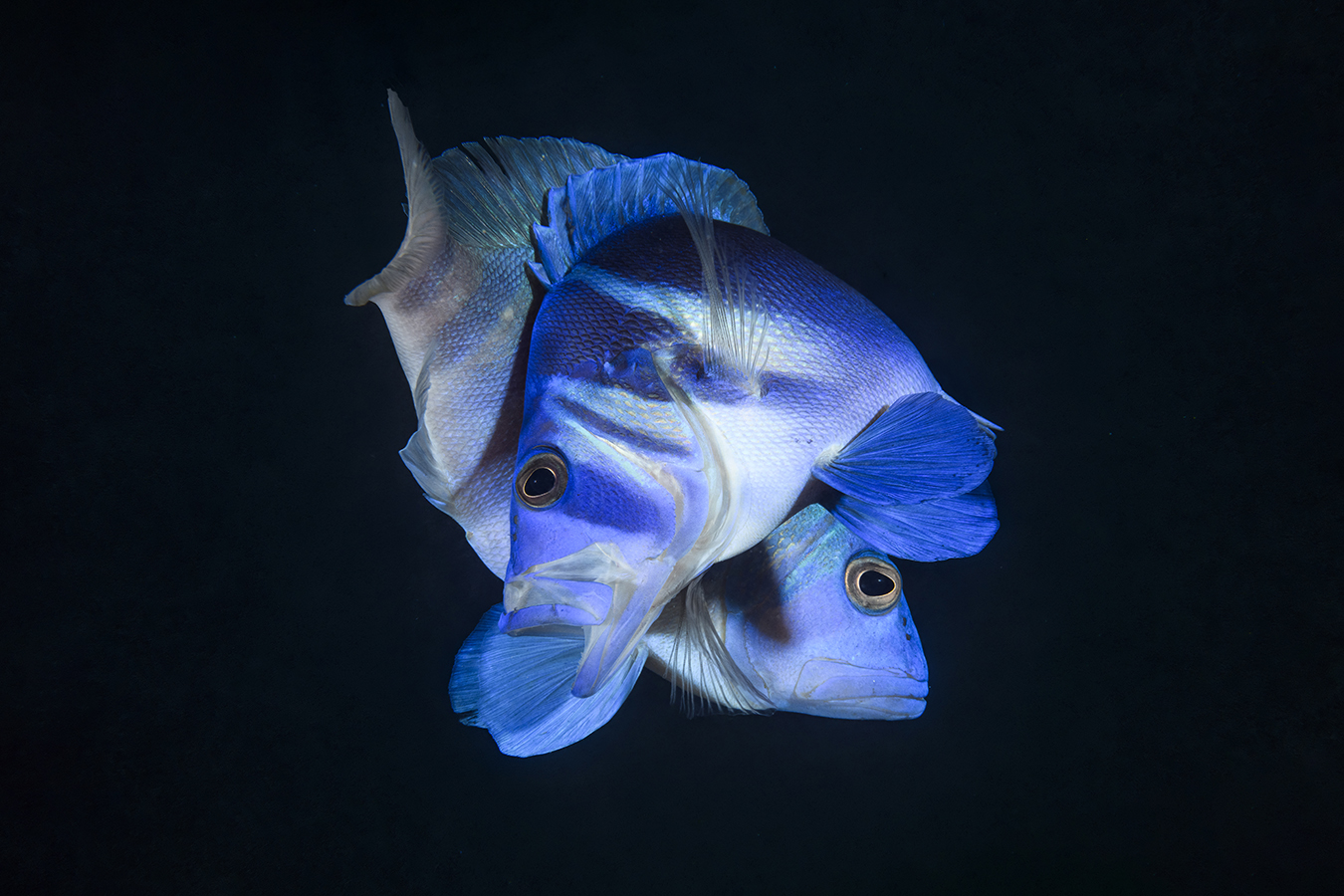
Worried that if I approached to closely that I would impede their romantic interlude I chose to go with a Nikon 105mm macro over my 60mm macro lens. For my focus light I went with a Kraken Sport Hydra 6000 WRGBU video light as this model include a green light mode in addition red. I have found from blackwater shooting that Nikon Z8’s autofocus is far more receptive to green light than it is to red in the dark.
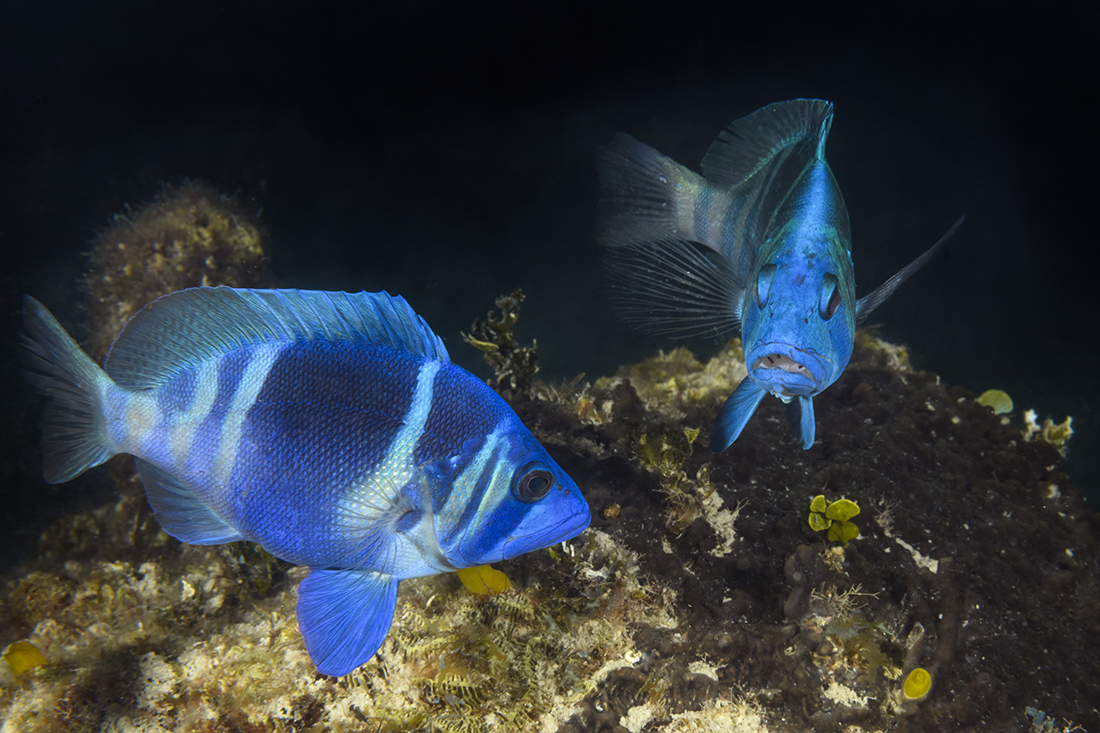
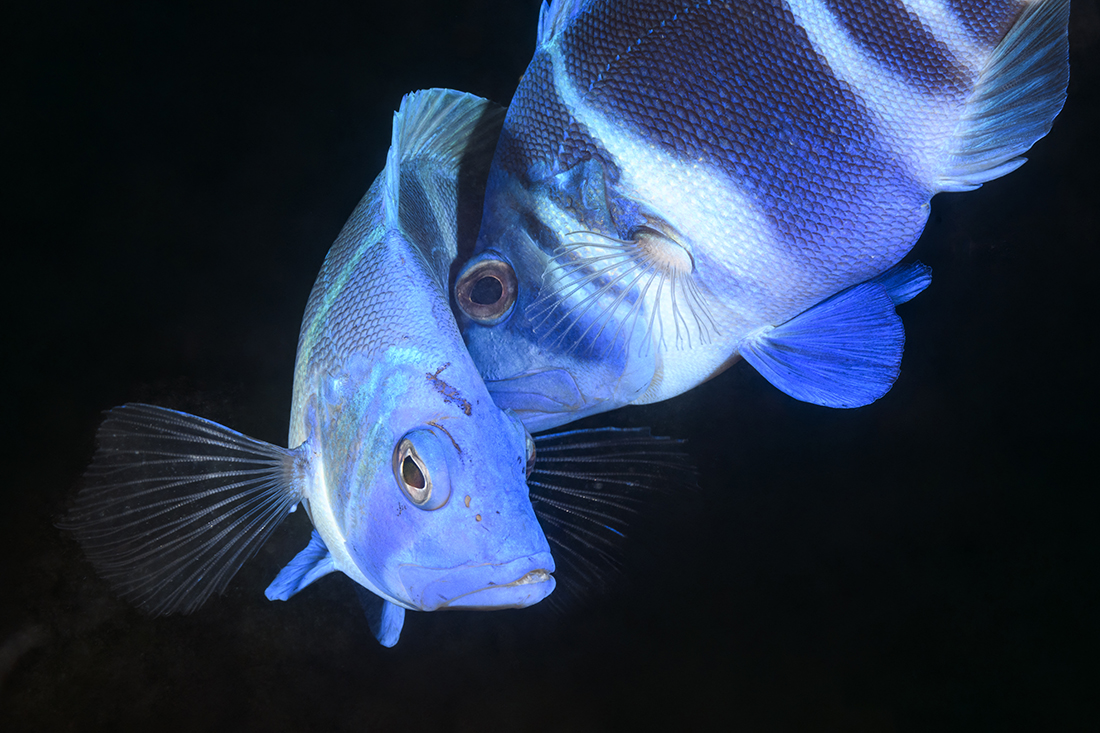
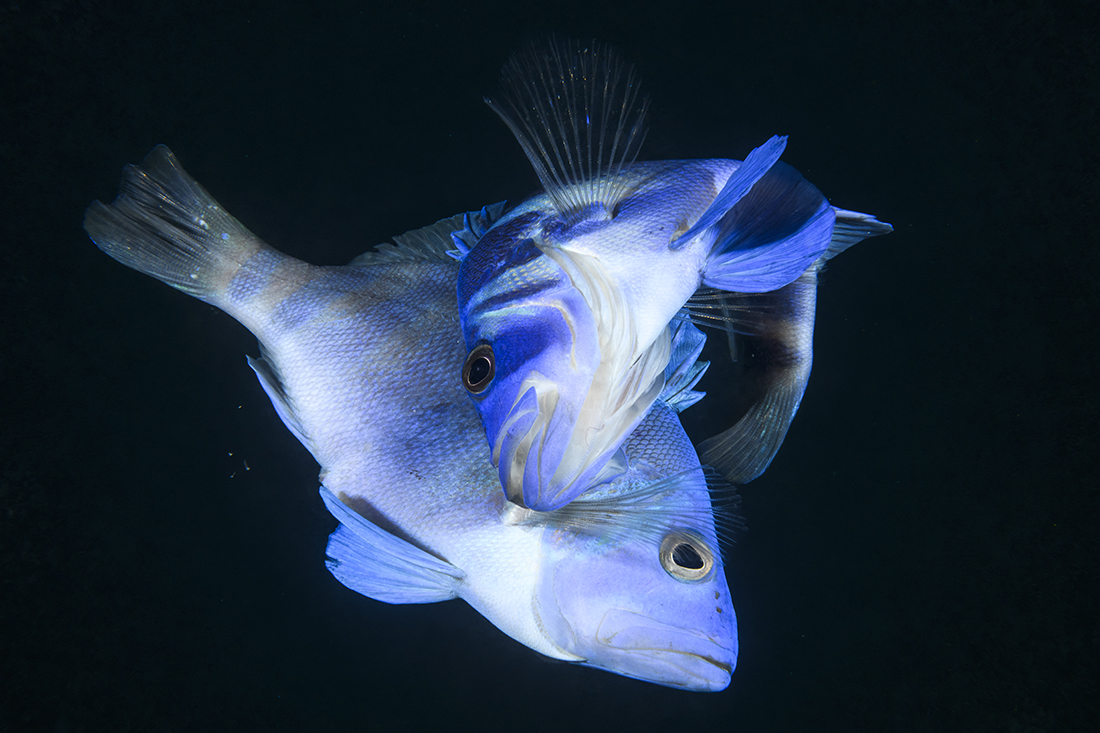
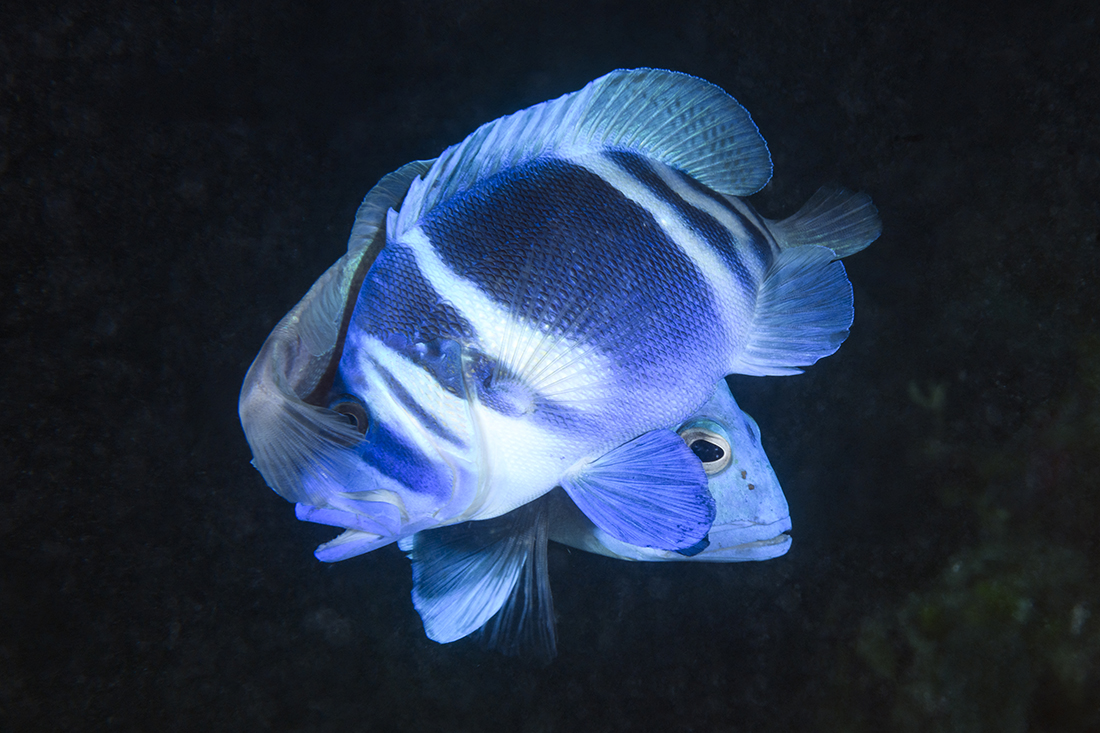
When the act begins, the fish move to the uppermost part of the coral head, slowly circling as they rise a few feet into the water column. The “following” fish folds around the “leading” fish. The leader takes the “female” role, signaling the shift by turning pale, while the acting “male” retains its dark coloration. A brief quivering motion marks the release of gametes.
For photographers, there is good news: this isn’t a “one and done” event. A pair will often perform this dance a half-dozen times before dark, frequently swapping reproductive roles between takes!
Furthermore, my choice of a 105mm macro lens over a 60mm macro lens would have also been unnecessary as the fish seemed totally unaffected by my presence. As for the “stealth” lighting. Well that too went out the window. Once the circling begins, you can use your brightest video lights; the fish become so focused on the ritual that they remain indifferent to the camera.
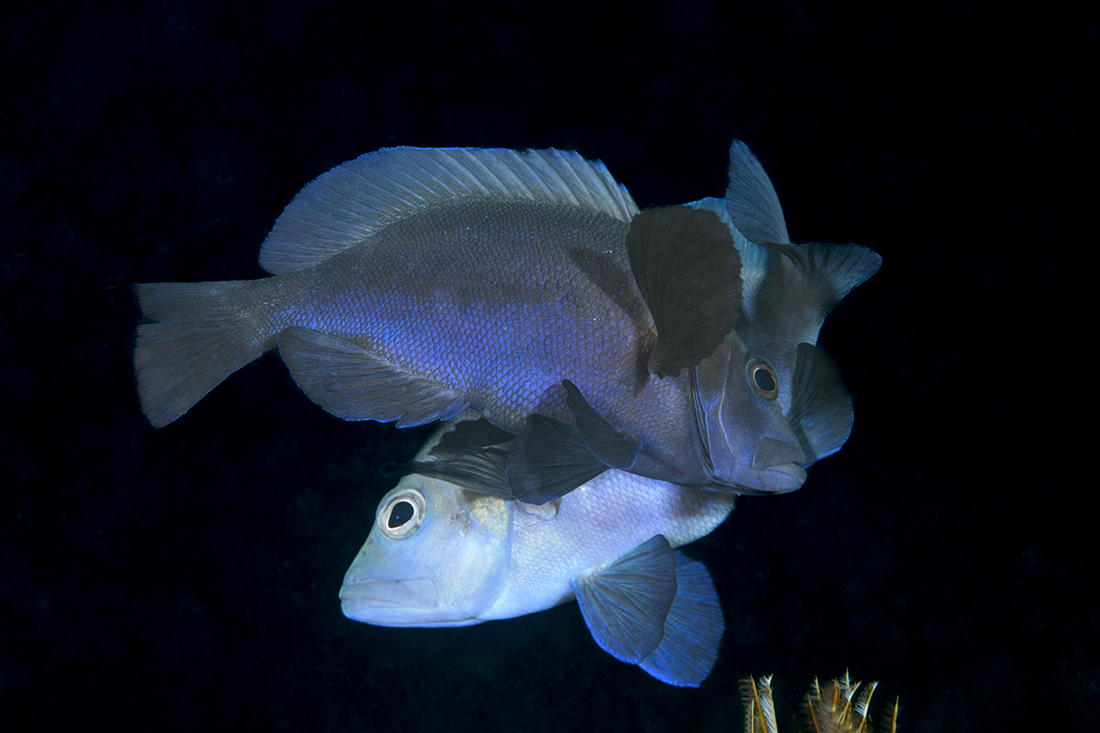
My dusk ventures on the Coco View house reef far exceeded my expectations. Not only did I secure the Indigo shots I came for, but I also captured spawning Black hamlets—a perfect ending to a world-class house dive.
