

As Close as it Gets to Diving Your Way.
The morning’s first dive began at a pleasant wreck called the Mr. Bud. While the resort’s website describes it as a cargo ship, it is actually a 75-foot Gulf shrimp boat. Sitting upright in 60 feet of water, its bow is wedged into the crest of a wall that drops down around 125 feet. Walls on the south side Roatan rarely extend deeper than beyond 150 feet.
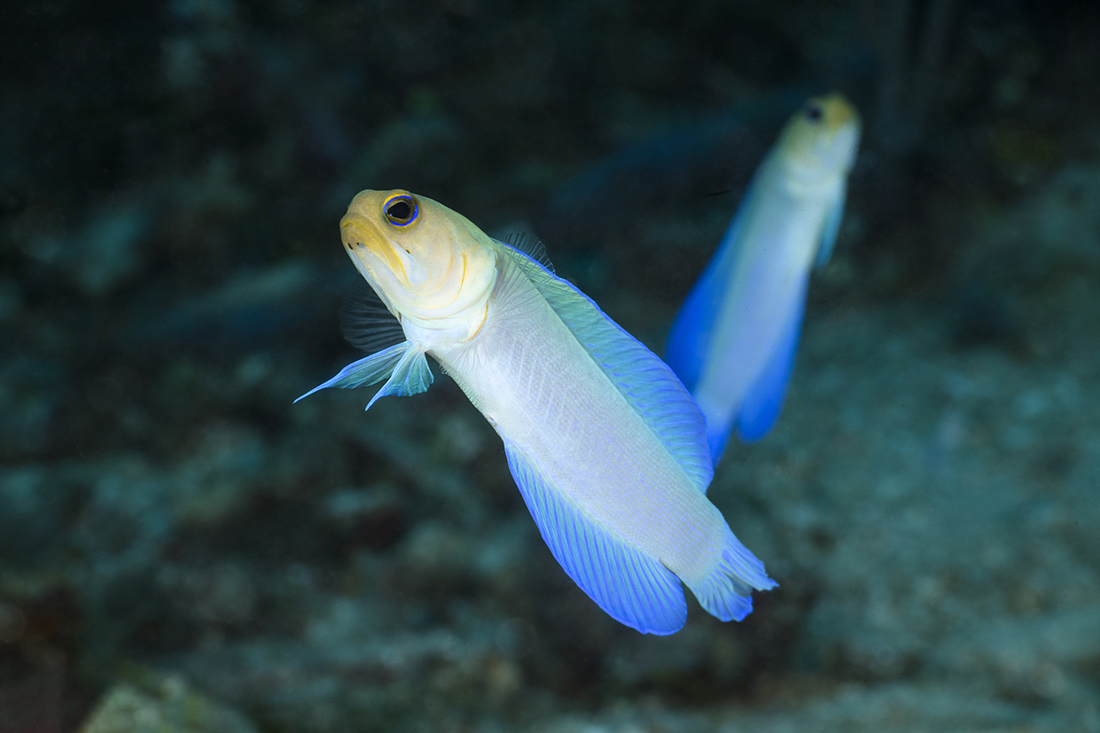
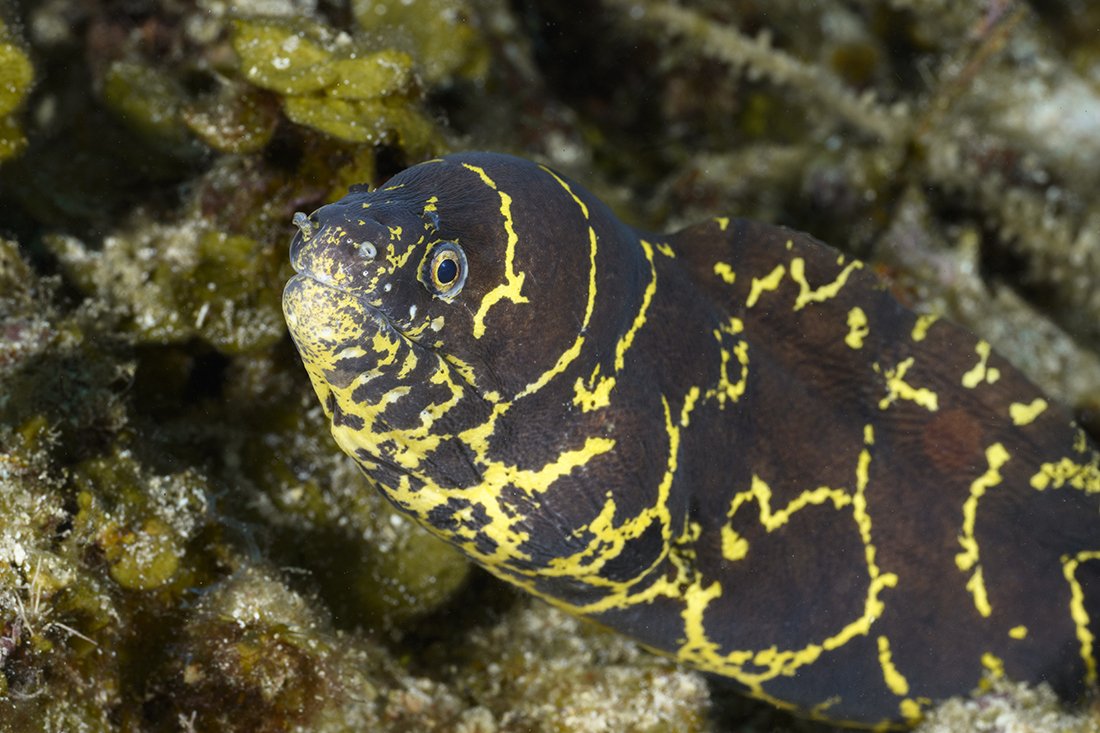
The rest of the wreck sits on a broad flat bottom comprised of sand and ruble populated by yellowhead jawfish, tobacco fish, several varieties of bottom-dwelling gobies. It also turned out to be good place to find the smaller species of morays like golden tail and chain.
While the Mr. Bud was a delight, the dive I was truly looking forward to was the “Drop-Off Dive” on the outer wall of Coco View’s famous House Reef.
On the House at Coco View
Coco View’s House Reef is the most unique house reef in Roatan, as it is comprised of four distinct dive sites. Directly in front of the property lies the “Front Yard,” a vast seagrass bed with shallow coral heads perfect for snorkelers. For scuba divers, the entry point cuts through the turtle grass to a deeper, reef-dominated area where the sandy bottom slopes beyond 60 feet.
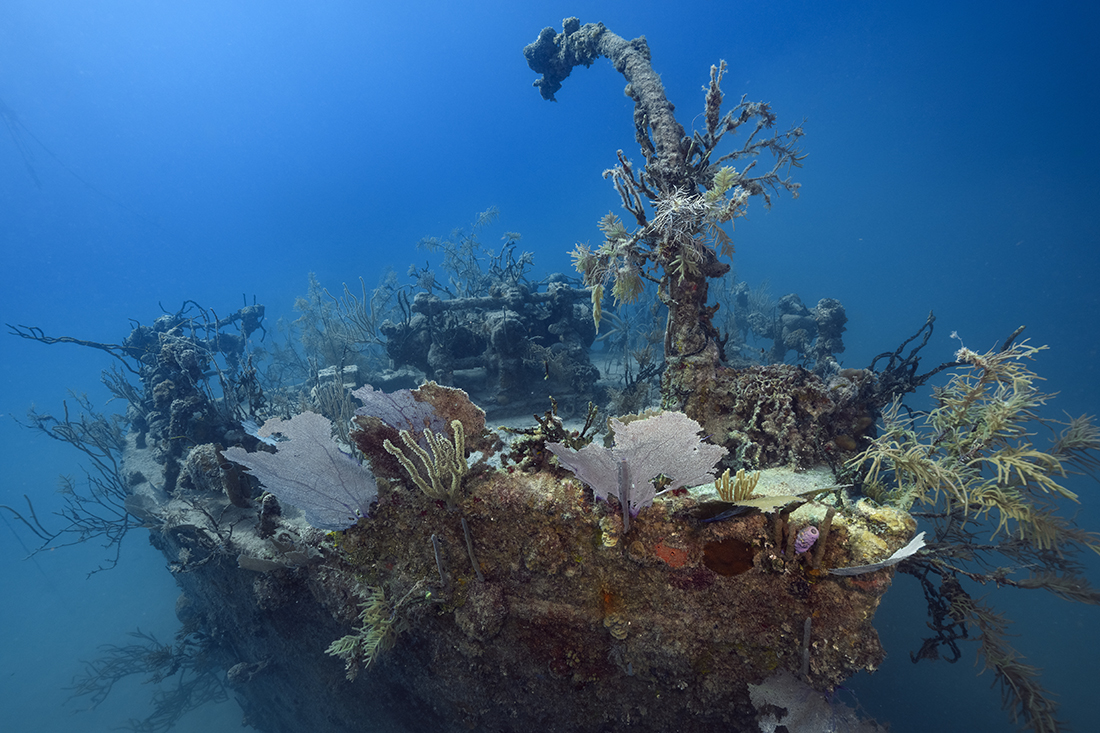
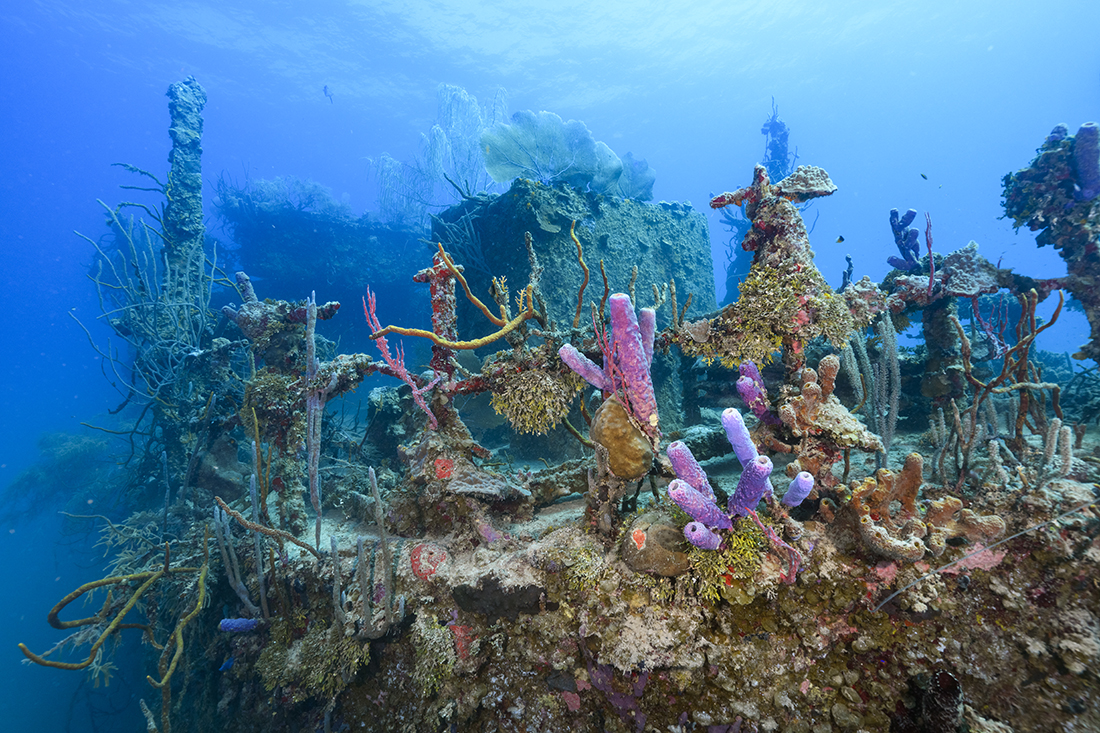
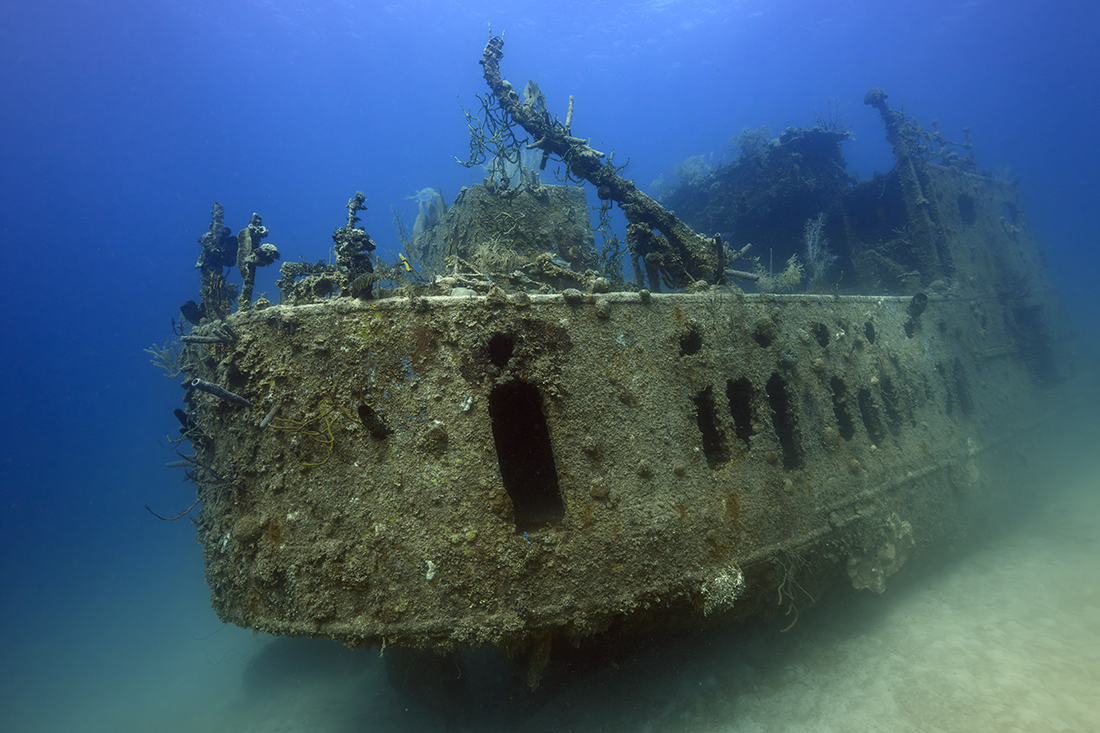
A few fin kicks from the reef lies the resort’s signature wreck, the Prince Albert. A 140-foot former cargo freighter intentionally sunk in 1985, it remains one of the most intact wrecks in Roatan. Over the last 40 years, it has become encrusted with soft corals and ornate sponges from bow to stern.
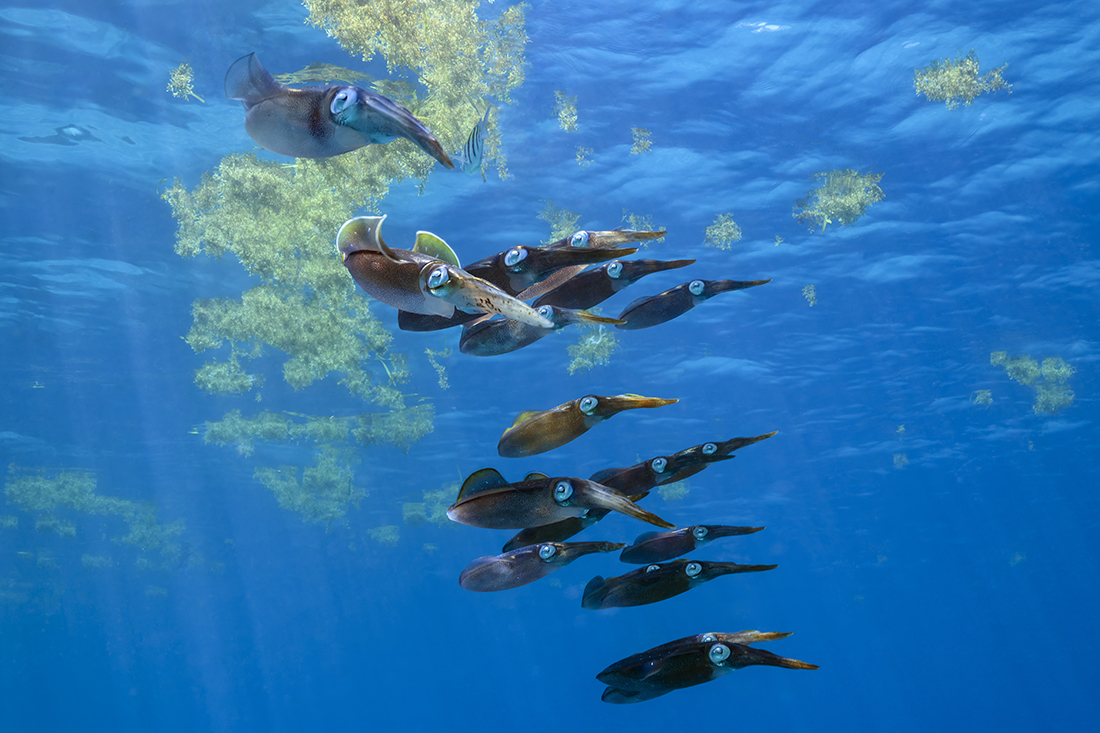
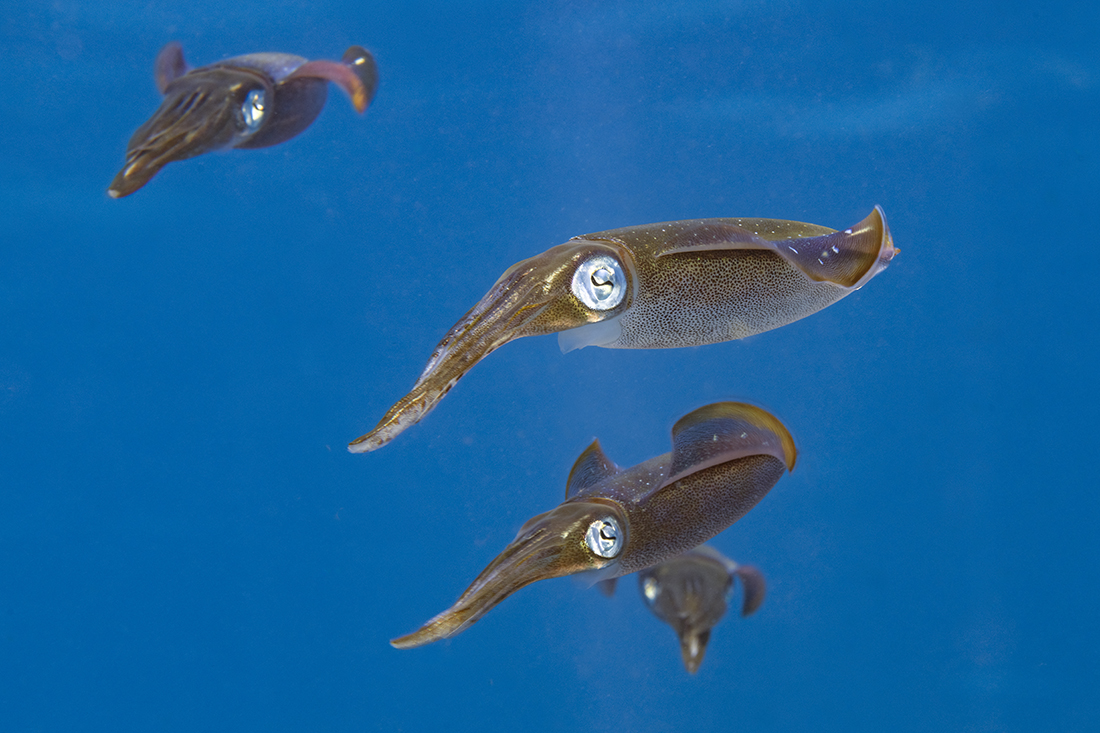
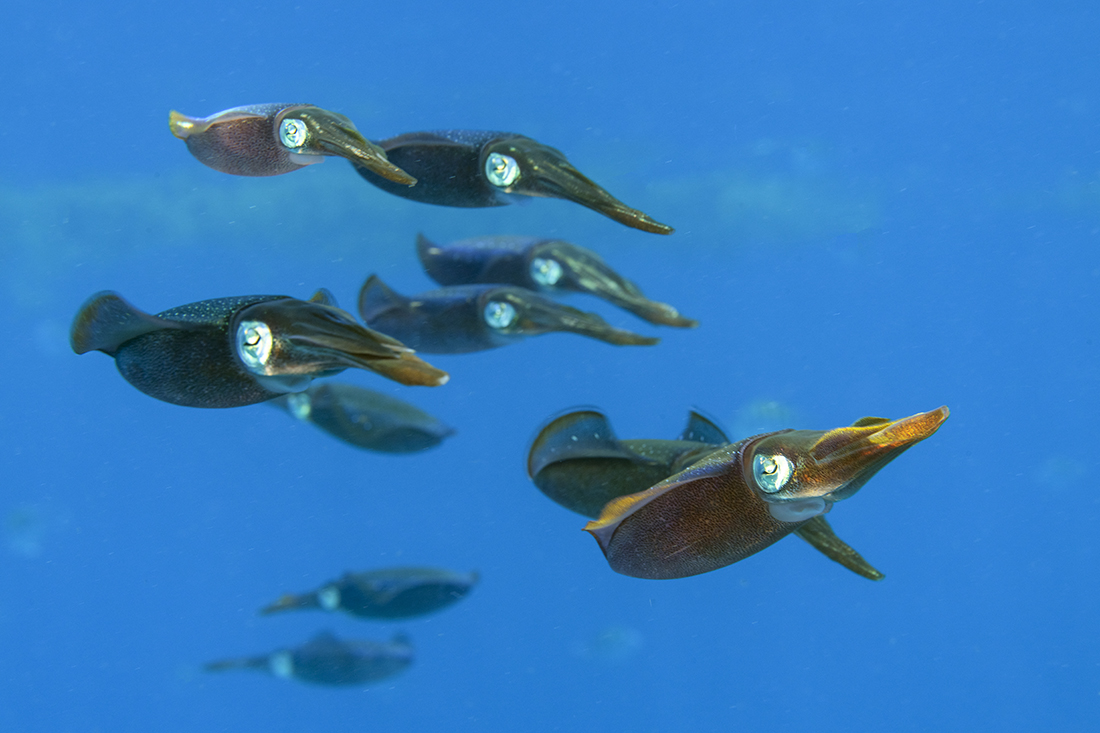
Divers frequently encounter eagle rays and southern stingrays here, but the most consistent residents are a large shoal of reef squid inhabiting the channel between the wreck and the Front Yard.
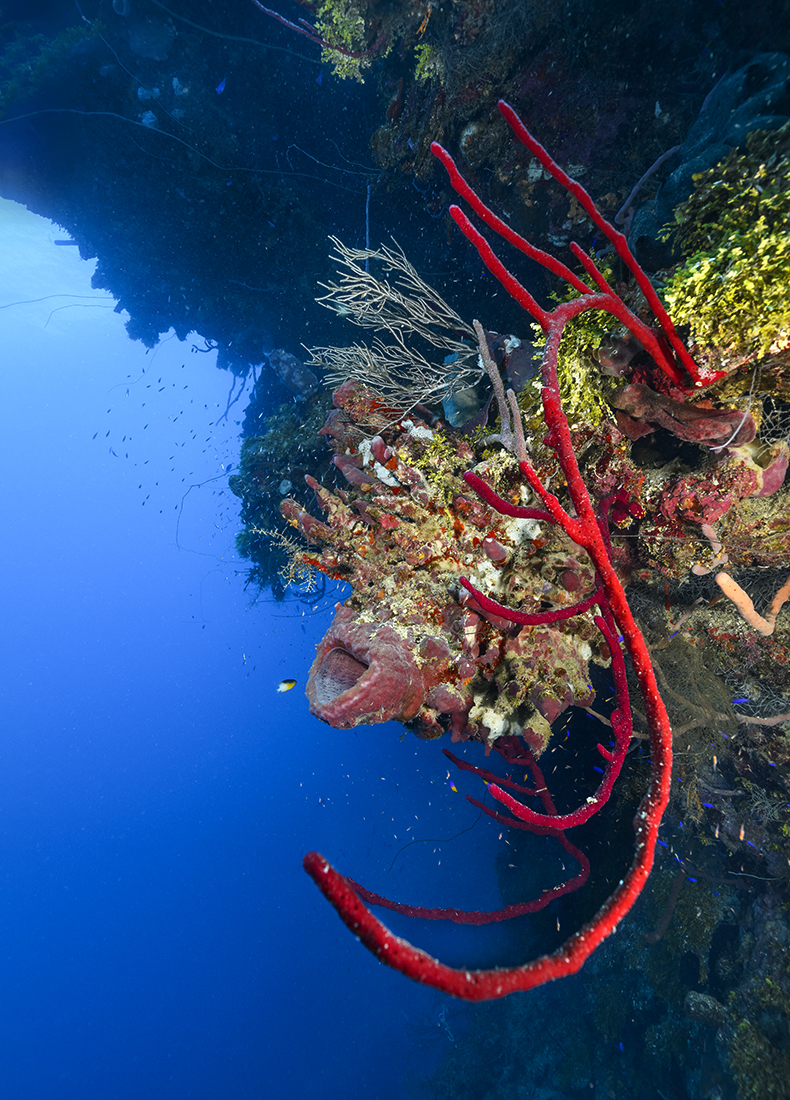
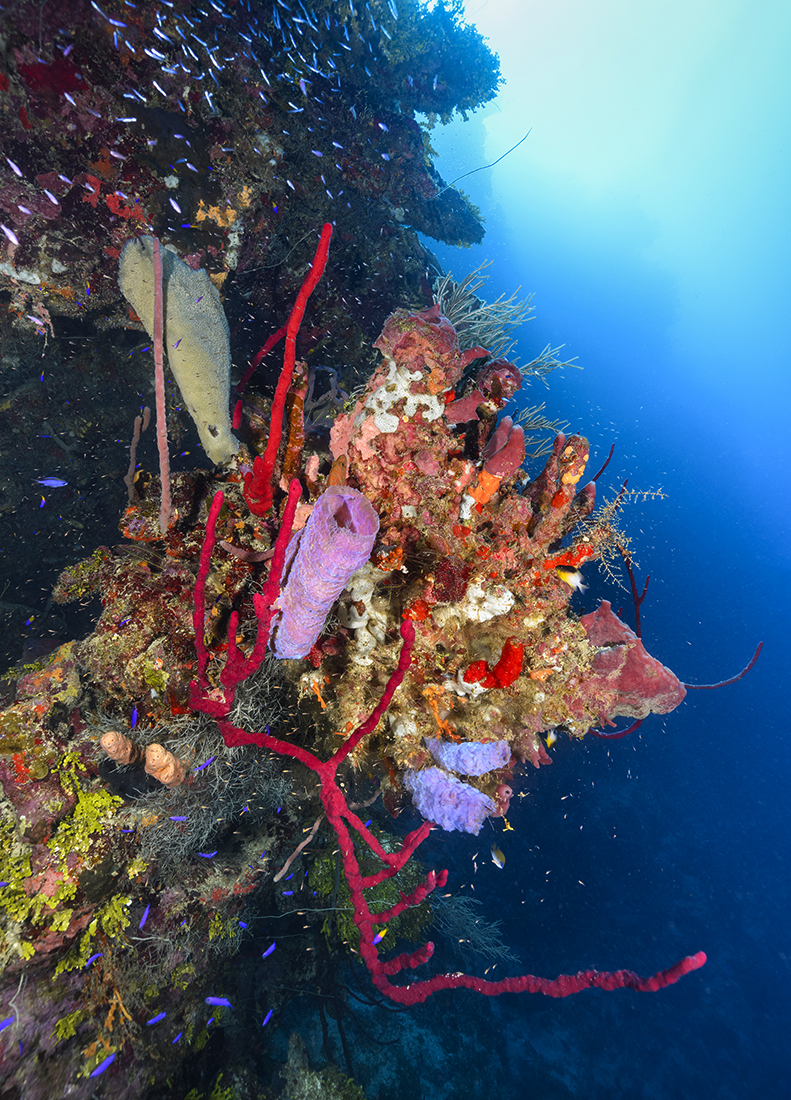
Beyond the wreck, a massive cut separates two distinct wall sites. To the east is Coco View Wall, featuring a dramatic vertical profile with overhangs and colorful sponge clusters. To the west lies Newman’s Wall, characterized by long vertical indentations and sand chutes. While spectacular, both walls require significant air and energy to reach from shore—which is exactly where the “drop-off” comes in.
What’s a Drop-Off Dive?
In a nutshell, a drop-off dive involves the dive boat making a stop on the way back to the dock to “drop” divers off on the outer edge of the reef. This allows divers to explore the reef’s deeper edges and work their way back to the shore entry at their own pace.
This head start saves the effort and air required to swim out from the beach, allowing for a longer, more leisurely profile. On the return trip from the morning boat dives, the divemaster checks who wants a drop-off. You can choose to be let in at Newman’s Wall, Coco View Wall, or the Prince Albert. The boat will drop different groups at different spots—no problem at all.
For those concerned about safety, consider this: in a resort with unrestricted shore diving, you are already diving without a guide. The drop-off actually enhances safety by starting you at the deepest point of the dive with a full tank, allowing for a natural multi-level profile as you make your way back the resort’s shore dive entry/exit point.
A Resort Built for Divers
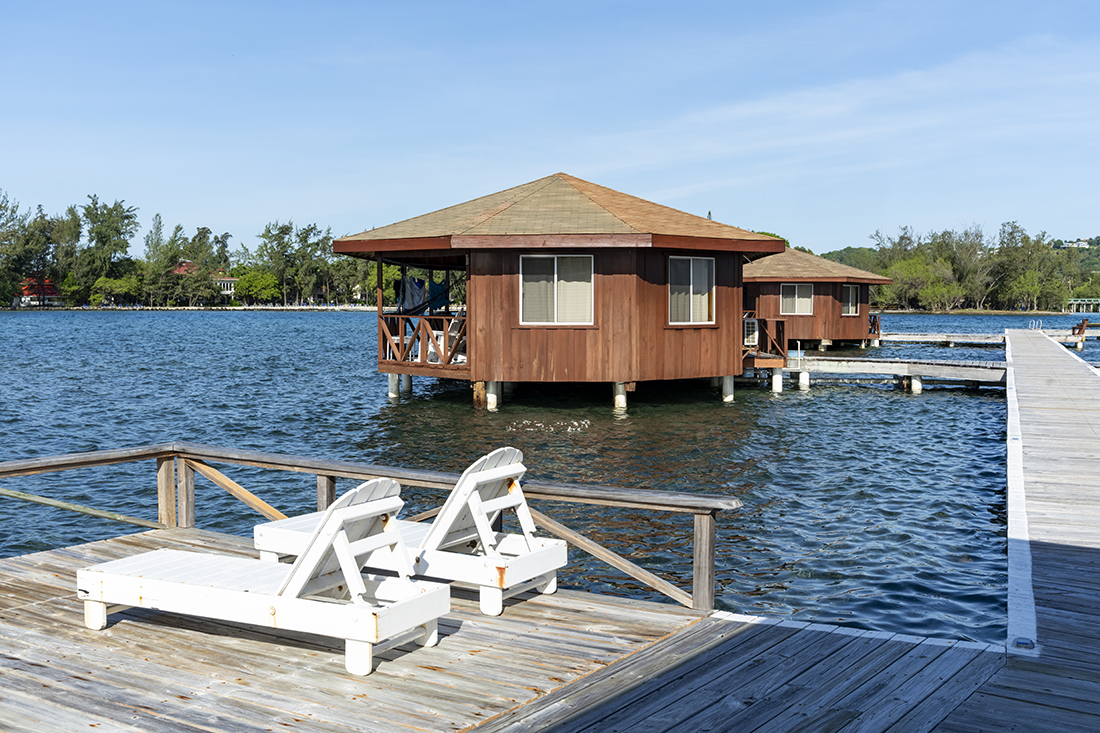
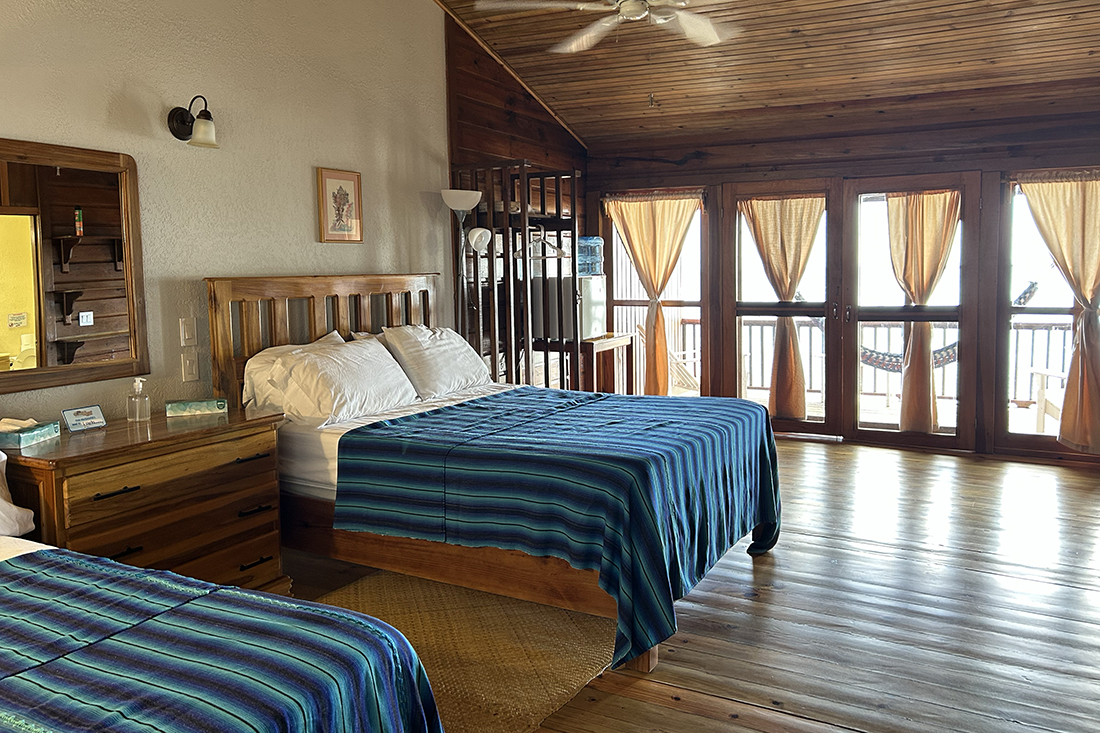
Founded in 1982, Coco View Resort is the second oldest operating dive resort on Roatan. Stepping onto the grounds feels like a journey back to the golden age of Caribbean dive lodges. The 29 guest accommodations line the water’s edge—half of them literally perched on stilts out over the over water. Rooms are spacious and air-conditioned, and while WiFi is available, you won’t find a TV in sight.
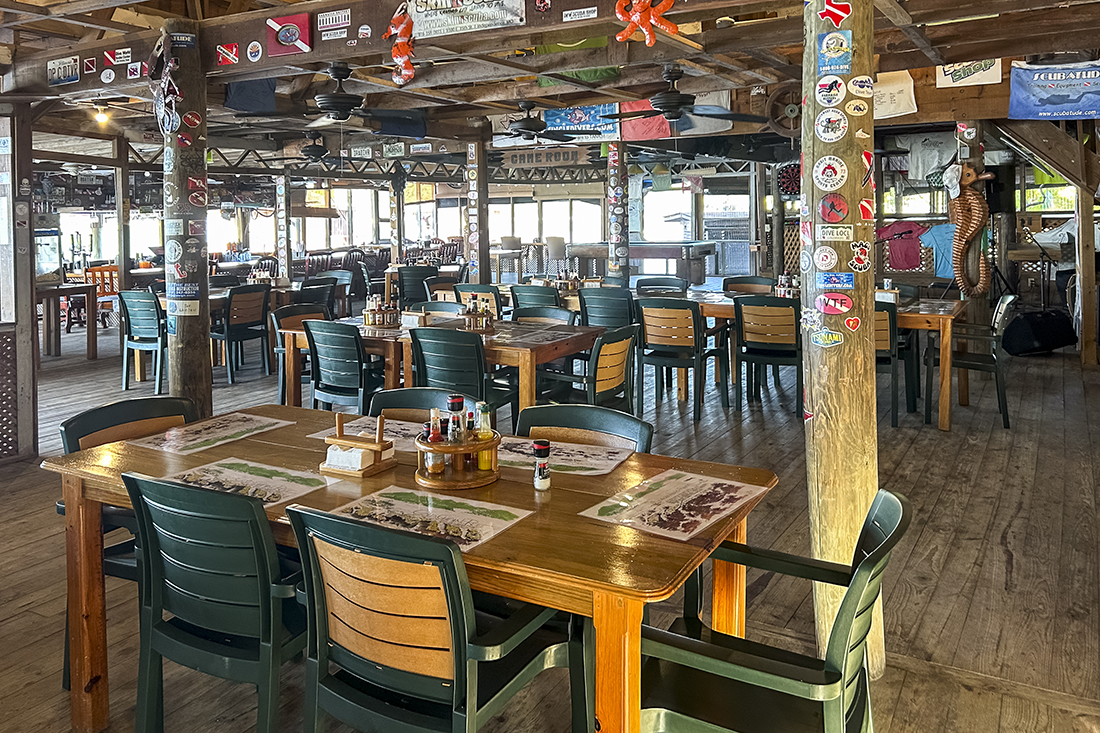
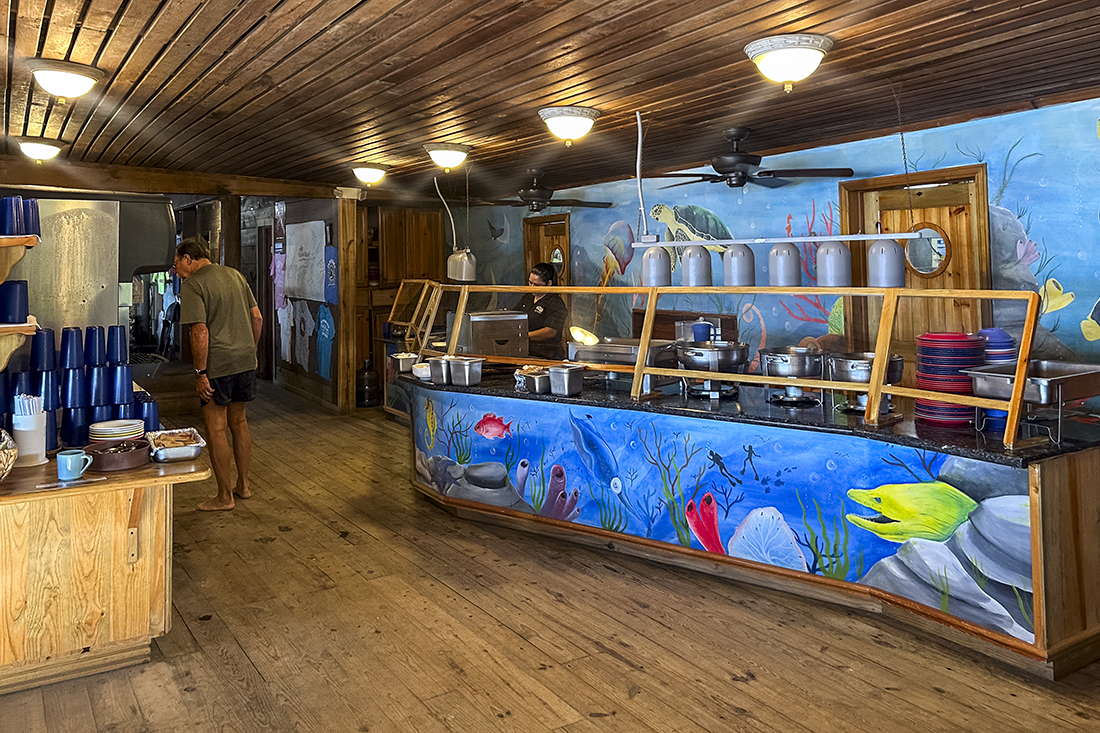
The two-story clubhouse serves as the resort’s social heart, housing the dining room and a full-service bar. Meals are served buffet-style, featuring made-to-order omelets for breakfast and a mix of Honduran staples and international entrees for lunch and dinner.
The Dockside Dive Center
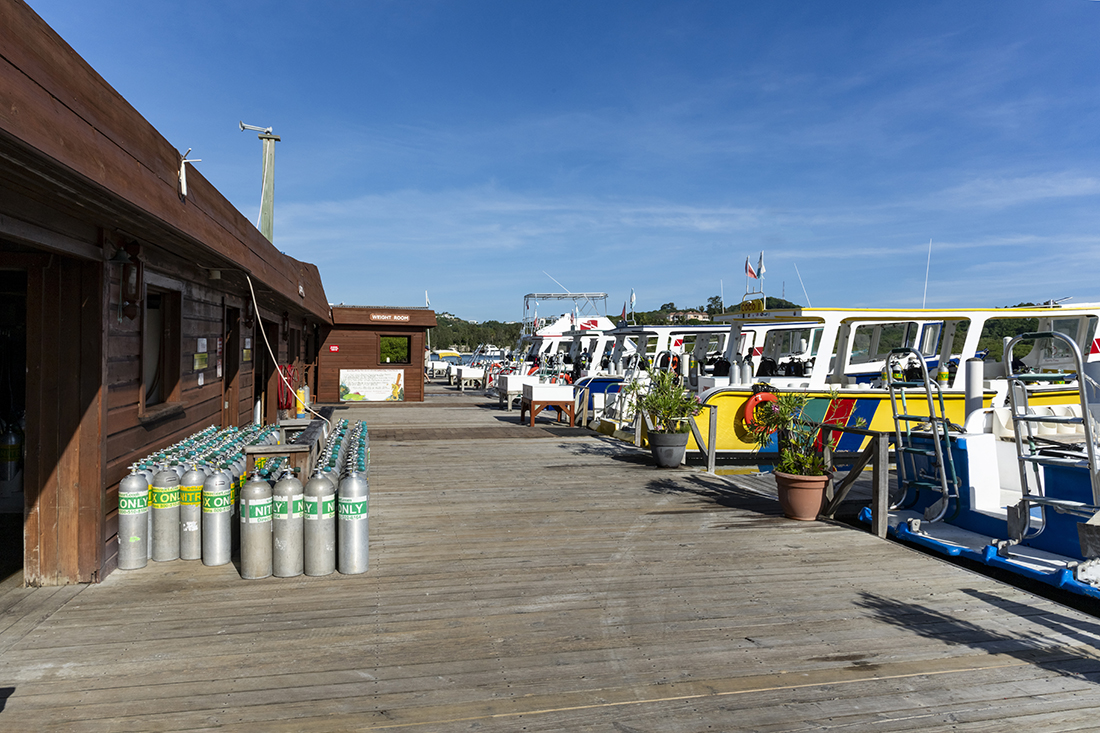
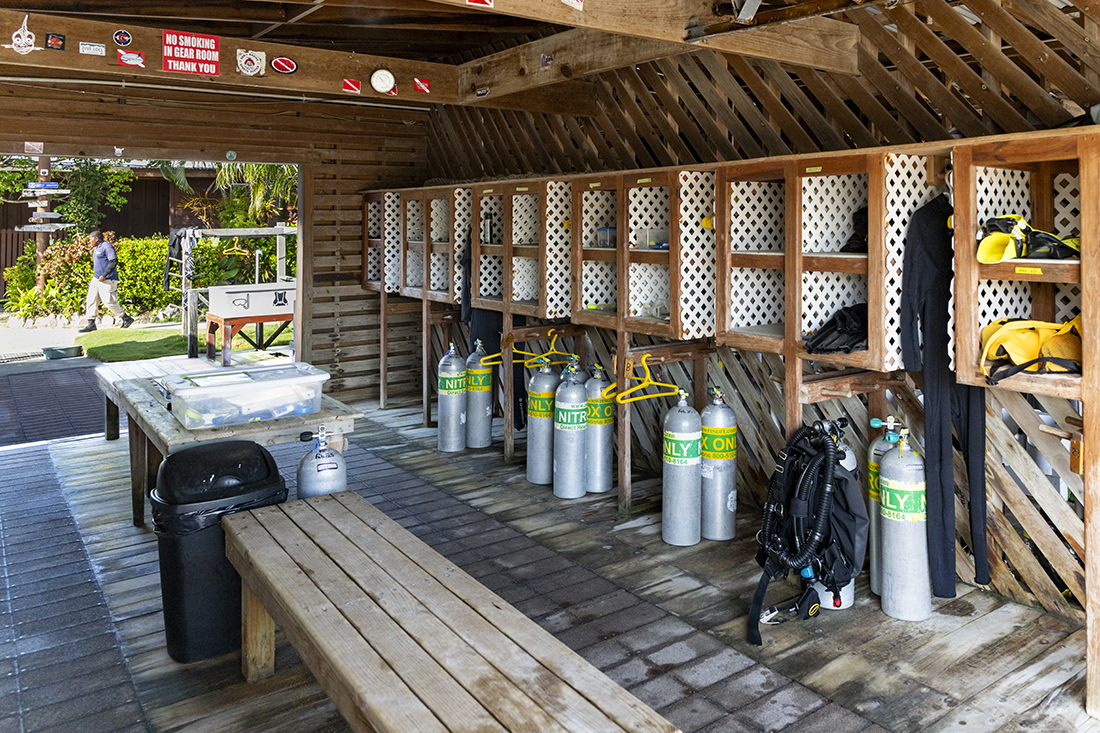
The dive center is a large complex, featuring a dedicated camera room and six gear-staging rooms where guest can stow their gear between dives.
Primary model tanks are aluminum 80’s with air or 32% Nitrox. There are also several aluminum 63’s and 100’s on hand for those requiring smaller or larger volume tanks.
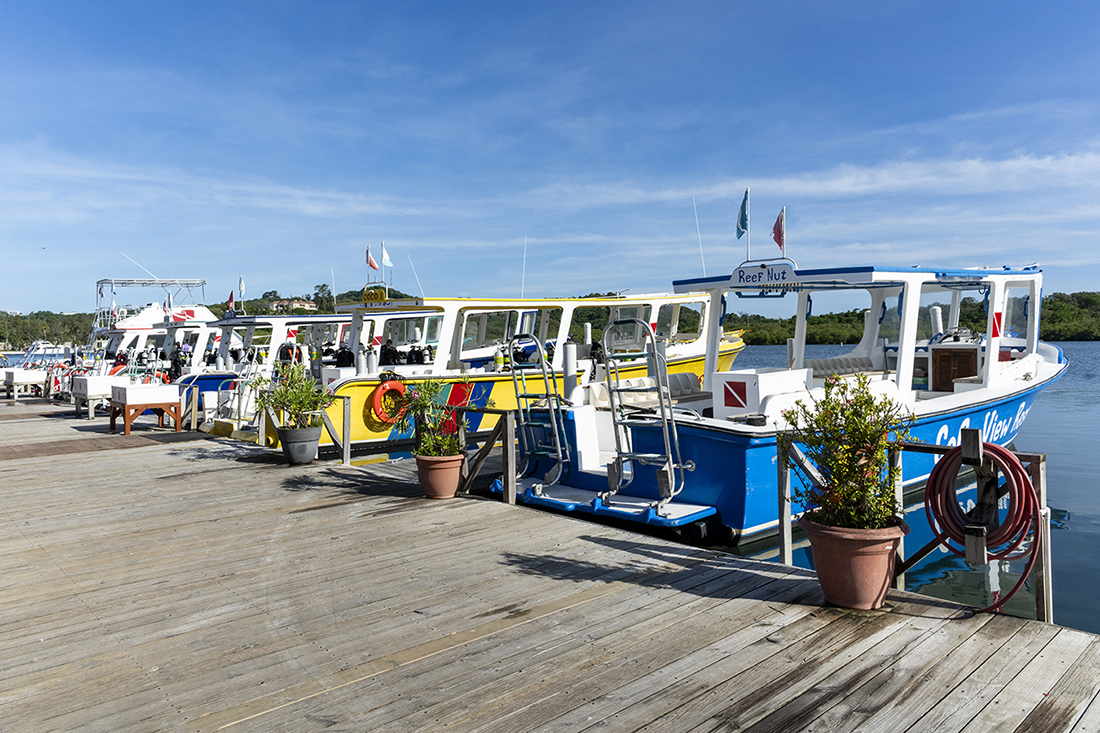
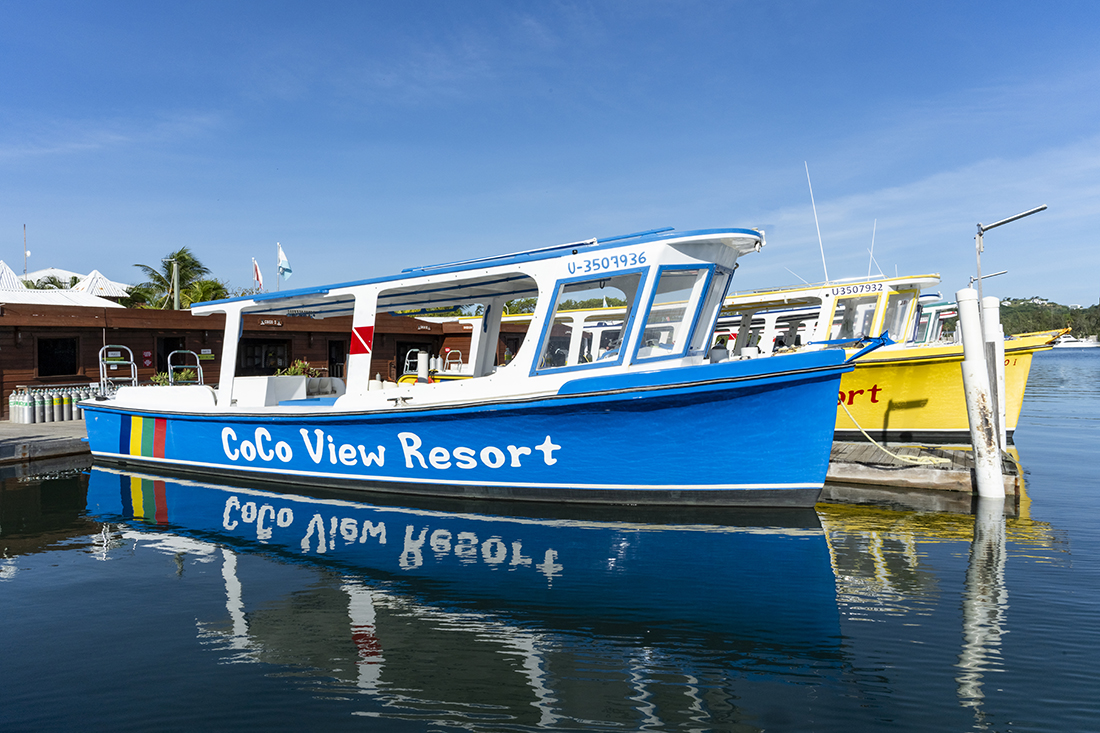
The fleet consists of five 50-foot vessels that resemble vintage Navy pier taxis. They are, in fact, refurbished MK 4 Utility boats built for the U.S. Navy. Each features a hardtop roof covering two-thirds of the deck and an aft swim platform with dual ladders. Their most unique feature is a center-keel entry port, allowing divers to exit the water by climbing a ladder straight up through the middle of the boat.
In addition to the forementioned 5 boats, CoCo View also runs a more contemporary design faster running 45-foot dive boat for outings to more remote all-day trips as well as a more basic model, the Reef Nut, for snorkel groups and other adventures.
When it’s time to depart, the dock echoes with a series of horn blasts: three for a 15-minute warning, two for ten, and one final blast to announce the boat is leaving in five minutes.
Boat dives comprise of two morning dives followed by one afternoon dive. Morning begins with the first dive on one of the 20 named sites along Roatan’s southern shoreline of which includes the highly renowned Mary’s Place. For those unfamiliar with this site, Mary’s Place is huge crevasse that cuts through the reef where a section the drop off takes a turn outward forming elbow-shaped plateau that descends from 30 to 60 feet before plunging vertically to 120 feet.
The second dive being the forementioned drop-off dive with the after. The afternoon dive also ventures to most of what’s on the list of named dive sites.
Coco View’s approach to scuba diving is pretty liberal living up to their founded axiom Coco View is “an escape for those who value diving freedom.”
While novices are encouraged to follow the guides’, experienced divers are granted the freedom to explore independently, provided they return with at least 500 psi.
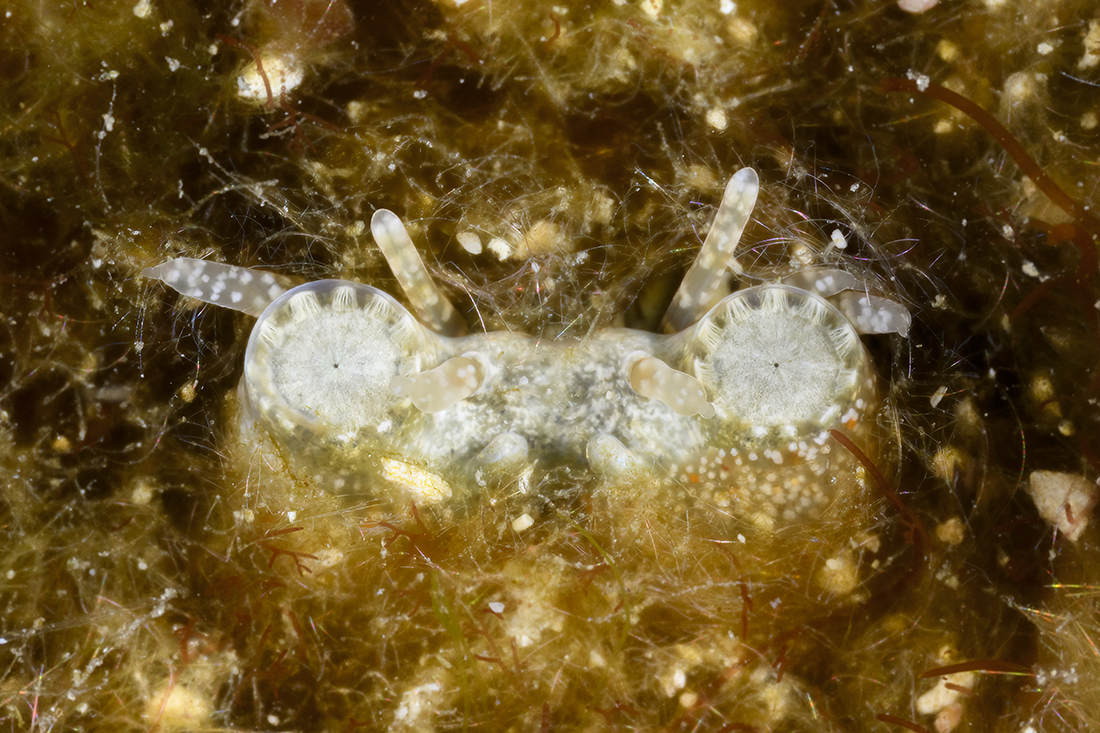
For night dives, the resort uses a honor system for tracking their guest: divers place their signature on the log sheet and take a numbered brass tag. If you happened to be the first going in, you are expected to as take the strobe light hanging on the board. Once at the reef’s edge, the first diver clips the strobe 8 feet below the surface to the chain of a marker buoy. Subsequent divers clip their brass tags to the same chain. When you return, if only your tag and the strobe remain, you are the last one in and bring the strobe back to the board.
Fish Nerd Paradise
The true selling point of Coco View is the incredible variety of macro life. Beyond the cleaning stations and the variety of basslets – several species from royal grammas to blackcap and yellowcheek are found here, the reef is a haven for hamlets. Of the 17 species native to the Caribbean, most can be found right here!
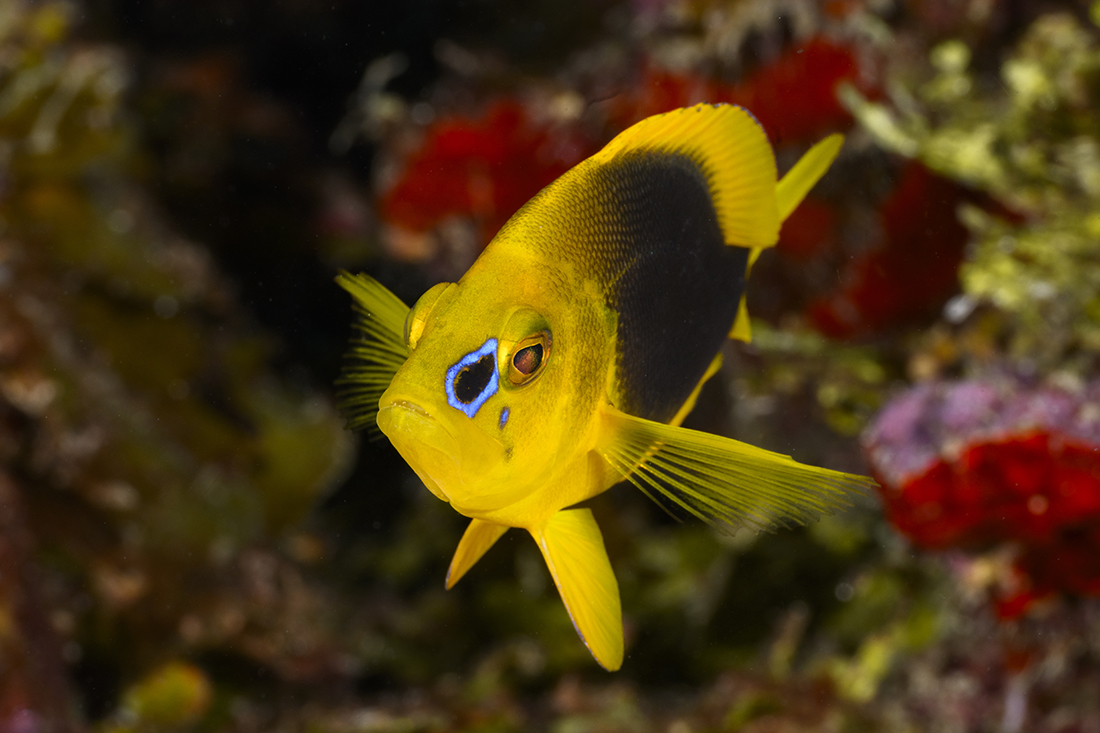
At the top of my list is the shy hamlet (Hypoplectrus guttavarius) with its gold coloration featuring a distinctive black spot encircled in bright blue on its nose and large black area that covers a region of the body below the dorsal fin down to the anal fin.
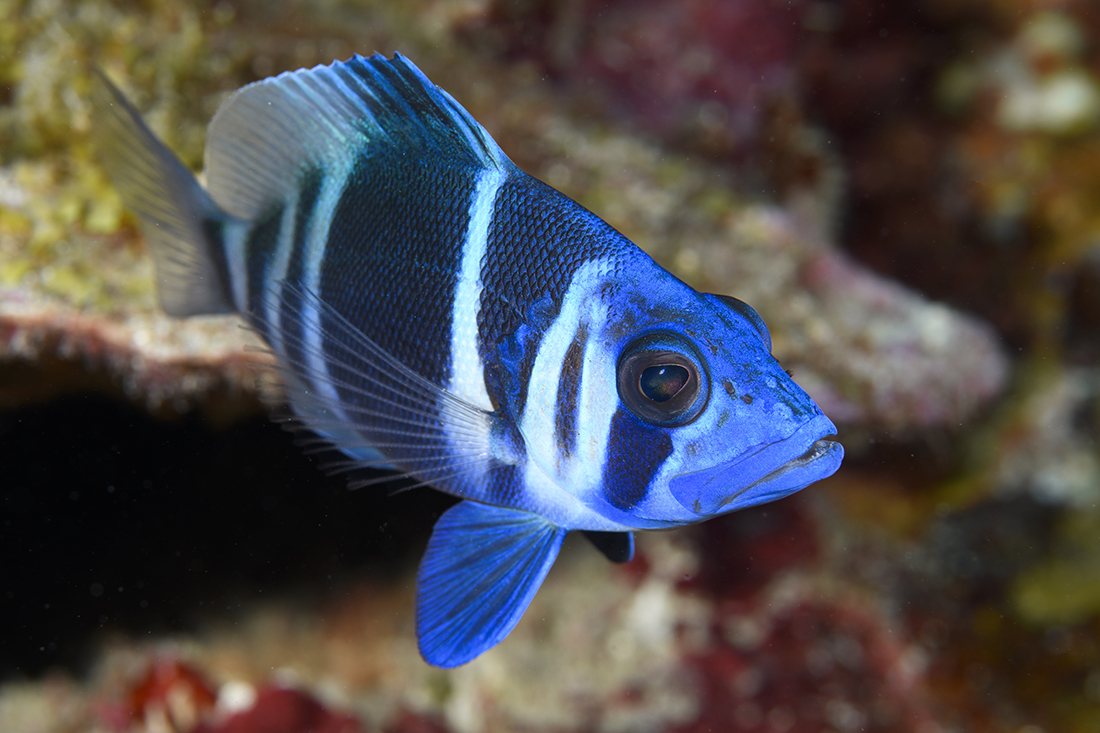
Then there is of course, the Indigo hamlet (Hypoplectrus indigo) identifiable through its pallet of blues from dark indigo to powered blue arranged vertical bars that run from the eye to the base of its tail.
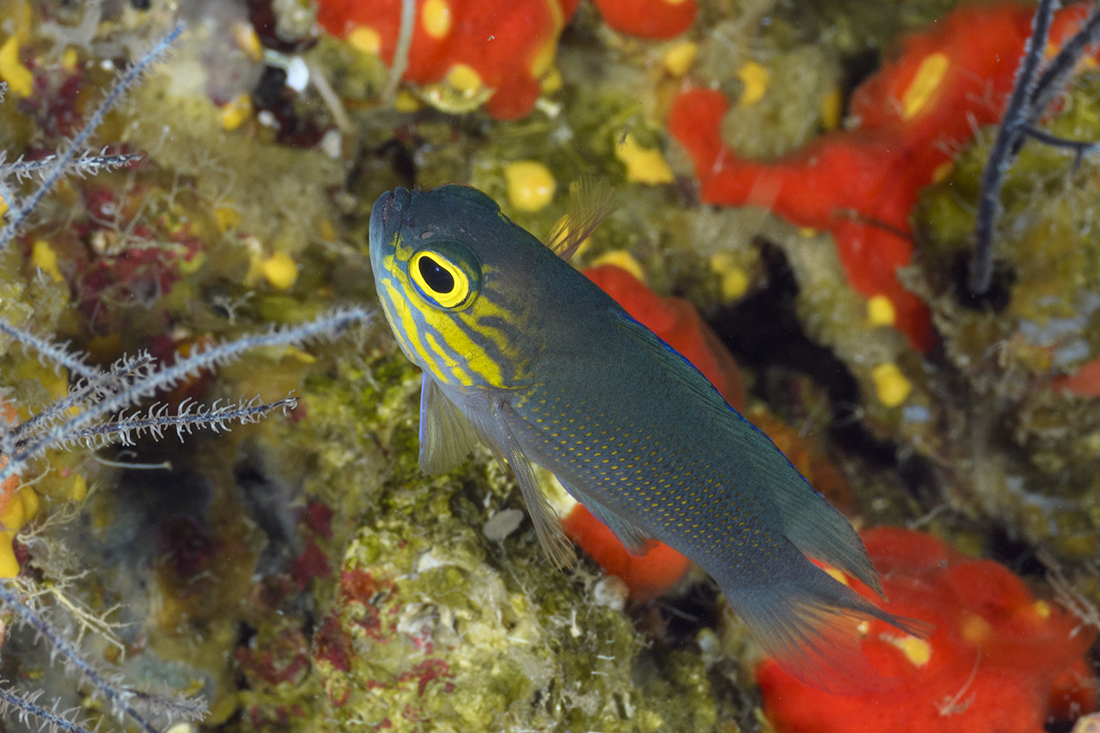
Thanks to intel from resident photo pro Mickey Charteris, I also managed to photograph the secretive Yellowcheek Basslet in the shadows below 90 feet. Though the rarer Three-lined Basslet and Swordtail Jawfish eluded me this time, the ease of access at Coco View makes a return trip inevitable.
Whether you are seeking a specific species or simply want the autonomy to dive 24/7, Coco View offers a level of freedom that is becoming increasingly rare in the diving world.
